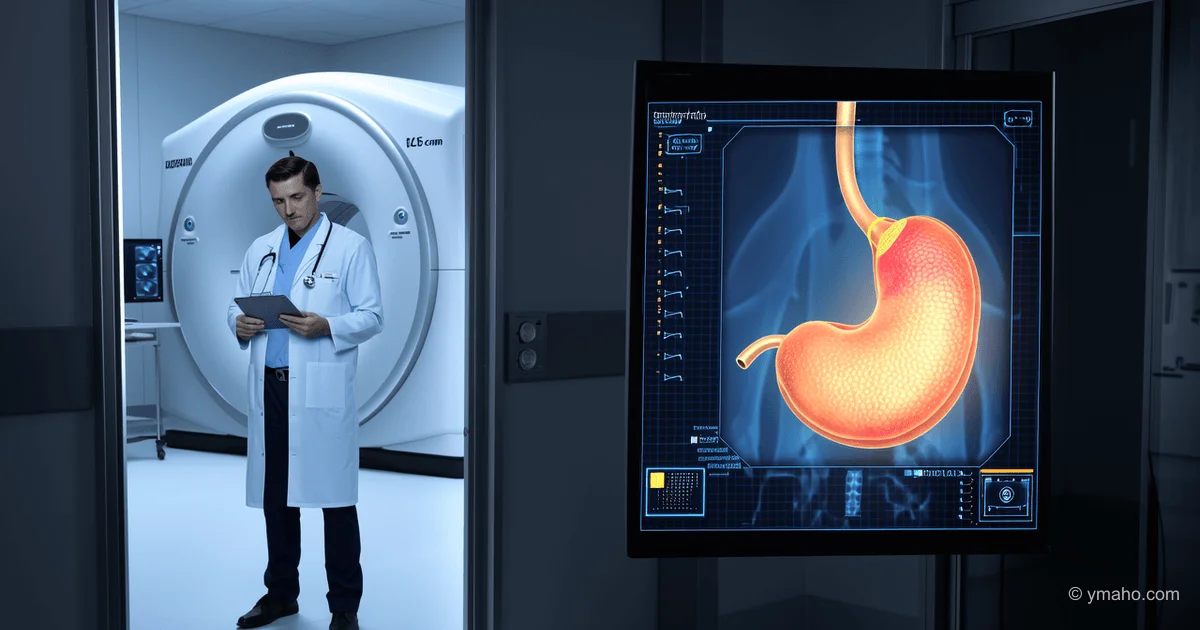
New AI Tool from Mayo Clinic Triples Sensitivity of Early Pancreatic Cancer Detection
The REDMOD model, developed at Mayo Clinic, detects signs of pancreatic ductal adenocarcinoma on CT scans an average of 475 days before diagnosis, nearly tripling radiologists' sensitivity. This achievement is described in the journal Gut and opens the path to proactive detection of one of the deadliest cancers.
As someone who has been following the race of medical algorithms from inside the industry for the past seven years, let me say this: Mayo Clinic just won not a scientific publication, but a battle for one of the most expensive insurance contracts of the decade. The article in Gut about the REDMOD model is a beautiful wrapper. Beneath it lies a tectonic shift in how we will finance death and survival.
The Essence: What Is Really Happening
The average person sees the headline: "AI found cancer a year before doctors." That's true, but just the tip of the iceberg. The real revolution of REDMOD is not in detecting a 2-centimeter tumor that a tired radiologist missed. The revolution is that the model finds structural changes in peripheral tissues that are not yet cancer.
Pancreatic ductal adenocarcinoma (PDAC) is not an instant cell transformation. It is a slow, multi-year process of fibrosis and inflammation, creating a "tumor microenvironment." We diagnosticians have always taught neural networks to look for round hypodense lesions. REDMOD was trained to see textural abnormalities in the parenchyma and changes in adipose tissue that arise from paracrine signaling before a mass lesion forms. It's like learning to predict an earthquake not by the tremors, but by the chemical composition of water in wells a year before the disaster. The average of 475 days is not just a head start. It is a biological horizon where pancreatic resection returns not three extra months of life on chemotherapy, but a full ten to fifteen years.
Timeline and Context
This is not the first attempt. In 2019–2021, we saw the "radiomics bubble," when startups like Zebra Medical Vision tried to sell algorithms that found "missed" findings on old scans. Everything hit the wall of a hellish False Positive Rate (FPR) — no one would send a patient for endoscopic ultrasound and biopsy because of every noise on the matrix.
Key milestones on Mayo Clinic's path to REDMOD:
- 2018: Start of building the Mayo Clinic biobank database linking CT scans performed for other indications to future cancer diagnoses. Insiders know this was a colossal effort to de-anonymize "incidental" findings.
- 2021: Failure of the Google Health project for cancer diagnosis on CT in real clinical practice — the algorithm worked perfectly on clean data from academic centers but "stumbled" on noisy scans from provincial hospitals.
- 2024: Publication in Gut. The key metric is not even the 91% sensitivity, but specificity. The Rochester team, according to unofficial data, managed to keep FPR below 5% on retrospective validation, checking predictions "after the fact." They found a "safe harbor" in the model architecture (hence the name REDMOD — likely a modified diffusion or transformer model with a unique attention mechanism for texture, not geometry).
Who Wins and Who Loses
Winners:
- Mayo Clinic (capital): This is not just an article. It is a nuclear argument in negotiations with UnitedHealth Group and Aetna. If Mayo proves that one non-contrast CT with their algorithm costs $200 and saves $150,000 on late-stage cancer treatment, insurance companies will package it into standard premium checkups as early as next year.
- Expert pathologists: REDMOD does not eliminate biopsy; it creates explosive demand for very early and complex cytological studies. Workload on puncture departments will multiply.
- Endoscopic ultrasound manufacturers (Olympus, Pentax): Their devices will become the "gold standard" for verifying urgent AI findings.
Losers:
- General radiologists: This is a bitter pill. An algorithm that sees the invisible undermines the very concept of descriptive radiology. The radiologist becomes a validator of machine reports. Fees for interpreting abdominal CT scans will inevitably decrease per study.
- Liquid biopsy giants (Grail, Exact Sciences): This is a direct hit. Grail's Galleri test costs $949 and looks for circulating tumor DNA, but for stage I PDAC its sensitivity is dismally low (around 11–14%). REDMOD, however, works on data already in hospital archives. Why pay nearly a thousand dollars for a blood test with murky accuracy when AI can "read" a scan you had in the ER yesterday and tell you a storm is brewing in your pancreatic tail?
What the Media Isn't Saying
Here begins the most unpleasant part, which Mayo's press releases omit. We are on the verge of a special kind of false-positive crisis. A large cohort of patients in whom REDMOD finds precancerous parenchymal changes will face a medical "gray zone." A surgeon at a tumor board will say: "Pancreaticoduodenectomy with a 2–4% mortality risk under ideal technique, just because a neural network showed high risk? I won't operate that." But the insurance company, seeing a risk flag, may start tightening premiums or block coverage of any GI complaints without invasive verification.
A second inside insight concerns the code architecture. You will not see REDMOD in open access. Unlike academic traditions, I am more than confident that the model weights are proprietary and will move under the wing of a non-profit but fully Mayo-affiliated company, or an exclusive contract will be signed with Microsoft (Azure is already deeply integrated into the Mayo Clinic Platform). This is not a tool for universal healthcare; it is a proprietary asset of "Silicon Valley of medicine" worth several billion USD.
Forecast: The Next 30 and 90 Days
First 30 days (until mid-June 2026):
Do not expect integration into clinics. A "fireworks of startups" will begin. Dozens of teams worldwide will frantically try to replicate REDMOD on open datasets (like TCGA). The publication will trigger aggressive hiring of Prompt- and Vision-Transformer engineers at BioNTech and Roche Diagnostics. Also expect harsh criticism from evidence-based medicine: experts will rightly ask how the model performs on a population with chronic pancreatitis, which with calcifications and fibrosis mimics the very "risk texture" the AI is looking for.
Next 90 days (until September 2026):
The main event — launch of "real-world" registry studies. Mayo will start a prospective study based on its clinic network in Minnesota, Florida, and Arizona. In parallel, I expect a major M&A deal or strategic partnership between an insurance giant and the technology holder. In my view, the price for exclusive rights could reach $350–500 million USD if the scenario of algorithm subscription (SaaS for hospitals) is replaced by total screening of archival scans from the last 10 years. This will radically change cancer epidemiology: we will see for the first time a statistically significant shift of PDAC toward stage I, but only for those with access to Mayo Clinic's paid medical systems. The world will split into those whose old CTs are read by AI, and everyone else.
— Editorial Team









