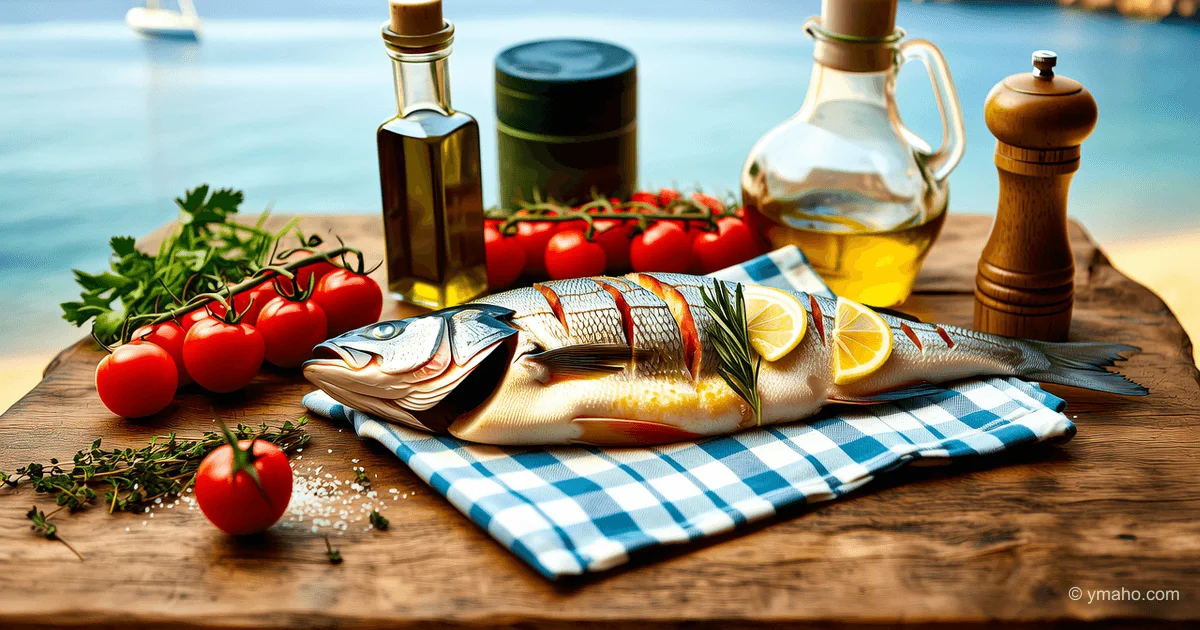
Mediterranean Diet Gains Popularity as a Skin-Improving Treatment for Psoriasis
The MEDIPSO study confirmed that adherence to a Mediterranean diet leads to clinically significant improvement in mild-to-moderate psoriasis symptoms.
Mediterranean Diet vs. Psoriasis: Why Food Becomes a Prescription Weapon — and Who Will Lose Billions
The Bottom Line: What's Really Happening
In early May 2026, Dermatology Times published an analysis of MEDIPSO — the first randomized controlled trial of the Mediterranean diet for psoriasis. 38 adults with mild-to-moderate disease, 16 weeks of structured dietary support with personalized counseling and weekly provision of extra virgin olive oil versus standard low-fat recommendations without support. Result: an average PASI reduction of 3.4 points, and 47% of participants achieved a significant clinical response — 75% improvement on the PASI scale. In the control group, there were no changes at all.
At first glance, it's just more evidence that "eating right is good for you." But I read these data differently. MEDIPSO is a precedent that triggers a fundamentally new wave of competition. The object of competition is not market share of biologics or diet rankings in wellness apps, but the very architecture of treating chronic inflammatory diseases.
When JAMA Dermatology publishes a randomized trial showing that food works as well as some topical drugs, and the safety of this intervention is virtually absolute — that's not a scientific curiosity. It's an explosive device planted under the foundation of a multi-billion dollar pharmaceutical business model. And the most alarming thing for pharma is that this device has already gone off.
Timeline and Context
The events leading to the publication in Dermatology Times spanned three years.
The MEDIPSO study started in 2024 as a joint project of Spanish dermatologists and dietitians, funded by the Spanish Academy of Dermatology and Venereology. Primary results were published in JAMA Dermatology in December 2025 — the article appeared in volume 161(12), pages 1215-1223, DOI 10.1001/jamadermatol.2025.3410. But a scientific publication is one thing; recognition by the professional community is another. The latter happened only now.
In January 2026, an Italian coalition of five scientific societies — dietitians, dermatologists, nutraceutical experts, keto dietitians, and endocrinologists — published a Joint Consensus Statement on medical nutrition therapy for dermatological diseases, where the Mediterranean diet received evidence-based intervention status for psoriasis, acne, and hidradenitis suppurativa. Concurrently, Clinical Nutrition published a prospective cohort study of 121,299 participants from the UK Biobank: those who adhered to a healthy plant-based dietary pattern had a 19% lower risk of developing psoriasis, and increased BMI explained 14% of this protective effect.
In March 2026, the German dermatology portal Wikiderm published a German-language analysis of MEDIPSO, highlighting metabolic effects — a significant reduction in HbA1c in the intervention group, which takes the diet beyond "just skin" into systemic therapy for comorbidities. Around the same time, Everyday Health updated its recommendations, explicitly citing the Mediterranean diet as the preferred dietary pattern for psoriasis patients.
On May 9, 2026, Dermatology Times published the article "Social Media Mythbusters: The Mediterranean Diet," which became the tipping point from academic discussion to mainstream recognition. The article introduced a key metaphor: "The MEDIPSO effect is comparable to a low-potency topical agent, but not to a biologic." This formulation is both an acknowledgment and a limitation that, as I will show, will satisfy neither side.
Who Wins and Who Loses
Winners: Patients with mild-to-moderate psoriasis. 47% achieved PASI-75 — meaning nearly complete skin clearance in half the participants with zero side effects, no prescription, and no out-of-pocket drug costs beyond the price of food. For context: a typical topical corticosteroid costs $50-200 per tube in the US, requires regular application, and carries a risk of skin atrophy. The Mediterranean diet costs about the same per week but offers systemic bonuses: reduced HbA1c, cardioprotection, weight control.
Winners: Dietitians and nutritionists. In the Perez-Bootello et al. study, the intervention group received intensive dietary support — individual counseling, educational materials, weekly oil deliveries. It was this package, not just "eat tomatoes and fish," that produced results. This sets a precedent for including registered dietitian services in psoriasis treatment protocols — thus opening a new market for dietetic services reimbursed by insurance companies.
Winners: Extra virgin olive oil producers. It sounds like a joke, but it's not. MEDIPSO gives EVOO the status of a "medical product" in the context of psoriasis. The polyphenols hydroxytyrosol and oleocanthal, found specifically in extra virgin oil, have documented anti-inflammatory and anti-angiogenic properties. Spanish producers can now legally label their oils as "clinically studied to support psoriasis therapy."
Losers: Manufacturers of low- and mid-potency topical drugs. If 16 weeks of the Mediterranean diet yields PASI-75 in 47% of patients, that's an efficacy level comparable to some topical steroids and anthralin, but with zero side effects and systemic bonuses. For patients with PASI 2-10, this means a real choice: smear on hormones or change their diet. And dermatologists, following the principle of "do no harm," will increasingly recommend the latter.
Losers: Biologics — but not immediately, strategically. For now, MEDIPSO does not threaten the market for adalimumab and secukinumab: PASI-75 in 47% for moderate psoriasis is not competition for biologic therapy, which achieves PASI-90 in 70-80% for severe disease. But it changes the funnel. A patient who previously progressed from topicals to systemic therapy in 2-3 years may now stay at the "topicals plus diet" stage for 5-7 years. This is a delayed but guaranteed blow to biologic manufacturers' revenue.
Losers: Influencers selling "miracle diets." MEDIPSO is not "eliminate gluten and it will all go away." The rigorously designed study showed that without structured dietitian support and without EVOO, there is no effect. This devalues the content of wellness bloggers who promote lax, evidence-free dietary protocols. Psoriasis patients will now ask: "Where is your 16-week RCT with a control group?"
What the Media Isn't Saying
Insight #1: MEDIPSO is not about olive oil. It's about patient retention in therapy.
Re-read the study methodology. The intervention group didn't just get a food list. They received: individual dietitian consultations, educational materials, weekly EVOO delivery. This is an intensive support package that costs money and logistics. The control group got a leaflet with low-fat dietary recommendations — and that's it.
The real active ingredient in MEDIPSO is not olive oil polyphenols, but compliance. In the Perez-Bootello et al. study, the average PASI reduction was 3.4 points — but this average includes those who adhered poorly to the diet. If you isolate the high-adherence subgroup, the effect is likely even higher. This means that integrating dietary support into dermatology practice is the only way to replicate MEDIPSO results in the real world. And that, in turn, requires structural changes in how dermatologic care is organized: hiring dietitians in clinics, billing codes for nutritional consultations, and updating clinical guidelines.
Insight #2: Inflammatory biomarkers drop as much as with drug therapy — and no one is talking about it.
The study recorded not only PASI reduction. In the intervention group, metabolic parameters, including HbA1c, significantly improved. This is critically important because psoriasis is not a skin disease. It is a systemic inflammatory disease with comorbidities: cardiovascular risks, type 2 diabetes, metabolic syndrome, obesity. Reducing HbA1c means the diet works systemically, not just locally on plaques.
Moreover, a systematic review by Zanesco et al. (2026) in the Proceedings of the Nutrition Society showed that the Mediterranean diet reduces IL-6, IL-17, IL-23, TNF-α, and C-reactive protein — the same cytokines targeted by biologic drugs costing $30,000-50,000 per year. The difference in magnitude of effect is real — biologics are more potent. But the "side effect" profile of the diet — weight loss, improved lipid profile, cardioprotection — versus immunosuppression and infection risk from biologics is a comparison that pharmaceutical companies categorically do not want in the public domain.
Insight #3: MEDIPSO makes diet not an "alternative" but a "first-line adjuvant" — and this will change insurance standards.
Currently, US insurance companies do not cover dietary consultations for psoriasis patients. MEDIPSO creates an evidence base to change this practice. If a structured Mediterranean diet yields clinically significant improvement, and the annual cost of dietitian support ($800-1,500) is 20-60 times lower than the cost of biologic therapy ($30,000-50,000), insurers will start requiring diet as a mandatory first step before authorizing expensive drugs. This is classic step therapy, which pharma hates and payers love. And the precedent has already been set.
Forecast: Next 30 Days and 90 Days
30 days (by June 13, 2026):
The Dermatology Times publication is the starting gun. In the next month, mainstream media will pick up the story. Expect articles in Prevention, Healthline, WebMD, and possibly the New York Times Well section. The phrase "Mediterranean diet works like a drug for psoriasis" will become the headline of dozens of articles.
The American Academy of Dermatology (AAD) and the National Psoriasis Foundation (NPF) will come under pressure — they will be asked for comments. The most likely scenario: cautious acknowledgment with the caveat "adjunctive therapy, not a replacement for medication." But the very fact that leading professional organizations will have to respond publicly will change clinical practice faster than any guidelines.
Simultaneously, telehealth dermatology startups will begin integrating dietary consultations into their platforms. Teladoc, MDLive, Apostrophe — one of them will announce a partnership with Mediterranean meal kit delivery services. This will be the first step toward a "psoriasis dietary support as a subscription service" product.
90 days (by mid-August 2026):
By this point, structural shifts will begin. I predict three key events.
First, a multicenter MEDIPSO-2 study with a larger sample — around 200-300 participants, several centers in Europe and possibly the US — will be announced. Funding will likely come from the European Commission or NIH, not from pharma — pharmaceutical companies have no interest in the success of this direction. The design will include a third arm: "diet plus topical drug" to evaluate synergy.
Second, the first insurance products covering dietary support for psoriasis will appear. These will be pilot programs from small insurers or Medicare Advantage plans looking to cut biologic costs. If the pilots show cost savings — and they will, the math is relentless — by the end of 2027, this will become standard practice.
Third, olive oil producers will launch dedicated medical-grade lines. Brands like California Olive Ranch, Cobram Estate, and Deoleo will start selling "clinically tested EVOO for anti-inflammatory diets" with references to MEDIPSO in marketing materials. The price will be 30-50% higher than regular extra virgin — and consumers will pay. When food becomes medicine, it starts to cost like medicine.
Conclusion. MEDIPSO is not a study about olive oil and psoriasis. It's a wake-up call that has sounded across the pharmaceutical industry, but few have heard it yet. 38 patients, 16 weeks, PASI-75 in 47% — modest numbers, but enough to change treatment standards for a chronic inflammatory disease affecting 3% of the world's adult population.
The Mediterranean diet will not replace biologics — but it will replace the first line of therapy. And the first line is the most massive, most profitable, and most vulnerable market segment. Dermatologists who start integrating dietary support into practice today will gain patient loyalty and competitive advantage. Insurance companies that first cover these services will save billions of dollars in avoided prescriptions. And patients who can control their disease without hormones, immunosuppressants, and side effects will gain what pharma could never give them: autonomy.
— Editorial Team









