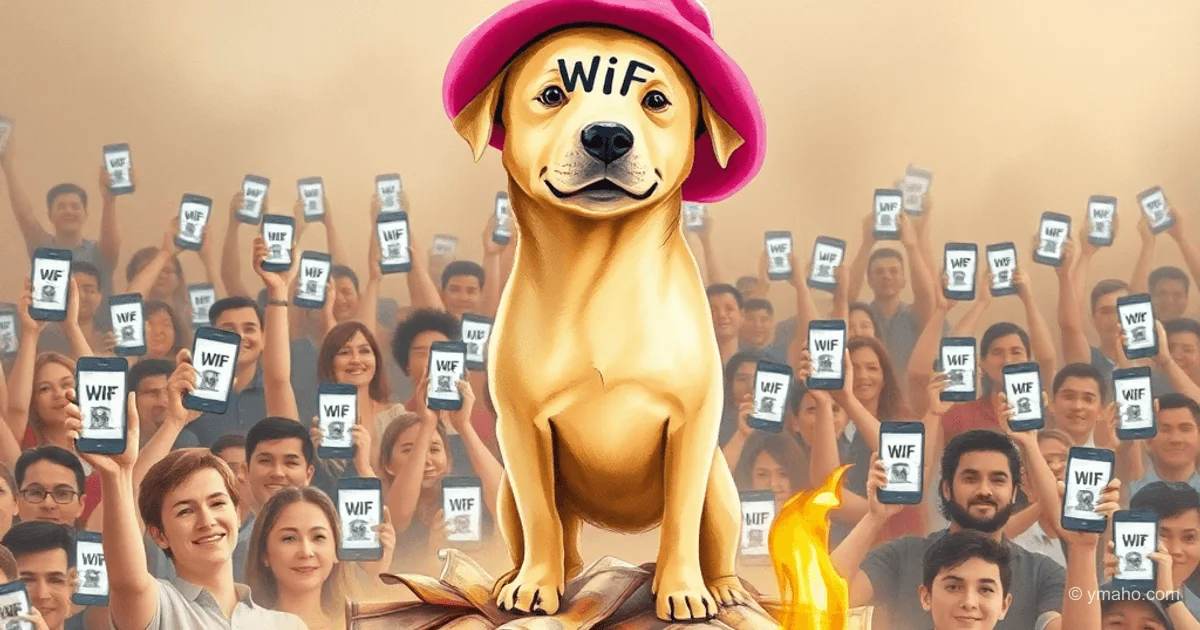
Why a Dog in a Hat? Decoding the Meme Coin Craze
You've probably seen it: a goofy photo of a dog wearing a hat, paired with the word "WIF" and wild price charts. That's dogwifhat, a meme coin that turned an internet joke into a multi-million dollar phenomenon. If you're scratching your head wondering how a silly image became valuable, you're not alone — and it matters because it shows how culture and community can create real economic value in our digital age.
What Exactly Is a Meme Coin?
Meme coins are digital tokens built around internet jokes or viral trends, like the famous "doge" dog. They don't have real-world uses like paying bills or running apps — instead, their value comes from how much people collectively believe in the joke. Think of it like a concert ticket: the paper itself is worthless, but it gets you into the show. For meme coins, the "show" is the community and the buzz.
Dogwifhat (WIF) is a perfect example. It started as a photo of a Shiba Inu wearing a pink hat that went viral online. Unlike Bitcoin or Ethereum, which power complex financial systems, WIF exists purely as a cultural symbol. Its price swings wildly based on social media trends, not technology upgrades.
Here’s what really drives meme coin value:
- Community energy: The more people share memes and chat about it, the "realer" it feels.
- Scarcity: Most meme coins have a fixed supply (like WIF’s 10 billion tokens), creating artificial rarity.
- FOMO: Fear of missing out pulls in new buyers during price surges.
How Does WIF Work on Solana?
WIF lives on the Solana blockchain, which is like a digital ledger that records who owns what. Solana is known for being fast and cheap — imagine sending a text versus mailing a letter. While Bitcoin might take 10 minutes and cost $2 for a transaction, Solana handles it in seconds for pennies. This makes it ideal for meme coins, where people trade constantly.
Technically, WIF is an "SPL Token" — Solana’s equivalent of a standard digital token (similar to how all apps on your phone use the same basic file system). Every time WIF changes hands, Solana updates its ledger. But remember: this tech is just the stage. The real star is the community acting out the meme.
Why Do People Care About a Dog in a Hat?
At its core, WIF is a social experiment. It proves that if enough people agree something has value — even a photo of a dog in a hat — it does have value. This isn’t new; people have traded baseball cards or rare sneakers for decades. But blockchain makes it global and instant.
Meme coins like WIF highlight a shift in how we create value. In the old economy, value came from factories or patents. Today, it can come from a viral tweet. That’s powerful — but also risky. When the joke stops being funny, the value can vanish overnight.
Key takeaways
- Meme coins like WIF are digital tokens built on internet culture, not technology.
- Their value comes from community belief and social media buzz, not real-world utility.
- Solana’s speed makes trading them easy, but the real driver is human psychology.
- They’re high-risk: fun while the trend lasts, but can crash when attention fades.
What does this mean for regular people? Meme coins are a reminder that value is often a shared story — but stories can change fast. If you’re tempted to jump in, remember: never invest in a joke you wouldn’t tell twice. And keep your savings in boring, stable things like cash or stocks, not digital hats on dogs.
— Editorial Team









