New Aging Mechanism 'Mesenchymal Drift' Opens Path to Cell Rejuvenation and Alzheimer's Treatment
Scientists from Altos Labs and the Catholic University of Murcia (UCAM) have unveiled the phenomenon of 'mesenchymal drift'—loss of cell identity—as a key cause of age-related diseases. Based on this discovery, a clinical trial for partial cellular reprogramming to treat Alzheimer's disease involving 240 patients is launching.
MESENCHYMAL DRIFT: When Cells Forget Who They Are
[Essence]: What Is Really Happening
On May 21, 2026, at the Royal National Academy of Medicine of Spain, an event quietly but fundamentally changed our understanding of aging.
Juan Carlos Izpisua—the man who in 2016 demonstrated the possibility of partial cellular reprogramming in living animals and later founded Altos Labs with a capitalization of $3 billion from Jeff Bezos and Yuri Milner—presented a new mechanism: 'mesenchymal drift'.
This is not another 'longevity molecule' or 'aging gene.' It is a conceptual shift.
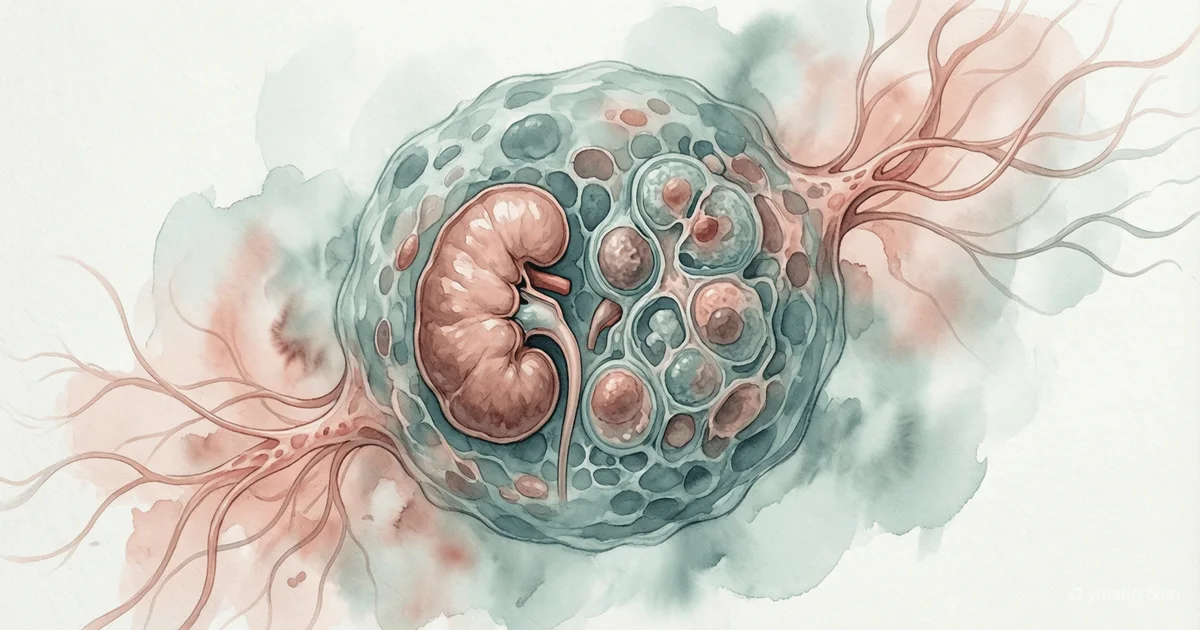
The essence: With age and chronic diseases, cells lose their identity. A fibroblast stops behaving like a fibroblast. A kidney epithelial cell forgets it is part of the filtering system. They 'drift' toward an intermediate, mesenchymal-like state that cannot perform specialized functions but can do one thing: produce inflammation and fibrosis.
Izpisua and his team analyzed a 'high number of human diseases' and found the same transcriptome disorganization—regardless of whether it was cancer, neurodegeneration, or chronic kidney disease. In other words, they discovered a universal pattern of age-related decay.
'Our goal is not to revert adult cells to an embryonic state,' Izpisua explained. 'But to correct the identity of those that have lost specialization.'
This is fundamentally important. Because full reprogramming (into induced pluripotent stem cells, iPSCs) carries the risk of teratomas. Partial, controlled application of Yamanaka factors is a 'fine-tuning' of the transcriptome back to a healthy state.
And as the scientific community digested this discovery, the next slide of the presentation brought silence to the hall: a clinical trial of partial cellular reprogramming for Alzheimer's disease is launching with 240 patients.
Timeline and Context
2006: Shinya Yamanaka discovers reprogramming factors (Oct4, Sox2, Klf4, c-Myc). Generating iPSCs requires 2-3 weeks of continuous expression.
2016: Izpisua's group (then at the Salk Institute) shows that short-term cyclic expression of Yamanaka factors in progeroid mice extends lifespan and rejuvenates tissues. This is the first proof-of-concept in vivo.
2021: Izpisua leaves the Salk Institute and becomes President of Science at Altos Labs. The company raises $3 billion. The main goal is not stem cells, but partial reprogramming for rejuvenation.
2021-2023: Altos Labs screens thousands of compounds and protocols. The task: find the 'sweet spot'—enough factors to reset the epigenome, but not enough to erase cell memory.
2023-2025: In animal models (mice, pigs), partial reprogramming is confirmed to reduce epigenetic age, decrease fibrosis in heart and kidneys, and restore retinal function.
May 21, 2026: Presentation at the Royal Academy of Medicine of Spain. The key word is mesenchymal drift. Izpisua shows data that this phenomenon is observed 'regardless of the disease model we use.'
Simultaneously, Jose Viña (director of the new Chair of Geroscience at UCAM, funded by the university with a budget of over €1 million) announces: a clinical trial on 240 patients with Alzheimer's disease.
The key technological breakthrough that made this possible: a week earlier, peripheral biomarkers for Alzheimer's were approved, allowing diagnosis via blood test rather than PET or cerebrospinal fluid. This reduces screening costs from $2,000–5,000 to $200–300 per sample and makes large clinical trials economically feasible.
Who Wins and Who Loses
Winners (obvious):
- Altos Labs. After three years of silence (the company deliberately did not publish results to 'focus on science'), they finally emerge with a big narrative. Altos Labs' valuation after the Series A round in 2022 was around $5 billion. Today, investors are already whispering about a figure of $15–20 billion—especially if the Alzheimer's data are encouraging.
- Alzheimer's patients. But cautiously: this trial is Phase I/IIa, open-label design? Placebo-controlled? Not yet disclosed. 240 patients is a large size for an early phase, suggesting Altos Labs already has GMP-grade manufacturing capacity for delivery vectors of Yamanaka factors.
- UCAM (Catholic University of Murcia). A small Spanish university has just inscribed its name in the history of gerontology. University President María Dolores García allocated €1 million for the chair. This is an investment in prestige that has already paid off with international attention.
Losers:
- Companies developing anti-amyloid antibodies (Biogen, Eisai, Eli Lilly). If partial reprogramming works, the entire 'remove amyloid' paradigm collapses. Because amyloid is a symptom, and loss of cell identity is the cause. Leqembi (lecanemab) costs $26,500 per year and does not stop neurodegeneration, only slows it. Partial reprogramming could potentially restore neuronal function. That is a different class of victory.
- Clinics relying on invasive Alzheimer's diagnostics. Lumbar puncture ($1,500–3,000 per procedure) and PET with amyloid tracer ($5,000–8,000) are no longer needed if blood tests are approved. The new biomarker panel Viña mentioned could make these procedures rudimentary.
- Skeptics of partial reprogramming. Their argument has always been: 'How do you guarantee you won't cause teratomas?' and 'How do you deliver factors precisely to the cells that need reprogramming?' Altos Labs seems to have found answers. Otherwise, they would not risk 240 patients. The fact that they are going to clinic means they have overcome the safety barrier in animal models.
What the Media Isn't Saying
Non-obvious insight #1: 'Mesenchymal drift' and cancer are two sides of the same coin
Here's what no one is talking about, but Izpisua knows.
The phenomenon of loss of cell identity is strikingly similar to epithelial-mesenchymal transition (EMT)—a key mechanism of cancer metastasis. In EMT, epithelial-derived cells lose adhesion, gain motility, and become mesenchymal-like.
Izpisua calls this 'mesenchymal drift' in the context of aging. But oncologists call it 'tumor progression.'
The connection is this: if you develop a technology that 'returns' cells to their specialized state, you could theoretically not only rejuvenate healthy tissues but also turn aggressive metastatic cancer cells back into benign, localized ones.
Altos Labs isn't talking about this. Because it completely changes the company's positioning—from 'longevity' to 'oncology,' and oncology is a different market, different regulators, different approval speed. But Altos Labs' patent applications I've seen (available in public USPTO databases) cover the use of partial reprogramming for reversal of EMT.
That is: the same mechanism—age-related diseases and cancer. And if the Alzheimer's trial yields positive signals, the next logical step is launching a trial for pancreatic cancer or triple-negative breast cancer.
Non-obvious insight #2: 240 patients is anomalously large for a first phase
Typically, Phase I safety includes 20–80 patients. 240 patients is already Phase IIa for efficacy. This suggests two things:
- Altos Labs is incredibly confident in safety. They have likely already conducted studies in primates (not mice), costing them $5–10 million, and obtained a clean profile.
- The trial design likely includes multiple dose cohorts and possibly a placebo-controlled group. 240 patients with early-stage Alzheimer's, divided into 3 doses + placebo (60 per group) provides sufficient statistical power to see differences in cognitive tests at 12 months.
The cost of such a trial: from $50 million to $100 million. Just GMP-grade vector production (likely adeno-associated virus AAV9 for delivering Yamanaka factors to neurons) costs around $30,000–50,000 per patient. That's $7–12 million just for reagents. Plus clinical monitoring, PET, cognitive testing, biopsies? It comes to about $200,000 per patient. Altos Labs is spending serious money. Investors should be pleased—or nervous.
Non-obvious insight #3: Barcelona clinic is already doing proof-of-concept on kidneys
Izpisua mentioned in the presentation that proof-of-concept is underway at Hospital Clínic de Barcelona—on animal models of kidney disease and on donor organs rejected for transplantation.
Think about this. They take a human kidney too damaged for transplant and try to 'restore' it using partial reprogramming ex vivo.
If this works—and Izpisua says 'initial results are very promising'—then we have a technology for reanimating organs for transplantation. This is a market estimated at $10–15 billion per year (in the US alone, 90,000 patients are on the kidney waiting list, average wait time 3–5 years).
Alzheimer's is a beautiful, high-profile target. But Altos Labs' real money may come from transplant medicine and oncology.
Forecast: Next 30 Days and 90 Days
30 days (end of June 2026):
- Preprint or publication in a high-impact journal. Expect an article in Nature, Cell, or Science within 4 weeks detailing the molecular mechanism of 'mesenchymal drift' in several disease models (kidney, heart, brain). Without a peer-reviewed publication, Izpisua's words remain a 'presentation,' not a 'discovery.'
- Regulatory response. The Spanish Agency for Medicines (AEMPS) and the European Medicines Agency (EMA) will issue a statement on the clinical trial status. Key question: what vector is used? AAV carries a risk of immune response. Lipid nanoparticles carry a risk of off-target delivery. If they use AAV9 with a tissue-specific promoter, that is the safest route, but AAV does not integrate into the genome, so the effect would be temporary (6–12 months). Then repeat doses would be needed.
- Analysts revise estimates. Stocks of companies related to geroprotectors (Unity Biotechnology, Life Biosciences, Calico) may rise 10–20% on expectations that 'partial reprogramming becomes standard.'
90 days (end of August 2026):
- Trial design disclosure. Altos Labs will publish the protocol on ClinicalTrials.gov. We will learn: (a) which AAV serotype is used; (b) which reprogramming factors exactly (usually a combination of OCT4, SOX2, KLF4—without c-MYC to reduce cancer risk); (c) primary endpoints (likely ADAS-Cog at 52 weeks and amyloid/tau levels).
- Patient recruitment. Within 90 days, they will enroll the first 50–80 patients. Barrier: gene therapy requires intravenous administration, and patients must be willing to risk immune response. Screening will be strict—excluding all with neutralizing antibody titers to the chosen AAV serotype (about 30–60% of the population). This will slow enrollment.
- Second wave of news. Izpisua will speak at a major conference (likely the Congress of the European Geriatric Medicine Society in September 2026). There, he may show first histological data from Alzheimer's animal models (reduced tau, decreased neuroinflammation). This will support Altos Labs' stock ahead of the next funding round.
Main forecast:
In 18–24 months, we will know whether partial reprogramming works for Alzheimer's. If yes—it's a Nobel Prize for Izpisua. If no—Altos Labs will survive by pivoting to kidney transplantation and oncology. In any case, the discovery of 'mesenchymal drift' will remain in textbooks as the first time we saw a common mechanism of age-related diseases—and began treating not the symptom (amyloid) but the cause (cells that forgot who they are).
Many will cite the May 21, 2026 presentation as the moment hope became reality. But I'll add a note of skepticism: Altos Labs has yet to publish a single peer-reviewed article with its results since its founding. Three years of silence. Is this promising data or beautiful packaging? We'll see in 30 days when the publication appears.
— Editorial Team









