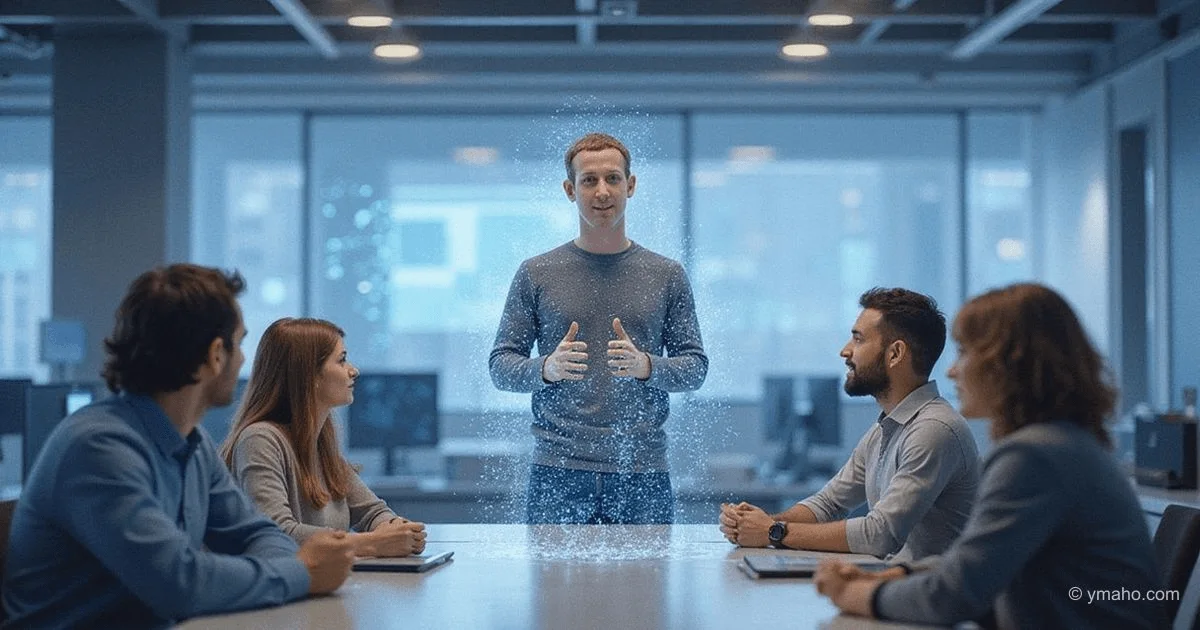
Meta Builds a Digital Zuckerberg: What It Means for the Future of Work Communication
Meta is developing an artificial intelligence that speaks and acts like Mark Zuckerberg—but not for the public. Instead, it’s designed for internal use by company employees. This isn’t just another voice assistant. It’s a photorealistic 3D character capable of holding conversations, offering feedback, and explaining company strategy as if the founder were standing right in front of you.
Why does this matter? Because if the technology works, it could transform how millions interact with leadership—especially when bosses are physically unreachable. Imagine asking your project manager a question, only to get a response from their "digital twin," trained on every past statement, decision, and mannerism.
How the 'Zuckerberg AI' Works
This AI persona learns not only from public interviews or posts but also from internal recordings, strategic notes, and even speech patterns. It replicates not just words, but thought style. According to sources, Zuckerberg himself spends up to 10 hours per week programming and testing these systems—he’s personally involved in their development.
These digital avatars are part of Meta’s broader push to launch AI assistants with distinct personalities. The company previously introduced chatbots mimicking celebrities like Snoop Dogg. But now, the goal has shifted: not entertainment, but a practical tool for corporate communication.
Why Now?
The idea emerged after the success of Character.ai—a platform where users chat with AI versions of historical figures, fictional characters, and real people. It’s especially popular among teens and young adults, who find emotional support or engaging conversation through these interactions.
Meta decided to apply the same concept internally. If employees struggle to reach the CEO, why not let them talk to his digital copy? This could speed up decision-making, reduce bureaucracy, and strengthen company culture.
But risks remain:
- Trust erosion: If the AI says something inaccurate or contradictory, it could damage the credibility of the real leader.
- Ethical dilemmas: Who’s responsible for the digital twin’s words—the person or the algorithm?
- Privacy concerns: What internal data is used to train the model, and who has access to it?
Key Takeaways
- Meta is building a digital version of Mark Zuckerberg for internal employee use.
- The character is trained on both public and private materials, including tone and thinking style.
- The technology aims to improve workplace communication, not entertain.
- The project was inspired by Character.ai’s popularity with younger users.
- Serious ethical and legal questions arise around accountability boundaries.
What This Means for You
Even if you don’t work at Meta, this tech may soon affect you. Picture your bank manager, online school teacher, or telehealth doctor being an AI trained on real people. Communication becomes faster and more accessible—but demands new rules: Who’s liable for errors? How do you tell human from digital clone? And most importantly—do we really want machines speaking for us?
While such systems are still being tested within major corporations, widespread adoption is just a matter of time. Along with it comes the urgent need to rethink what ‘personal communication’ truly means in the digital age.
— Editorial Team









