Nature: Study Links Microbiome 'Rejuvenation' to Cognitive Function Restoration
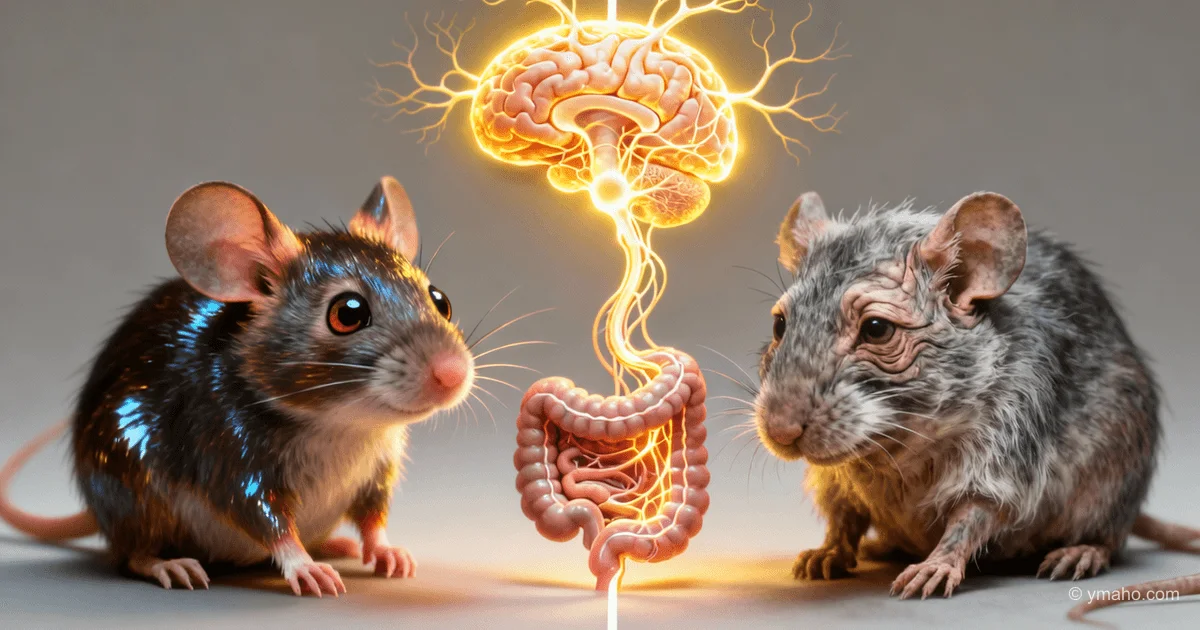
Following up on the Stanford discovery, it has been established that transplanting a young microbiome into old mice blocks the GPR84 inflammatory cascade and restores hippocampal neuron activation, confirming the regulated, rather than inevitable, nature of age-related cognitive decline.
Microbiome Youth and Memory: Why Transplanting 'Young' Bacteria Is Not Magic, but Reproducible Biology
When Christoph Thaiss and his colleagues from Stanford and the Arc Institute published a paper in Nature on March 11, 2026, headlines jumped in the usual rhythm: 'Scientists reverse memory loss through the gut.' But over the past two months, it has become clear that this work is not just a flashy experiment with mice, but a systematic dissection of a cascade that can be blocked in at least three different ways. And the most conceptually elegant of these—transplanting a young microbiome—is actually the most challenging for clinical translation. A paradox that the media largely missed.
The Core: What Is Actually Happening
Formally, the study describes how transplanting fecal microbiota from young mice (2 months) into old mice (18 months) blocks the GPR84 inflammatory cascade, restores signal transmission along the vagus nerve, and returns hippocampal activation to levels seen in young animals. But the real story is more complex. Transplanting a young microbiome is not a standalone discovery, but a logical extension of the central finding: cognitive aging is actively modulated from the periphery, not hardwired in the brain.
Thaiss put it in a crisp phrase: 'The timeline of memory decline is not hardwired; it's actively modulated in the body, and the gastrointestinal tract is a critical regulator of this process.' Transplanting a young microbiome is just one tool confirming this thesis. But it became the most viral in popular retellings because it promises 'rejuvenation from within' without drugs.
The mechanism underlying the effect: the aging microbiome accumulates bacteria that produce medium-chain fatty acids, primarily Parabacteroides goldsteinii. These metabolites activate the GPR84 receptor on myeloid immune cells in the gut wall, triggering local inflammation. Pro-inflammatory cytokines, especially IL-1β, suppress the function of afferent vagus nerve fibers (specifically, the PHOX2B+ TRPV1+ neuron population). Weakened interoceptive signals fail to reach the hippocampus, and neurons in CA1, CA3, and the dentate gyrus lose the ability to activate in response to new stimuli. Transplanting a young microbiome breaks this cascade at the very beginning—at the level of bacterial composition.
Timeline and Context
The story began with a simple, almost mundane experiment: young two-month-old mice were housed in the same cage as old 18-month-old mice. After a month of coprological cohabitation, the young animals began to fail tests for novel object recognition and spatial memory—their cognitive performance matched that of their old cage mates.
Then came a series of control experiments excluding alternative explanations. Young mice raised in sterile conditions without a microbiome showed no age-related memory decline even at 18 months. Transplanting fecal microbiota from old donors into young germ-free recipients reproduced the cognitive deficit. Broad-spectrum antibiotics that eliminated the gut microbiota fully restored memory in young mice that had 'aged' from cohabitation with old mice.
Next, the team narrowed the search to a specific bacterium. Among 1,133 species whose abundance changed with age, Parabacteroides goldsteinii was the strongest correlate of cognitive decline. Mono-colonization of young mice with this species alone caused memory deficits and reduced neuronal activation in the hippocampus.
Key timeline:
- March 11, 2026: Publication of the paper in Nature
- April 2026: First wave of scientific commentary and summaries
- May 2026: Emergence of analysis on overlap with existing FDA-approved vagus nerve stimulation devices
- June 2026 (planned): Presentation at FASEB SRC on NAD+ and neuro-immune interactions in Florida
Who Wins and Who Loses
The concept of 'regulated aging' wins. Thaiss's study is part of a growing body of evidence that cognitive decline is not an inevitable consequence of neuronal wear and tear, but an actively modulated process. This is a tectonic shift for all of neurobiology of aging, comparable to the discovery of adult neurogenesis in the 1990s.
The therapeutic vagus nerve stimulation industry wins. Manufacturers of implantable devices (LivaNova, FDA-approved for epilepsy since 1997 and depression since 2005) and non-invasive stimulators (gammaCore, approved for migraine since 2017) gain strong scientific justification for expanding indications to cognitive aging.
Developers of GPR84 inhibitors win. The molecule PBI-4050 has been shown to restore memory in old mice by blocking the receptor targeted by bacterial metabolites.
Manufacturers of GLP-1 agonists (Novo Nordisk, Eli Lilly) win. The study showed that liraglutide and CCK restore memory in old mice through activation of vagal afferents. This opens an additional indication for a drug class already dominating the diabetes and obesity market.
The concept of neurocentrism in gerontology loses. The model 'brain aging is a brain problem' loses its monopoly. If the gut controls the hippocampus through an inflammatory cascade, research budgets should shift toward peripheral targets.
FMT enthusiasm in its current form loses. Transplanting whole fecal microbiota from young donors to elderly people is an idea that will inevitably arise among biohackers after such news. But the FDA considers FMT a biological product with high regulatory oversight, and the risks of transferring pathogens or unwanted bacterial metabolites with untested transplantation are very real.
What the Media Are Not Saying
First non-obvious insight: transplanting a young microbiome is the weakest link from a translational perspective. In the study, FMT transplantation demonstrated that the microbiome is causally linked to cognitive decline—this is the gold standard of evidence in microbiome science. But as a therapy, FMT is the least promising: fecal transplant is a complex, variable, difficult-to-standardize product, unacceptable to regulators for cosmetic anti-aging use. Much closer to the clinic are phage therapy against P. goldsteinii, GPR84 inhibitors, and pharmacological vagus stimulation. The media emphasize 'microbiome rejuvenation' precisely because of its conceptual appeal, not its therapeutic promise.
Second non-obvious insight: the DBA/2J mouse line is naturally protected from cognitive decline due to a GPR84 mutation. These animals have a defective GPR84 receptor and do not lose memory with age or upon colonization with P. goldsteinii. If similar GPR84 polymorphisms exist in humans, we would have a genetically stratifiable population: who needs intervention and who does not. This changes the economics of future clinical trials, allowing enrollment of patients most likely to respond.
Third non-obvious point: the study was funded in part by Calico Life Sciences, the biotech arm of Alphabet (Google), focusing on aging. This means that a corporation with a market cap of over $2 trillion is systematically mapping aging mechanisms, and this publication is not an isolated academic discovery but part of a long-term strategy.
Fourth non-obvious point: 'interoceptive dysfunction' is a new term Thaiss introduces into scientific discourse. It is not just a catchy neologism. It describes the loss of the brain's ability to perceive signals from internal organs as one of the fundamental mechanisms of aging, alongside exteroceptive loss (vision, hearing). If this framework takes hold, it will create an entire class of 'interoceptomimetics'—drugs that mimic healthy interoceptive signaling.
Fifth non-obvious point: the effect is not limited to the hippocampus. The study showed reduced neuronal activation in several brain regions, including the nucleus of the solitary tract, somatosensory cortex, and entorhinal cortex. This hints that microbiome-dependent interoceptive dysfunction may affect not only memory but a broader range of cognitive functions.
Forecast: Next 30 Days
Second half of May 2026. At least one major review or commentary is expected in Nature Reviews Neuroscience, detailing the concept of interoceptive dysfunction and its implications for treating neurodegenerative diseases.
June 2026. FASEB SRC conference in Florida. The convergence of Thaiss's group data with parallel studies on the NAD+/hypothalamus axis by Imai's group (Cell Metabolism, May 7, 2026) could be the hottest scientific discussion of the summer. Two leading groups have simultaneously shown that peripheral signals regulate the rate of brain aging—one through the gut and vagus, the other through adipose tissue and the sympathetic nervous system.
Mid-June 2026. Manufacturers of vagus nerve stimulation devices (electroCore, LivaNova, Parasym) will hold meetings with scientific advisors to design pilot studies for age-associated cognitive decline. At least one company is expected to announce plans for a clinical trial by the end of 2026.
Forecast: Next 90 Days
July 2026. Publication of first data on the correlation of P. goldsteinii with cognitive status in humans. A human cohort study is already underway, and preliminary results may be presented at closed scientific meetings.
August 2026. The FDA will release updated guidance on endpoints for clinical trials of cognitive aging therapies. Thaiss's discovery created a precedent for a 'mechanistically justified peripheral target,' and regulators will need to determine how to validate interoceptive biomarkers.
September 2026. The first independent meta-analysis of existing studies linking microbiome and cognitive function in humans will be presented at the CTAD (Clinical Trials on Alzheimer's Disease) conference. The analysis is expected to confirm the role of bacterial-derived inflammatory metabolites as an independent risk factor.
End of Q3 – beginning of Q4 2026. One of the major pharmaceutical companies (Novo Nordisk or Eli Lilly) may announce an expansion of clinical trial programs for GLP-1 agonists to patients with mild cognitive impairment. Thaiss's data on liraglutide provide them with a strong preclinical argument.
Strategic conclusion: the Nature publication on young microbiome transplantation is not so much a ready-made therapeutic solution as proof of a rule. The rule is formulated as follows: cognitive aging is actively regulated from the periphery, and the entry points for intervention—the microbiome, the GPR84 inflammatory cascade, and the vagus nerve—are accessible for modulation right now. Microbiome transplantation is the most conceptually pure but least practical approach; phage therapy and GPR84 inhibitors are more complex to develop but more realistic; vagus nerve stimulation is the fastest path because the equipment is already FDA-approved for other indications. It is this third path, not the hyped 'microbiome rejuvenation,' that is most likely to enter clinical practice first.
Monetary estimate: the global market for cognitive aging therapy in 2026 is estimated by analysts at $12-15 billion. The segment of vagus nerve stimulation devices, currently about $800 million, could potentially double within five years if indications expand to cognitive impairment. GPR84 inhibitors and targeted antimicrobial therapy are early-stage markets whose combined potential is not yet precisely quantifiable but could reach several billion dollars with successful clinical translation.
— Editorial Team









