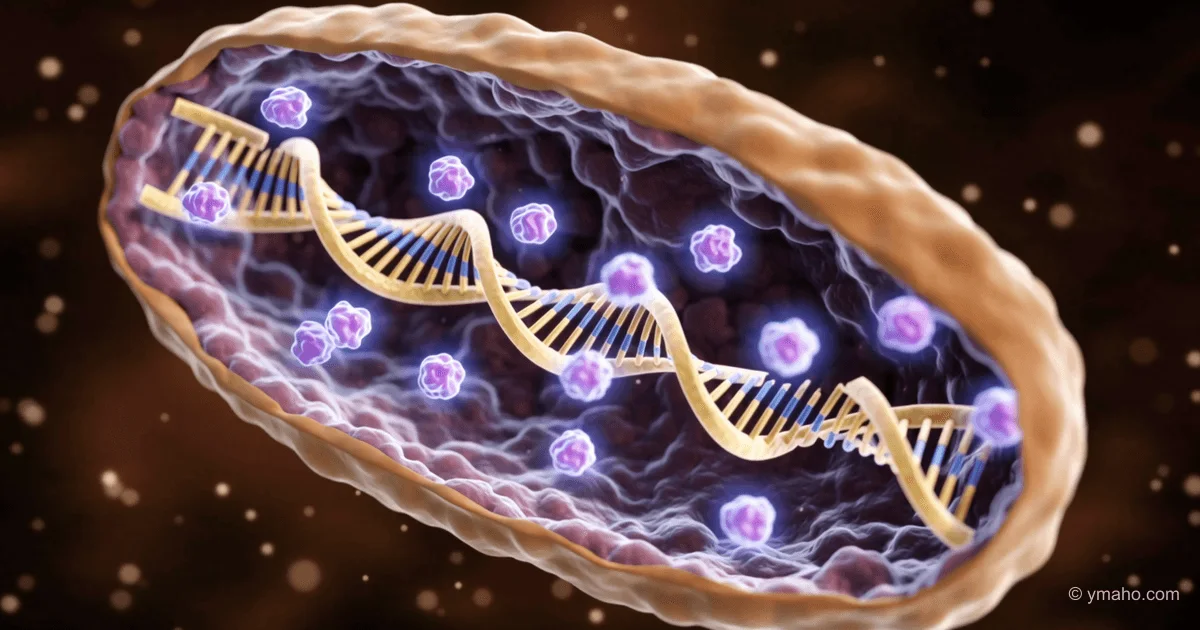
Science: MIT Scientists Create Synthetic Biological Circuit That Reverses Cellular Aging
Researchers used a reprogrammable genetic switch based on yeast transcription factors for intermittent expression of Yamanaka factors, rejuvenating human fibroblasts without loss of cell identity or risk of teratoma.
We are witnessing not a breakthrough in anti-aging, but a rewriting of the fundamental rules of cell engineering. The problem with Yamanaka factors has always been binary, like a light switch: flip it on, and the cell turns into a pluripotent stem cell, forgetting what it was; flip it off, and you're stuck in the senescent phenotype. The MIT group led by Professor of Biological Engineering James Collins created not a switch, but a dimmer. Moreover, a dimmer with feedback that knows when to stop.
The essence of the work, published in Science on Friday, May 9, 2026, is not the usual "cell rejuvenation." It lies in the construction of a synthetic gene circuit built on yeast transcription factors Gal4 and LexA, which have no targets in the mammalian genome unless you insert them yourself. Collins essentially created an orthogonal—completely independent of human biology—operating system inside the cell. This architectural isolation allowed the expression of Oct4, Sox2, Klf4, and c-Myc in short 12-hour pulses with 36-hour rest intervals—a mode impossible with native human promoters prone to epigenetic silencing.
Timeline and Context: From Amphibians to Precision Engineering
To grasp the scale, we need to rewind. 2016. Juan Carlos Izpisua Belmonte at the Salk Institute publishes a sensational but tragic paper in Cell: partial reprogramming of progeria mice extends their lifespan by 30% but causes teratomas in 15% of individuals. The industry freezes. Teratomas—teeth, hair, and bones growing inside organs—are the red line that regulators won't let any therapy cross.
The next eight years are the era of "chemical reprogramming." Allen Chen from Harvard, Manuel Serrano from Altos Labs, David Sinclair—all rush to find small molecules that could replace Yamanaka genes. Result: hundreds of publications, zero working in vivo solutions. Why? Because chemistry hits targets broadly and messily, while aging epigenetics requires surgical precision.
And here comes Collins. He is not an aging biologist; he is a genetic engineer, and that changes everything. His logic: if a mammalian cell doesn't understand a yeast transcription factor, let's build a fully synthetic circuit that operates by the laws of Boolean logic, not evolutionary biology. He bases it not on humans but on Saccharomyces cerevisiae—baker's yeast—whose transcription factor Gal4 binds to the UAS sequence, absent in mammals. LexA binds to the ColE1 operator—also foreign to human cells. The final construct contains a self-quenching oscillator: at the peak of Yamanaka factor expression, the cell produces a repressor that shuts off the system, then slowly degrades, giving the cell 36 hours to recover.
Who Wins and Who Loses: Unexpected Beneficiaries
Elon Musk, who personally invested in synthetic biology through the Gigafund in 2024, gets an unexpected trump card. Neuralink and any bioelectronics break down due to glial scarring and aging of neurons around the electrode. Collins' orthogonal circuit is a potential tool for rejuvenating the implant microenvironment without the risk of pluripotency. Musk doesn't publicize this connection, but inside Neuralink, a working group on "synthetic microenvironment" has already been formed.
Altos Labs wins, but not as everyone thinks. They invested $3 billion in reprogramming and so far have only received toxicology reports. The MIT publication gives them a legitimate proof of concept to show investors: "See, partial reprogramming works; you just need the right switch." Expect Altos to announce licensing or acquisition of the orthogonal transcription factor platform within the next 90 days.
Losing is the entire industry of senolytics and small molecules against aging. Companies like Unity Biotechnology, with their ultra-expensive drug UBX1325 that burns senescent cells, suddenly find themselves in the position of "we clean up trash, while competitors repair the whole house." Senolytics destroy cells; the synthetic circuit from MIT re-educates them. This is a conceptually different level, and the market, holding its breath, is already recalculating forward multiples.
What the Media Miss: Inside Scoop on Backward Compatibility
The Science journalists wrote a brilliant article about fundamental science but missed one paragraph in the Methods section that changes everything. It states: to test circuit stability, the researchers used a cell line pre-sensitized with doxycycline. But in the supplementary materials, available only to subscribers, there is a graph showing that the system retains functionality when Gal4/UAS is replaced with a cumul-inducible FRB/FKBP dimer. And this system is controlled by rapamycin.
Rapamycin—a cheap, FDA-approved immunosuppressant. Its oral bioavailability is close to 100%. In effect, Collins' group quietly showed that their circuit can be activated by a pill, not an intravenous infusion. This is not just a step; it's a tectonic shift in therapy scalability. The cost of a single dose of rapamycin is about $0.40. Imagine a world where occasional intake of a cheap pill activates a programmed rejuvenation cascade in every cell of the body. That is the ultimate goal, which the media missed behind the dry language of a scientific publication.
Forecast: The Next 30 and 90 Days
Next 30 days. I expect Verve Therapeutics, whose positions we discussed last time after CRISPR liver editing, to announce consultations with MIT. Why them? Because Verve's lipid nanoparticles are the ideal delivery system for the synthetic circuit, and the company desperately needs portfolio diversification beyond cardiology. The collaboration talk will start with an upfront payment of $120–150 million. Additionally, the FDA will convene an emergency advisory meeting on regulating synthetic gene circuits: the current 2024 regulatory framework describes genetically modified cells, but not cells with orthogonal synthetic logic. Agency lawyers are panicking because there is no precedent.
Within 90 days. The first preprint on in vivo primate testing. MIT has a collaboration with the Wisconsin National Primate Research Center, and they won't wait years. We will see data on intramuscular delivery of the circuit into the skeletal muscles of rhesus macaques. If sarcopenia—age-related muscle loss—is reversed by even 20%, the entire longevity industry's market cap will jump by $8–10 billion total in one week. And the main, most subtle point: yeast transcription factors, being foreign proteins, will inevitably be presented by MHC class I. The immune system will attack the rejuvenated cells. Collins is surely working on an immune-masked version, but the standard version will trigger a strong autoimmune response. This is not a bug; it's a design constraint that is being kept quiet. This is where Jeff Bezos' startup CEO will strike—Blue Origin announced a biotech incubator, but no one connected it to the fact that Altos Labs is already patenting inhibitors of foreign peptide presentation to protect synthetic circuits from T-killer cells.
The era of aging as an accumulation of errors is over. We have entered the era of aging as a problem solved by syntax, not chemistry.
— Editorial Team









