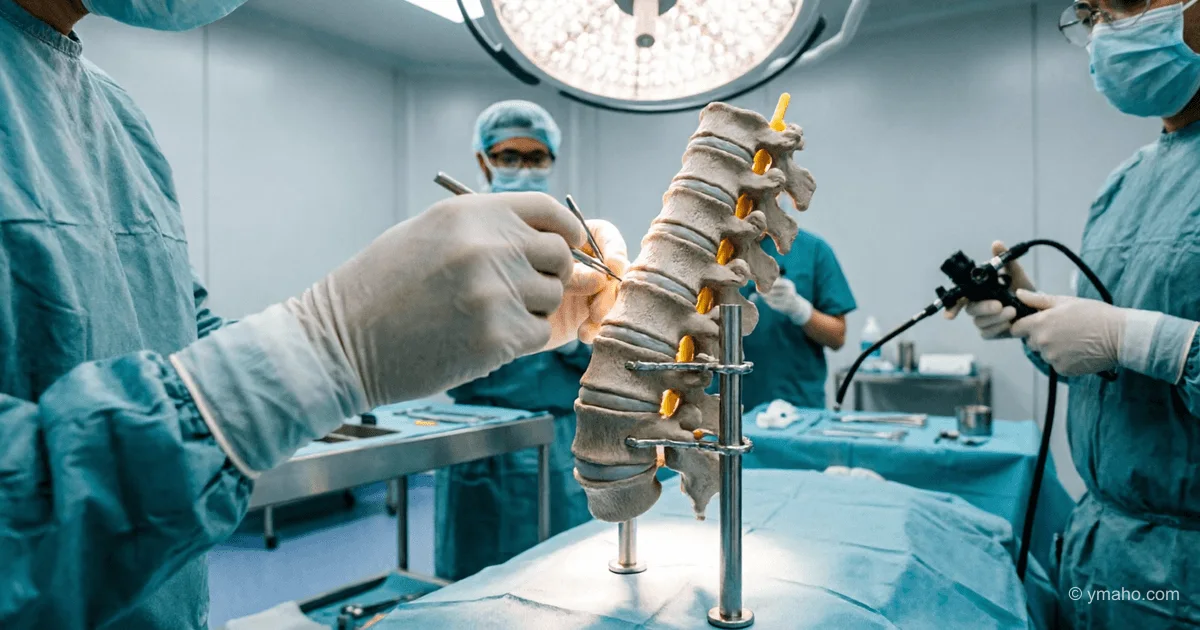
Breakthrough in Spinal Deformity Treatment: Indian Surgeons Develop Life-Saving Technique
Specialists at the All India Institute of Medical Sciences (AIIMS) have modified the highly complex spinal surgery known as posterior vertebral column resection. The new technique enhances stability during the procedure, reducing the risk of complications for patients with severe pathologies previously considered inoperable.
Breakthrough in Spinal Deformity Treatment: How the AIIMS Technique Is Changing Patients' Lives
Introduction
In early May 2026, the All India Institute of Medical Sciences (AIIMS) in New Delhi announced the development of a modified surgical technique for treating severe spinal deformities—a breakthrough experts are calling a major advance in spinal surgery. Behind this announcement lie seven years of clinical practice, international publications, and, more importantly, dozens of patients who have regained the ability to walk, breathe, and live without pain. The technique, developed by Professor Bhavuk Garg and his team in the Department of Orthopedics, does not merely refine an existing operation—it reshapes the very notion of which cases are considered operable.
Event Details and Timeline
At the core of the development is posterior vertebral column resection (PVCR), one of the most complex operations in spinal surgery. In classic PVCR, the surgeon completely removes a vertebral segment, creating temporary spinal instability and posing a risk of neurological complications. The AIIMS modification fundamentally changes the sequence of steps: the posterior spinal elements are preserved until later stages of the operation, maintaining stability during correction and potentially reducing complications.
The technique was first described in an international scientific publication in 2020, but its clinical application began earlier—over seven years, Garg's team accumulated experience and refined the protocol. By May 2026, sufficient data had been gathered for AIIMS to make an official announcement, and the technique has drawn attention from spinal surgeons in the US, China, and other countries.
The key difference of the method lies not in a radical change of instruments, but in a rethinking of surgical strategy. By preserving part of the bone and ligament structures in the early stages of resection, the surgeon gains an "anchor"—a temporary point of support that prevents pathological spinal mobility at the most critical moment of the operation. This is especially important in extreme deformities, where the spinal cord is already under tension and any uncontrolled displacement risks paralysis.
Professor Garg personally comments on the evolution of the approach: decisive factors included not only technical improvements but also accumulated clinical experience, which allowed better planning of the intervention, risk prediction, and perioperative patient management.
Impact and Significance
The significance of the AIIMS development extends far beyond a single clinic. First, the threshold of operability is changing. Patients who were previously denied surgical treatment due to excessive risks now have a real chance. These are individuals with extreme spinal curvatures who literally cannot stand upright, experience breathing difficulties, and suffer chronic pain.
Second, the social impact. AIIMS emphasizes that patients who previously could not walk, sit, or participate in daily life are now returning to school, work, and family life. For them, a straightened spine means not only relief from physical pain but also restoration of dignity and social integration. Patients' families describe the transformation as "life-changing."
Third, international recognition. The fact that a technique developed at an Indian public institute is attracting attention from surgeons in the US and China strengthens India's position in advanced orthopedic and spinal care. This is important for the global distribution of medical expertise: until recently, innovations in spinal surgery were primarily associated with American and European centers. AIIMS demonstrates that breakthroughs are possible in public hospitals in developing countries as well.
From a purely medical standpoint, the value of the method lies in reducing the rate of neurological and life-threatening complications. If previously PVCR instilled fear even in experienced surgeons—"these operations were feared due to the possibility of serious neurological and life-threatening complications," says a senior orthopedist at AIIMS—now risks have decreased and outcomes have improved.
Reactions of Key Players
Reactions to the AIIMS development span several circles of the professional community. Within India itself, the institute issued an official statement widely covered by national media—from the state news agency News On AIR and DD News to leading publications India Today and The Tribune. This unusually broad coverage of a surgical technique underscores its significance for national healthcare.
Internationally, Garg's technique has already been recognized. Surgeons from the US and China cite his 2020 publication as a significant achievement in orthopedic and spinal care. This fact is particularly notable because international recognition of a surgical technique often takes a decade or more—here, the process accelerated thanks to publication in a peer-reviewed journal and seven years of clinical validation of efficacy.
The patient community responds through individual stories. AIIMS provides examples of patients who could not perform simple actions—walk, sit, breathe normally—and are now returning to normal life. Families describe the result as "life-changing"—a term rarely applied in spinal deformity surgery to anything other than radical straightening of the spine in growing children.
The medical community uses cautious language: "with improved technique and experience, outcomes have improved remarkably," reflecting both recognition of the achievement and an understanding that long-term comparative data still need to be accumulated.
Forecast and Conclusions
The AIIMS development sets several directions for the evolution of spinal surgery. First—further evolution of PVCR. Garg's modification is likely to become not an endpoint but a platform for new improvements: other centers will adapt the technique to their conditions, accumulate data, and possibly propose their own modifications.
Second—expansion of geographic application. The technique is already being implemented outside India, and it is logical to expect its spread in countries with a high burden of severe spinal deformities—Southeast Asia, Africa, Latin America. For public hospitals with limited budgets, it is especially valuable that the technique does not require fundamentally new equipment—it is a modification of the surgical protocol, not a hardware innovation.
Third—impact on surgeon training. If previously PVCR was considered an operation accessible only to a few highly specialized centers, reducing risks through protocol modification may make it more reproducible. This does not mean the operation will become "simple," but the entry threshold for young spinal surgeons may lower.
Fourth—implications for other fields. The idea of preserving key structures until later stages of surgery to maintain stability is not unique to the spine. Similar principles could be applied in oncologic orthopedics (tumor resections while preserving supporting structures) and in pelvic traumatology, where temporary instability carries maximum risks.
Open questions remain. The 2020 publication describes the technique, but long-term comparative studies—for example, a randomized comparison of modified versus classic PVCR—are still lacking. Seven years of clinical use and positive feedback are impressive, but full validation through the lens of evidence-based medicine will require multicenter data with independent outcome assessment.
In the final analysis: the news from AIIMS is not just an announcement of yet another surgical modification. It is a story of how rethinking the sequence of steps in a highly complex operation can transform it from a "death sentence" into a real chance for a normal life. For a patient with a curved spine who for years cannot stand upright or breathe deeply, the difference between "surgery impossible" and "surgery successful" is measured not in surgical scale scores, but in the ability to leave home without fear and pain. That is what Professor Bhavuk Garg's team has done—and that is why their work deserves attention far beyond the operating rooms of AIIMS.
— Editorial Team









