Monetary vs Fiscal Policy: Key Differences Explained
Monetary vs Fiscal Policy: Key Differences Explained
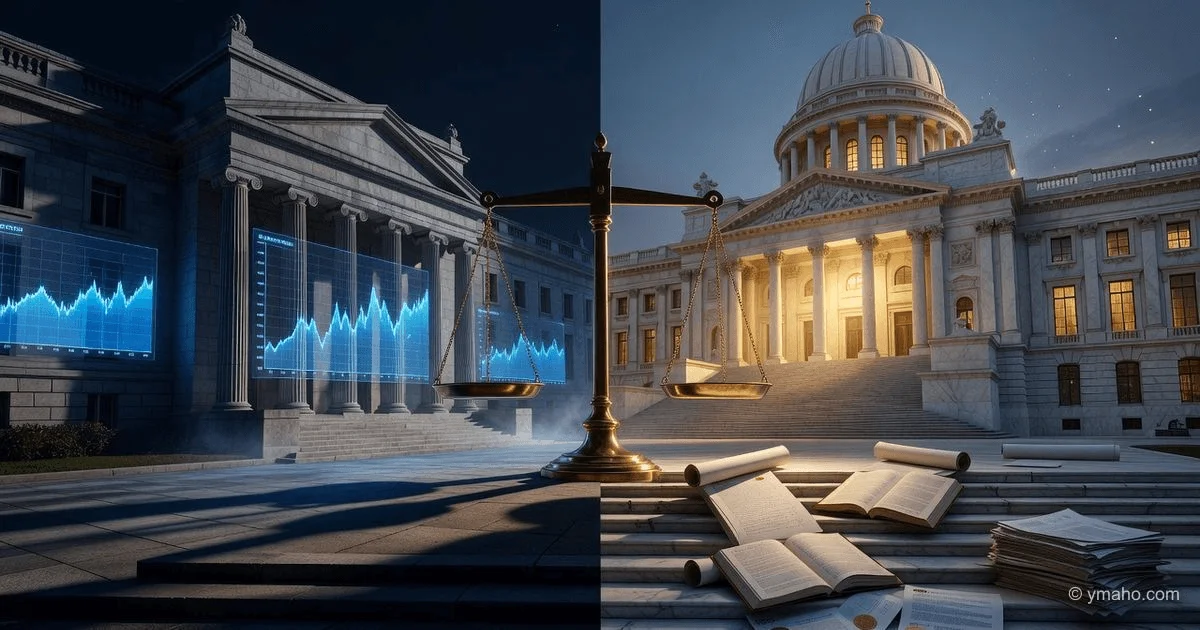
Understanding the tools that shape a nation's economic trajectory is essential for investors, business owners, and policymakers alike. Two of the most powerful forces at work are monetary policy, typically managed by a central bank, and fiscal policy, which is determined by a national government . The core monetary policy vs fiscal policy difference lies in who implements them and how they work: one controls the money supply and interest rates, while the other adjusts government spending and taxation.
What You'll Learn
By the end of this guide, you will clearly understand the monetary policy vs fiscal policy difference, including their unique tools, timelines, and impacts on the economy. You'll be able to identify how each policy is used to combat inflation or stimulate growth and grasp why their coordination is vital for economic stability. The single most important takeaway is that monetary policy is a blunt, fast-acting tool for managing inflation, while fiscal policy is a targeted, slower lever for addressing specific economic needs and distributional concerns.
At a Glance
The following table provides a rapid comparison of the key characteristics that define the monetary policy vs fiscal policy difference.
| Criterion | Monetary Policy | Fiscal Policy |
|---|---|---|
| Authority | Central bank (e.g., Federal Reserve, ECB) | National government (e.g., Congress and the Administration in the U.S.) |
| Primary Tools | Interest rates, reserve requirements, open market operations | Government spending, taxation, and borrowing |
| Main Objective | Price stability, maximum employment, and moderate long-term interest rates | Influence economic growth, redistribute income, and manage public resources |
| Decision Speed | Can be decided and implemented relatively quickly. The FOMC meets eight times per year . | Subject to a slow legislative process (for discretionary policy) . |
| Impact Lag | Transmission to the economy is slow, taking between three quarters and two years . | Impact can be faster, especially for direct spending, though tax changes can take several quarters . |
| Targeting | A blunt instrument affecting the economy as a whole . | Can be more targeted, affecting specific sectors or population groups . |
| Political Influence | Typically independent from short-term political pressures to maintain credibility . | Highly political, as it involves direct decisions on spending and taxes . |
| Impact on Debt | Indirectly affects debt through interest rates and its influence on economic activity . | Directly affects the government's primary balance and accumulates public debt . |
Monetary Policy Deep Dive
Monetary policy is the process by which a country's central bank, such as the Federal Reserve in the U.S., manages the money supply and interest rates. Its goal is to achieve macroeconomic objectives like price stability, full employment, and stable economic growth . The Federal Reserve, for instance, operates under a "dual mandate" from Congress to promote maximum employment and stable prices .
To implement monetary policy, central banks use several key tools:
- Interest Rates: By raising or lowering the benchmark interest rate (like the federal funds rate), the central bank influences borrowing costs throughout the economy. Lower rates encourage spending and investment, while higher rates cool down an overheated economy .
- Open Market Operations: This involves buying and selling government securities. Purchasing securities injects money into the banking system, lowering interest rates and encouraging lending. Selling securities does the opposite .
- Reserve Requirements: The central bank can change the amount of funds banks are required to hold in reserve. Lower requirements free up money for lending, while higher requirements restrict it .
Monetary policy's main strength is its independence and speed of decision-making. The Federal Open Market Committee (FOMC) can meet and adjust policy without needing approval from the executive or legislative branches . However, it is a "blunt instrument"—it affects the entire economy and cannot easily target specific sectors . For example, during the 2008 financial crisis, the Fed implemented expansionary monetary policy through large-scale asset purchases (quantitative easing) to provide liquidity and lower long-term interest rates . More recently, during the COVID-19 pandemic, the Fed cut rates and deployed credit facilities to stabilize financial markets . As a rule of thumb, monetary policy primarily affects the rate of inflation over the long run, with its impact on employment and output being more temporary .
Quasi-Fiscal Policy: A New Hybrid Tool
During crises like the COVID-19 pandemic, central banks have deployed "quasi-fiscal" tools—programs that blur the line between monetary and fiscal policy. These include credit facilities and liquidity programs that act as stabilizers more quickly than conventional tools but can also exacerbate inequality. Research on the Fed's pandemic-era interventions shows that while these measures generated faster and stronger effects on consumption and employment compared to interest rate cuts, they also led to increased consumption inequality as wealthier counties benefited more . This evolution raises important questions about central bank accountability and the long-term implications of such policies .
Fiscal Policy Deep Dive
Fiscal policy refers to the use of government spending, taxation, and borrowing to influence the economy. It is determined by a nation's legislative and executive branches . The core idea is that a government can stimulate a sluggish economy by increasing spending, cutting taxes, or both. Conversely, it can cool down an overheated economy by reducing spending or increasing taxes .
The tools of fiscal policy are straightforward:
- Government Spending: Direct spending on goods and services (e.g., infrastructure, defense, education) provides a direct injection of demand into the economy .
- Taxation: Tax cuts leave more money in the hands of consumers and businesses, stimulating spending and investment. Conversely, tax increases can dampen economic activity by reducing disposable income .
A key strength of fiscal policy is its ability to be targeted. A government can choose to spend money on a specific industry or provide tax relief to a particular income group . For instance, a government battling a recession might invest in infrastructure projects to create jobs directly. However, a major weakness is the slow legislative process. Discretionary fiscal changes, like new spending bills or tax laws, can take months or even years to be debated and passed . The lag between a change in fiscal policy and its effect on the economy is generally shorter than for monetary policy, especially for spending changes that impact the economy directly . The financial crisis response from 2007-2009 saw a massive, multi-pronged fiscal response, including the Economic Stimulus Act and other programs, designed to pump billions into the economy and prevent a complete collapse .
It's also worth noting that fiscal policy directly influences a country's debt level. Persistent fiscal expansion, without corresponding economic growth, can raise concerns about debt sustainability and potentially lead to tensions with monetary policy, a dynamic highlighted by recent IMF research . The paper introduces the "fiscal-monetary gap"—the difference between the interest rate needed to stabilize debt and the central bank's policy rate—as a proxy for these tensions. Current estimates indicate these tensions are at historic highs .
Cost & Accessibility
Understanding the monetary policy vs fiscal policy difference also involves recognizing their distinct "costs" and accessibility to policymakers. The following table outlines these differences.
| Aspect | Monetary Policy | Fiscal Policy |
|---|---|---|
| Primary Cost | Risk of inflation if policy is too accommodative. | Risk of unsustainable public debt and deficits . |
| Implementation | Central bank decisions, independent of political approval. | Legislative process, subject to political debate and negotiation . |
| Speed of Implementation | Fast; can be changed at scheduled meetings or in emergencies. | Slow; subject to the legislative calendar and political compromise . |
| Accessibility | A central bank tool, less subject to direct public influence. | A government tool, often at the center of public and political discourse. |
How to Decide
When evaluating whether a policy action is monetary or fiscal, consider this framework:
- Identify the Actor: Who is making the decision? Is it a central bank official (like the Fed Chair) or a government official (like the President or a member of Congress)? If it's the central bank, it's monetary policy .
- Identify the Tool: What is the specific action being taken? Is it a change in an interest rate or the purchase of securities? If so, it's monetary policy . Is it a new spending bill, a tax cut, or a change to a government program? Then it's fiscal policy .
- Consider the Goal and Lag: Is the goal to manage inflation (monetary) or to fund a specific program or provide targeted relief (fiscal)? Also, consider the timing. A policy that takes effect immediately is likely a fiscal spending measure; one that takes many months to percolate through the economy is likely a monetary policy change .
Verdict
The choice between monetary and fiscal policy isn't an either/or decision—it's a matter of using the right tool for the right job and coordinating them effectively. Monetary policy is best for fine-tuning the economy, managing inflation expectations, and providing a quick, general stimulus or restraint. Its independence is a major advantage for long-term price stability . Fiscal policy is best for addressing structural issues, funding public goods, and directly supporting specific sectors, regions, or income groups. However, it is slower to enact and must be used with a keen eye on long-term debt sustainability . The ideal scenario is a well-coordinated policy mix, where monetary and fiscal policies work in tandem to achieve shared economic goals, especially in times of major crises like the 2008 financial meltdown or the COVID-19 pandemic .
Sources
- Federal Reserve Bank of San Francisco, "What is the difference between fiscal and monetary policy?"
- Federal Reserve Board, "What is the difference between monetary policy and fiscal policy, and how are they related?"
- International Monetary Fund, "Fiscal R-Star: Fiscal-Monetary Tensions and Implications for Policy" (2024)
- Banque de France, "The policy mix in a world of supply shocks" (2024)
- Federal Reserve Bank of St. Louis, "Here’s the Difference between Fiscal Policy and Monetary Policy"
- ScienceDirect, "Quasi-fiscal policies in times of crisis: A high-frequency data analysis"
— Editorial Team