NASA’s Moon Base Plan: What Comes After Artemis 2?
NASA just brought its first crewed moon mission in over 50 years safely back to Earth—but the real work is just beginning. The success of Artemis 2 proves humans can travel around the moon again, but now NASA must tackle even harder challenges: landing astronauts on the surface, building a base, and using that experience to eventually reach Mars.
A New Roadmap to the Moon
Originally, Artemis 3 was supposed to be the mission that returned humans to the lunar surface. But in early 2026, NASA changed course. Instead of landing, Artemis 3—now targeting mid-2027—will stay in Earth orbit to test how the Orion spacecraft docks with new lunar landers being built by SpaceX and Blue Origin. Think of it like practicing parallel parking in an empty lot before trying it on a busy city street.
Only after those docking tests succeed will NASA attempt an actual moon landing. That job now falls to Artemis 4, scheduled for late 2028 near the moon’s south pole—a region rich in water ice, which could one day be turned into drinking water, oxygen, or even rocket fuel.
Building a Home Far From Home
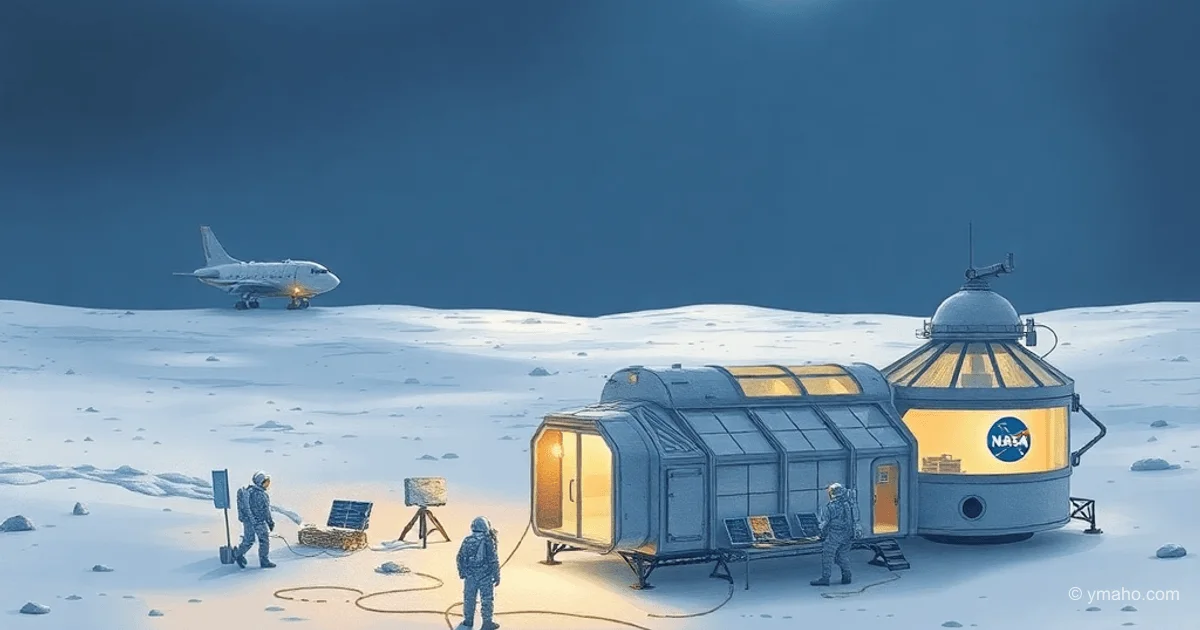
NASA’s ultimate goal isn’t just flags and footprints. By 2032, the agency aims to establish a permanent outpost where astronauts can live and work for weeks or months at a time. This “moon base” won’t look like a sci-fi dome city—it’ll start small, with modules linked together like Lego bricks, powered by solar panels and shielded from radiation.
Why go to all this trouble? Because living on the moon teaches us how to survive far from Earth. It’s a training ground for Mars, where help is months away instead of days. Every system—from toilets to air recyclers—must work perfectly, or lives are at risk.
Hurdles Still Ahead
Despite Artemis 2’s success, major obstacles remain:
- Unproven landers: Neither SpaceX’s Starship nor Blue Origin’s Blue Moon has flown with astronauts—or even reached orbit fully ready for human missions.
- Orion’s quirks: During Artemis 2, the spacecraft developed a helium leak in its propulsion system and had minor toilet issues. Engineers are already redesigning parts to fix these before longer missions.
- Refueling in space: Starship must be refueled by other rockets in orbit before heading to the moon—a complex ballet never attempted before.
NASA officials admit these are tough problems, but they’re moving fast. Some hardware for Artemis 3 is already at Kennedy Space Center, and astronaut assignments are expected “soon.”
Why This Matters to Everyone
You might wonder: why spend billions to build a base on the moon? Beyond exploration, this effort drives innovation. Technologies developed for space—like advanced water purifiers, lightweight materials, or efficient solar cells—often find their way into everyday life. Plus, international partnerships (Canada is already involved) foster cooperation in a divided world.
And perhaps most importantly, it answers a deep human question: Can we become a species that lives beyond Earth? The next decade will bring us closer to knowing.
Key takeaways
- Artemis 3 will now test docking in Earth orbit instead of landing on the moon.
- The first post-Apollo moon landing is now planned for Artemis 4 in late 2028.
- NASA aims to build a functional lunar base by 2032 as a stepping stone to Mars.
- Major technical challenges remain, especially with untested landers and life-support systems.
- Success could spark new technologies and redefine humanity’s place in the cosmos.
— Editorial Team









