Wellness from Boredom: Sensory Care and Neuroperfumery to Boost Your Mood
Cosmetics and food are becoming tools for emotional regulation: textures, cooling effects, and functional scents now matter more than ingredients. The luxury of 2026 is a product that gives you goosebumps or instantly calms your nervous system.
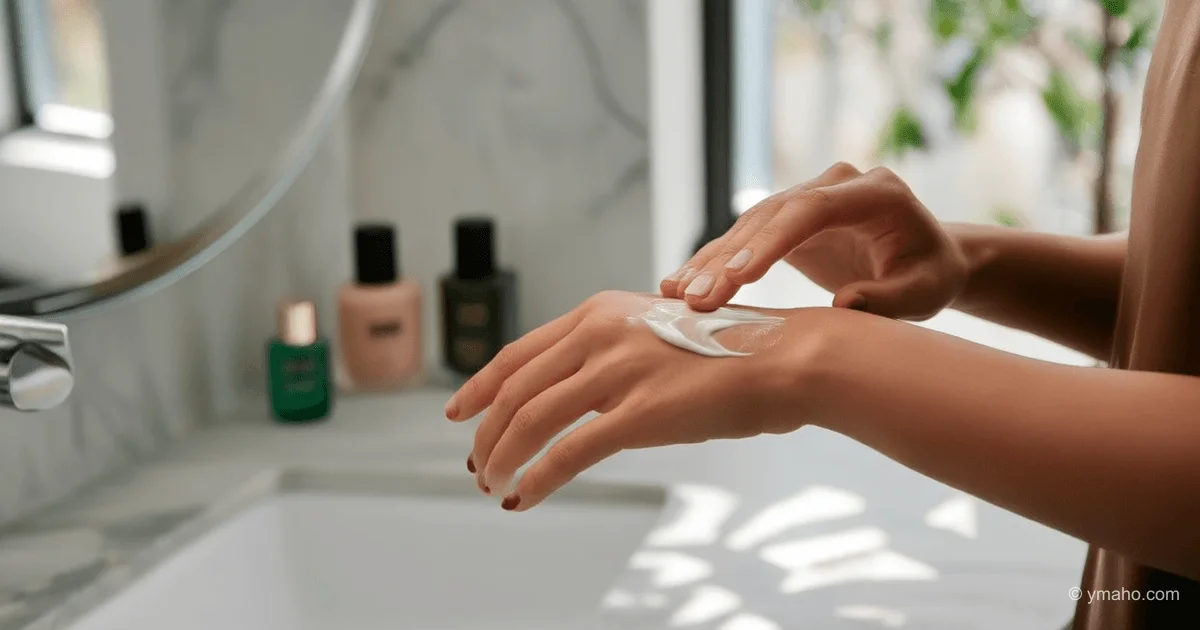
Your Next Antidepressant Is a Hand Cream. And It Works Faster Than a Pill
The neurocosmetics market has just crossed the $2.08 billion mark, and this is just the beginning. By 2030, it will soar to $3.14 billion with a CAGR of 10.9%. Behind these numbers lies a fundamental shift in why people buy jars and bottles at all. No one wants "just a cream" anymore. Everyone wants a product that, within 30 seconds of application, switches off anxiety, turns on dopamine, or delivers goosebumps comparable to that first sip of water on a hot day. The luxury of 2026 is measured not in carats, but in the response of the nervous system.
From "Composition" to "State": How Sensoriality Ate Efficacy
Polina Esina, who has launched 500+ beauty products, articulates the new law without equivocation: sensoriality does not compensate for a bad formula, but without it, even a good product loses. Textures are becoming mousse-like, whipped-creamy, and frankly "edible." Dolce Milk labels its shower gels with a warning "for skin only, not to eat" — and this is no joke, but a diagnosis of the market.
At the same time, the boundary between skincare and perfumery is crumbling. Brands like Byredo sell hand creams that smell like a full-fledged niche fragrance — Blanche or Suede. A regular shower turns into a sensory ritual where the scent is not an addition but the main protagonist. Syren captures this shift in terms of "emotional functionality": fragrance ceases to be an aesthetic supplement; it becomes emergency aid for the nervous system.
Joydrop, NA3, and the Hunt for Dopamine Receptors
The loudest shot of 2026 was fired by Initio Parfums Privés. In April, the brand launched the Supercharged line with two fragrances — Wild Rush and Sugar Blast — and a completely new technological core. Inside each bottle works a patented neuro-olfactory complex called Joydrop. The brand claims that the molecular system is confirmed by brain activity measurements and generates "distinct and measurable emotional signatures."
The essence is simple: Joydrop activates neural connections in the reward system — the very one responsible for pleasure, anticipation, and the dopamine surge. Initio directly calls joy a "neurobiological mechanism" and builds the product around its stimulation. Wild Rush is a fougère with bergamot, lavender, and caramel on a base of patchouli and sandalwood. Sugar Blast is a gourmand explosion of vanilla, rum, coconut, and praline. Both come in transparent bottles, which is unprecedented for Initio.
At the other pole of luxury is Sisley Paris. Back in April 2024, the company launched the Neuraé line with NA3 technology: a three-component complex that modulates the skin's nerve signals, supports the barrier, and enhances sensory comfort. But it is precisely in 2026, amid the neurocosmetics boom, that such products have ceased to be a niche experiment and become the standard.
Why the Brain Buys Faster Than the Eyes
Neuromarketing explains the mechanics. Traditional surveys and focus groups fail in the beauty market because people cannot verbalize why they like a product. Color, texture, tactile response of the packaging, and scent work at a pre-verbal level — activating deep brain regions responsible for memory and emotion, seconds before rational evaluation kicks in.
Hence the race for multisensoriality. Seppic at in-cosmetics Global 2026 presented the Beauty Cosmic Odyssey collection with "spatial" textures — lotions, gels, and emulsions where tactile sensations are designed with the same care as active ingredients. Sensient Beauty rolled out mochi-like foams and jelly creams that transform upon application — from mousse to oil, from gel to water. Consumers, especially Gen Z, equate "pleasantly playful texture" with "it works."
Functional Fragrances: Not to Smell, but to Act
Harper's Bazaar Germany articulates the trend of functional fragrances: these are perfumes that do not sell an image to others but work as a self-regulation tool. Lavender prepares the nervous system for sleep, citrus wakes the brain in the morning, vanilla dampens anxiety — on a neurobiological level, it resembles the scent of mother's milk.
Brands are embedding these principles not only in perfumery but also in household chemicals. Syren predicts that in diffusers and home products, "quiet luxury" will defeat floral compositions: mineral accords, "adult" gourmand notes — salty, smoky, starchy — and hyper-realistic botanicals with bitter herbs are taking over. A home should not smell "nice" but in a way that makes you exhale and relax your shoulders within three seconds of entering.
Who Is Taking Over This Market
The winners are companies investing in neuroscience at the R&D level. BASF, Symrise, Givaudan, and Shiseido are already deep in the race. Ingredient giants like Seppic and Sensient are building libraries of tactile polymers and sensory assets. Niche perfume houses are the first to bring "provable neuroactivation" to market — Initio with Joydrop, and others will follow.
The neurocosmetics market is growing at 11.1% annually. The personalized care segment is fueling it: consumers accustomed to AI skin diagnostics expect the emotional effect to be tailored to them as well. One product for all no longer works.
Losing are brands that continue to sell "composition for composition's sake." If the texture does not deliver tactile pleasure and the scent does not trigger an instant emotional response, the product is invisible. Also losing are those betting on aggressive anti-aging marketing: the 2026 consumer does not want to "fight" aging; they want a cream that soothes them after a hard day and helps them sleep.
What's Next: 2027–2030
Functional fragrances will become a separate category, much like sunscreens once did. Morning "activators," daytime "anti-stress mists," evening "melatonin precursors" in perfume format — this is not futurology but the roadmap of L'Oréal and Estée Lauder.
By 2028, neuroactive textures — bouncy, jelly, mochi, whipped — will fully colonize the mass market. What looks like a premium innovation from Seppic and Sensient today will end up in $12 shower gels tomorrow.
Products without sensory refinement will cease to exist as a category. The cream that simply "moisturizes" will die. Only those that deliver a fast, measurable, and predictable response to the nervous system — whether goosebumps, a relaxation yawn, or a micro-burst of joy — will survive. The bet is not on the skin, but on the brain. And the battle for it has only just begun.
— Editorial Team









