Humans Just Set a New Distance Record — And It Changes How We Think About Space
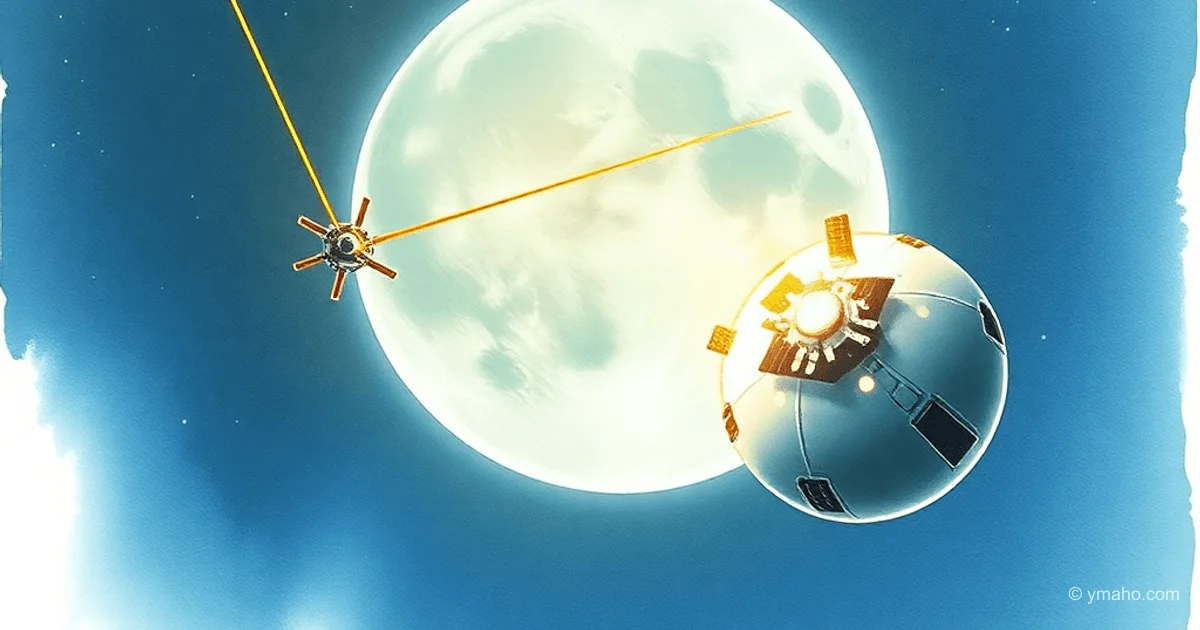
For the first time in history, humans were farther apart from each other than ever before—not because someone went deeper into space, but because we’re now spread across multiple outposts beyond Earth. On April 6, 2026, four astronauts aboard NASA’s Artemis 2 mission looped around the far side of the Moon while three others lived and worked on China’s Tiangong space station orbiting Earth. At that moment, they were over 260,000 miles apart—beating a record set during Apollo 13 in 1970.
Why should you care? Because this isn’t just about breaking a number—it’s a quiet signal that humanity is no longer clustered in one place near Earth. We’re starting to stretch out into space like seeds carried by the wind, and that shift could reshape how we explore, live, and even define “home” in the cosmos.
From One Outpost to Many
Back in 1970, when Apollo 13’s crew swung around the Moon after an oxygen tank exploded, they were the farthest humans had ever been from anyone else—because everyone else was still on or very near Earth. There were no space stations back then. Today, we have not one but two active human habitats in orbit: the International Space Station (ISS) and China’s Tiangong. That means when a spacecraft travels beyond low-Earth orbit, it can now be measured against multiple groups of people—not just those on the ground.
Astrophysicist Jonathan McDowell noticed this subtle but important change. He calculated that during Artemis 2’s lunar flyby, the Orion capsule named “Integrity” reached 260,754 miles from Tiangong—just slightly more than its distance from the ISS. It’s a difference of only about 40 miles, but it matters because it reflects a new era: one where human presence isn’t centralized.
Think of it like this: Imagine your family used to all live in the same town. Then one cousin moves to another city, another to a different country. Suddenly, the “farthest apart” any two relatives have ever been isn’t just between someone visiting a mountain and someone at home—it’s between two people who’ve both built lives elsewhere. That’s what’s happening in space.
Why This Moment Matters
This record might seem like a fun footnote, but it hints at something bigger. For decades, space milestones focused on “how far from Earth” humans could go. Now, we’re entering an age where the question becomes: How widely scattered are we?
McDowell put it plainly: “There may come a day when it’s Mercury to the moons of Saturn.” That’s not science fiction—it’s a logical extension of current trends. With NASA planning lunar bases, China expanding Tiangong, and private companies eyeing Mars, future distance records won’t involve Earth at all.
Consider these key developments:
- Artemis 2 was the first crewed mission beyond low-Earth orbit since Apollo, testing systems for future Moon landings.
- Tiangong, China’s permanently crewed station, has hosted astronauts for months at a time since 2022.
- Both stations operate independently, with separate life-support systems, supply chains, and mission controls.
This fragmentation—while peaceful—is unprecedented. Never before have humans maintained continuous presence in two separate orbital environments while also sending crews deep into space.
What Does This Mean for Regular People?
You won’t feel this shift in your daily life tomorrow. But over time, it could affect everything from satellite internet reliability to how we respond to global crises. More importantly, it changes our cosmic perspective: Earth is no longer the sole anchor of human activity. We’re becoming a multi-location species—even if just barely.
And that’s worth noticing. Because once you start living in more than one place, you begin to think differently about survival, cooperation, and what it means to be human.
Key Takeaways
- On April 6, 2026, humans reached a new maximum separation: over 260,000 miles between Artemis 2 and China’s Tiangong station.
- This beats the 1970 Apollo 13 record because there are now two human outposts in orbit, not just Earth.
- The milestone signals a shift from “distance from Earth” to “spread of civilization” as the key metric for space expansion.
- Future records may involve distances between spacecraft near Mars, the Moon, and Earth—with no planet as the center.
- While symbolic now, this trend could influence long-term space policy, international collaboration, and public imagination.
— Editorial Team









