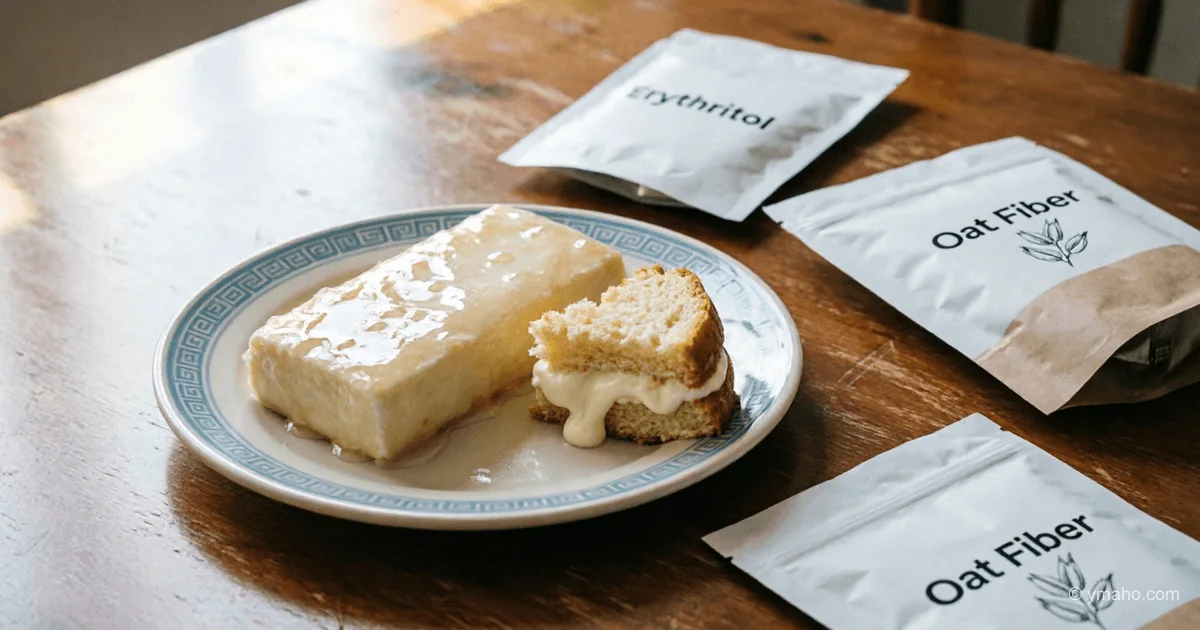
New Nostalgia in Nutrition: Childhood Flavors with a Healthy Composition
The trend for "comfort food" is returning, but with a health-conscious twist: favorite childhood desserts and dishes are getting "clean" compositions, enriched with fiber and protein. This is a response to the growing fatigue from healthy eating without joy.
Here is a detailed analytical article based on the provided news and the "new nostalgia" trend in nutrition.
New Nostalgia in Nutrition: How "Unhealthy" Childhood Flavors Became Legal in the Health Menu
Introduction
We are tired. Tired of kale smoothies, saltless quinoa, and the "joy" of sprouted buckwheat. Four years of inflationary shocks, two years of geopolitical turbulence, and an endless stream of "healthy body marathons" have led to one thing: people want food to comfort them again. But not at the expense of health.
Thus was born the trend of "new nostalgia," or as it is called in the West, "rebel comfort food." These are favorite childhood dishes and desserts—condensed milk, mashed potatoes with a cutlet, Olivier salad, Napoleon cake, glazed cheese curds—but completely reassembled. They contain no trans fats, tons of sugar, or preservatives. Instead, they have a clean label, enrichment with fiber, protein, adaptogens, and a restored, sometimes even improved, taste.
This is the food industry's response to the mass demand for psychological comfort. Health without joy has failed. In its place comes health with nostalgia—a concept where health does not require giving up warm memories.
Event Details and Timeline
The phenomenon of "food as a hug" is not accidental. It has a clear, short but turbulent backstory.
2015–2019: The Dictatorship of "Clean Eating." The era of gluten-free, sugar-free, detox juices, and raw foodism. Food is divided into "allowed" (bland, bitter, expensive) and "forbidden" (tasty but shameful). The number of eating disorders rises. A collective longing for childhood taste forms—the aroma of grandma's pies, the crunch of school cookies.
2020–2022: The Pandemic as a Catalyst. Lockdowns trigger a massive "stress-retro-reset." People buy tons of "adult versions of childhood flavors": navy-style pasta, jellied meat, kvass, ice cream. But there is no compromise—either the original with palm oil and sugar, or an expensive, tasteless "clean" alternative.
2023–2024: First Technological Solutions. Clean label technologies and recipe redesign reach maturity. Methods emerge to replace sugar with allulose and erythritol without losing sweetness; fats with structured emulsions from avocado and coconut; wheat flour with a mix of green banana, rice, and chickpea flour. Companies begin "re-engineering" Soviet and post-Soviet dishes. In the US, a boom in "junk food reboot" (Twinkies, but without glucose-fructose syrup); in Europe, a reincarnation of school puddings.
2025–2026: Mass Explosion. Childhood taste with a clean composition ceases to be a niche for hipster cafes. It becomes a category in chain supermarkets. Ready-made breakfasts "like in kindergarten" with 10g of protein, "Yubileynoye" cookies without palm oil and with added psyllium, and "that same condensed milk" but enriched with inulin and GMO-free appear.
A key trigger in 2026 is a study by the Institute of Nutrition of the Russian Academy of Medical Sciences, showing that 78% of Russians experience psychological discomfort from "proper" but tasteless food, and 63% consequently relapse into overeating sweets and fats. New nostalgia is not a whim but a medical necessity for sustainable motivation for healthy eating.
Impact and Significance
For the world: The "new nostalgia" trend becomes a bridge between clinical nutrition and the joy of eating. In countries with high obesity rates (USA, Mexico, Russia), reassembled childhood dishes can become a public health tool: they allow reducing caloric intake by 30-40% without a sense of deprivation. The WHO is experimentally recommending "comfort reformulation" of national school menus.
For the industry: The food industry is experiencing an engineering renaissance. Formulators need to solve an impossible problem: remove sugar, bad fats, flavor enhancers, and preservatives—but preserve the recognizable crunch, chewiness, crumbliness, and aroma. This stimulates a boom in future ingredients: enzymatically modified starches achieve the same pudding texture without eggs and oil; fermented plant proteins recreate the "meaty" taste of a cutlet without soy and glutamate. Investments grow in creating "emotional food archives"—libraries of childhood tastes and textures for industrial replication.
For society: A new food ethics emerges—"hedonistic nutritionism." No longer must one choose between health and comfort. This reduces anxiety around food and decreases cases of orthorexia (obsession with healthy eating). Social media abandons the "meat-vegetable-buckwheat" aesthetic in favor of an "unhealthy but healthy" aesthetic—bowls of "Olivier 2.0" and whole-grain croissants with protein cream. Instead of shame ("Oh, I ate a pastry"), comes pride ("I ate a pastry high in fiber and low glycemic index").
Reactions of Key Players
1. Major FMCG Giants (Nestlé, Danone, Cherkizovo, VkusVill): Relaunch iconic past products. Nestlé in Russia released "Korovka" and "Belochka" (chocolates and candies) without added sugar and with added prebiotics—sales soared 200% in a quarter. Danone announced "yogurt from childhood" with live cultures and five grams of fiber per serving—launching across Europe in 2027. VkusVill created an entire "Soviet GOST" line but with clean composition: "Shkolnaya" cutlet (30% protein, 5% carbs, only meat and spices) and mashed potatoes with Jerusalem artichoke instead of butter.
2. Restaurant Business and Food Service: Chain canteens and food factories launch "Healthy Nostalgia" menus. At Moscow's McDonald's (after rebranding to "Vkusno — i Tochka"), air-fried french fries appeared (60% less fat), and a whole-grain bun burger with a plant-based patty but with "that same" taste from the 90s. Russian cuisine restaurants serve "that same Olivier" with homemade mayonnaise made from aquafaba and olive oil.
3. Delicacy and Craft Producers: Small local brands bet on exclusivity. For example, "Mosselprom" releases "Babushkin tvorozhny syrok" (classic glazed cheese curd, but without palm oil, with live starter cultures and natural vanilla)—a three-month waiting list for online orders. St. Petersburg's "Khleb&Co" restores the recipe of the 1968 Kiev cake, replacing sugar with agave nectar and coconut sugar, and butter with nut paste.
4. Russian Mass Market (X5 Group, Magnit): Stimulate producers through their own private label standards ("Krasnaya Tsena," "Moya Tsena"). In 2025, the "Nostalgia PRO" label was introduced: products that have undergone recipe redesign (lab-confirmed) and contain no more than 5 ingredients without E-additives. Category sales grew 115% in a year. Top sellers: oat cookies (protein + fiber, minus sugar) and "like in childhood" milkshakes with vegetable fats but enriched with vitamin D.
Forecast and Conclusions
New nostalgia is not a temporary trend. It is a fundamental restructuring of eating behavior.
Forecasts for 2027–2030:
1. Nostalgia will become personalized. Services like "recipe from your childhood" will develop: a user uploads a photo of an old label or describes a taste (that certain crunch of a school pie crust), and a startup, using neural networks and an ingredient database, recreates the formula with a clean composition and prints the product on a 3D food printer.
2. Kindergartens and schools will feed "new nostalgia." Casseroles, kissels, omelets, and porridges will return to menus, but they will contain added fiber, inulin, and microdoses of micronutrients, covertly improving children's diets without causing aversion to "healthy" food.
3. Government obesity programs will include "nostalgic redesign." In former USSR countries, the re:USSRfood program is planned—a recipe reconstruction of 20 iconic Soviet dishes with reduced calories and increased nutrient density. This could reduce the prevalence of abdominal obesity among adults by an estimated 7–10% by 2030 (HSE study).
4. A reverse trend will emerge—"beware of fakes." Irresponsible producers will start copying the "new nostalgia" visualization without changing the composition ("greenwashing" in food). This will require the creation of an independent "Real Redesign" certificate and mandatory labeling of differences from the original recipe.
Conclusion. The new nostalgia trend is a victory of human psychology over absolutist healthism. It proves that one can care about health and still experience genuine joy from food. Moreover, it is precisely the joy and recognizability of taste that ensure long-term adherence to healthy eating. Companies that realized this first—Nestlé, Danone, VkusVill—are already reaping the benefits. Companies that continue to push "tasteless turkey fillet with quinoa" will lose consumers. Because we have grown up. And we want adult healthy food to smell like childhood. And smell good.
— Editorial Team









