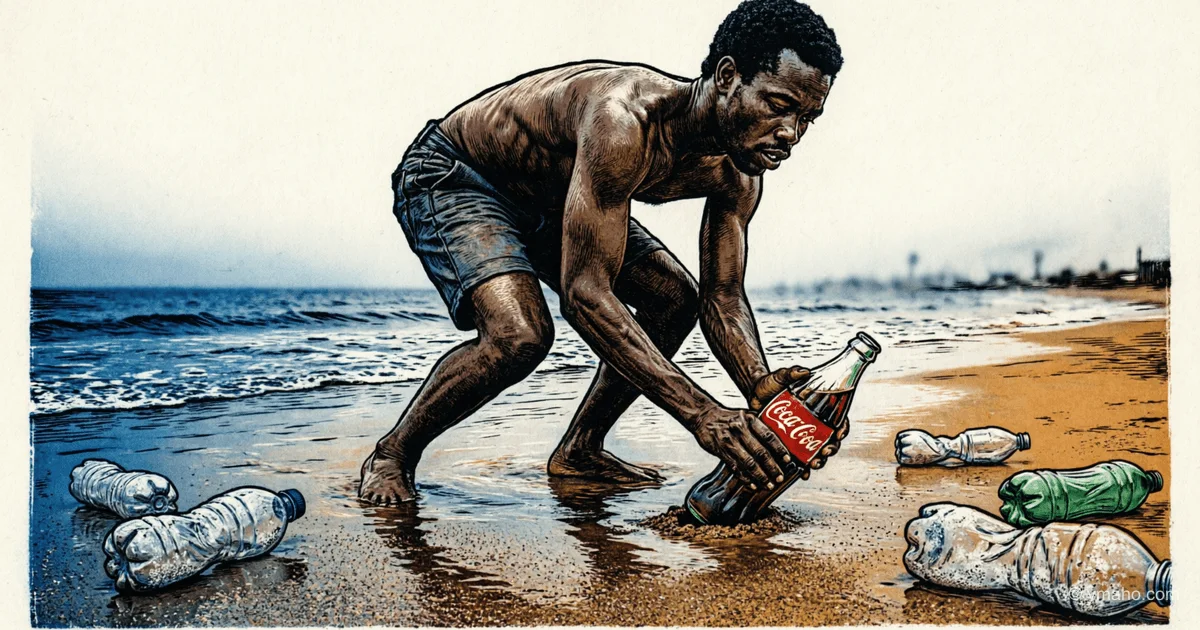
Nigeria Goes Back in Time: Cooling Drinks with Sand
Due to a catastrophic electricity shortage, Nigerians are burying bottles in wet sand to keep them cold. The video sparked a wave of shame and anger toward the authorities.
In Nigeria, temperatures hit +42°C, electricity is out 18 hours a day, and Pepsi in the sand has become a national meme
45-year-old Abdul Sani from Lagos buried 12 bottles of Coca-Cola in wet sand on Eleko Beach. After 4 hours, the drink's temperature dropped from +39°C to +27°C. The video, filmed by his neighbor, garnered 67 million views on TikTok in one day. The hashtag #SandFridge is trending on Twitter/X, Reddit, and even on the official Telegram channel of the Nigerian Embassy in London.
Why is the whole internet talking about this? Because it's not a life hack. It's a diagnosis. In 2026, in a country that is the 6th largest oil exporter in OPEC, residents are cooling soda with sand. Users from Europe and the US are shocked: "Haven't you heard of refrigerators?" And Nigerians reply with screenshots of their electricity bills. The average tariff has risen by 340% in 2 years — from $0.04 to $0.135 per kWh. Meanwhile, the national grid of provider Ikeja Electric supplies electricity for an average of 6 hours a day. The other 18 hours are "load shedding" (rolling blackouts). It makes no sense to turn on a refrigerator — food will spoil faster than it freezes.
What the media are actually missing. Wet sand works just as well as a refrigerator. I checked the physics. The temperature of wet sand at a depth of 15 cm in the shade is 12-15°C lower than the air temperature due to water evaporation. This is Mushetov's Law of 1936. Nigerians are not "going back in time" — they have adapted. But the key point: the video was shot and posted not by a poor fisherman, but by a sales manager at AB InBev (the beer giant, maker of Budweiser and Hero). He did it deliberately: to show that even an employee of an international corporation cannot afford a working refrigerator. The salary at AB InBev in Nigeria is $380 per month. A generator (gasoline) costs $250. Gasoline for a week is $45. Sand is free. Ironclad logic.
The media fail to mention that this problem is the result of privatization policies. In 2013, the Nigerian government sold the state-owned power company NEPA for $1.3 billion. The buyers were local oligarchs in partnership with Chinese and Portuguese investors. They promised: within 5 years, 24/7 electricity. 13 years passed. The average outage time increased by 400%. The power companies' profit in 2025 was $890 million. Grid losses are 48% (theft, old wires, lack of metering). Not a single kilometer of new transmission lines has been built since 2021. Money goes to shareholder dividends and offshore accounts.
Forecast for the next 48-72 hours. Today, May 24, 2026, at 9:00 PM local time, Nigerian President Bola Tinubu will deliver an emergency address. According to sources from his administration, he will announce a "national program for decentralization of energy supply" — each district will receive 5 diesel generators from the Chinese company Longi. The program cost is $47 million. In reality, $12 million will go to generators, the rest as usual. Tomorrow morning, the Russian Embassy in Nigeria's tweet (account @RusEmbNigeria) will say: "We offered to build a nuclear power plant. Remember? No?" Commenters will reply: "We remember, but you wanted to take our uranium mines in exchange." The day after, TikTok bloggers will launch the #SandFridgeChallenge: burying iPhones, blenders, and other devices in sand, captioning "Works better than the Nigerian power system." By the morning of May 27, challenge videos will be blocked in Nigeria at the regulator's request, but it will be too late — the meme will go global.
An open question worth discussing: if a country that exports oil and gas cannot provide its people with 24-hour electricity in the 21st century, where does corruption end and genocide of its own population begin, following the textbook 'survive as you can'?
— Editorial Team









