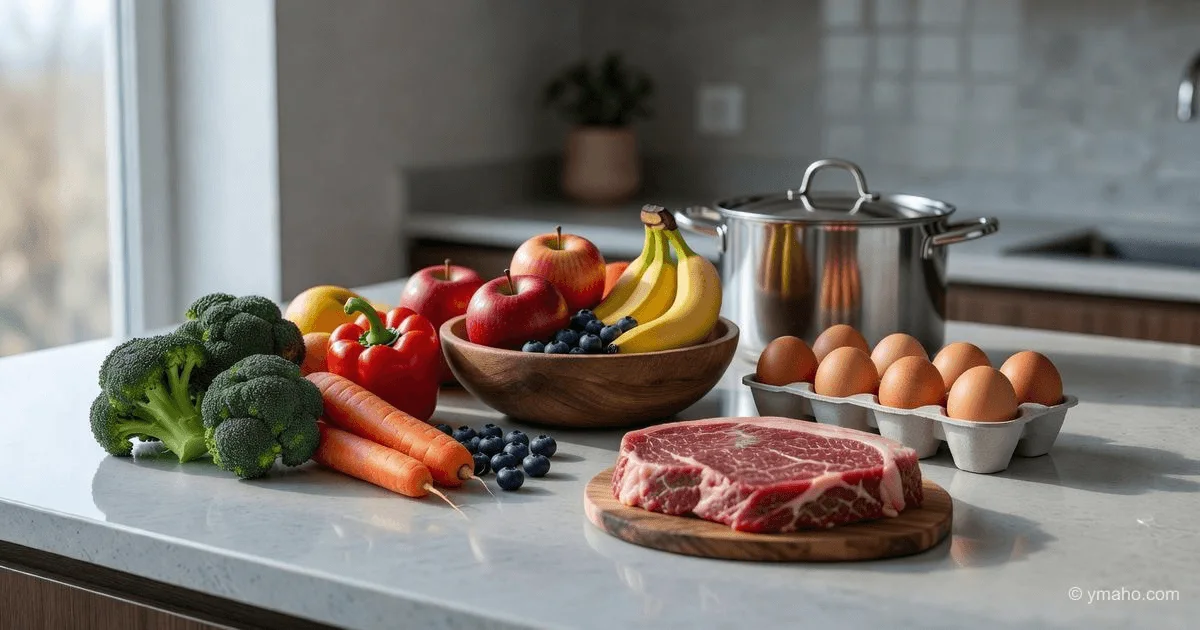
Whole Foods, Protein, and Gentle Cooking – Nutrition Principles in 2026
Experts formulate the rules of the year: 80-90% of your diet should be whole foods, protein intake rises to 1.6 g/kg of body weight, and the main cooking methods that preserve youth and health are steaming, baking, and stewing instead of frying.
The news about the "simple principles of 2026" — whole grains, high protein intake, and the steamer — looks like yet another glossy guide to healthy eating. However, behind this list of "healthy habits" lies a tectonic shift that will change your supermarket bill, cafe menus, and even the global agricultural economy. These are not the tips of lone dietitians, but the echo of a new government policy handed down from above.
[The Gist]: What's Really Happening
The reality is this: we are witnessing not just an update of trendy wellness fads, but an official ideological capitulation in the face of the obesity and chronic disease epidemics. In January 2026, the USDA and HHS simultaneously rewrote the federal dietary guidelines known as the Dietary Guidelines for Americans 2025-2030.
For the first time in decades, the government officially "ended the war on protein" (as officials themselves put it) and rehabilitated red meat and full-fat dairy, placing them at the top of the new food pyramid alongside vegetables. The essence of this manifesto is simple: eat "real food," sharply limit ultra-processed foods (UPFs), and budget at least 1.2–1.6 grams of protein per kilogram of body weight.
Population health figures are alarming: nearly 90% of US healthcare spending goes to treating chronic diseases, and over 70% of adults are overweight. Coupled with the fact that almost one in three adolescents is prediabetic, the government can no longer pretend that low-fat yogurts and breakfast cereals will save the nation.
Timeline and Context
January 2026: USDA and HHS publish the updated guidelines, instantly dubbed "radical." The key message is "Eat Real Food" and an inverted pyramid where proteins and healthy fats dominate, while grains take a modest place.
February-March 2026: The medical community enters the debate. Experts at the University of Michigan note that the recommendation to consume over 1.2 g/kg of protein significantly exceeds strict physiological norms. Simultaneously, the "protein leverage effect" is studied: when we eat too little protein, the body forces us to overeat fats and carbohydrates until we reach the required protein intake, leading to the obesity epidemic.
April-May 2026: Popular media and wellness bloggers form a simplified set of "2026 rules," focusing on 80-90% whole foods and gentle cooking methods (steaming, stewing, sous-vide).
Who Wins and Who Loses
Winners:
- Producers of quality meat and farmers. Secretary Rollins' phrase that "farmers are on the front line of the solution" is a direct signal to the market. Red meat has transformed from a "harmful product" into a premium nutrient.
- Kitchen appliance industry. Steamers, multicookers, and sous-vide machines become not just gadgets for geeks, but essential tools for extending life.
- High-income consumers. Switching to 80-90% whole foods with an emphasis on quality animal protein can increase the average weekly grocery bill by 40-60% (~$150-200 USD vs. the previous $100-120 USD).
Losers:
- Big Food giants (makers of snacks, sugary drinks, and breakfast cereals). Their products are now demonized at the federal policy level as a threat to national security due to their impact on the health of military recruits.
- Producers of cheap groceries and margarines. The return of full-fat dairy and butter kills the market for "light" spreads.
- Vegan industry. Although plant-based proteins remain in the recommendations, the emphasis on the "completeness" of red meat and eggs deals a serious reputational blow to ultra-processed meat substitutes.
What the Media Isn't Saying
First non-obvious insight: This is not a medical reform but pure agricultural protectionism. Behind the whole story about the nation's health lies the lobbying of American farmers and the dairy industry. The directive to "eat more meat and whole dairy" benefits the US economy and fits perfectly into the political narrative of Trump's fight against the "deep state" and old food norms.
Second non-obvious insight: Cooking methods matter, but we miss the nuances. 2026 research shows that even when boiling vegetables, we lose up to 50% of water-soluble vitamins if we discard the broth. Moreover, frying with extra virgin olive oil (EVOO) may be healthier than simple steaming, as the oil helps extract and absorb fat-soluble carotenoids. Experts also sound the alarm: simply raising protein intake to 1.6 g/kg is not supported by evidence of sharply reducing chronic disease risks for most people.
Forecast: Next 30 Days and 90 Days
30 days (by June 7, 2026):
Expect a wave of "exposés" from fitness bloggers showing that getting 120-140 g of protein per day on "clean eating" costs about $15-20 USD per day (just for food). This will cause a class divide in the wellness community: "elite biohacking" vs. "diet for the poor."
90 days (by August 8, 2026):
Fast food chains will begin to adapt. Collaborations between fast food and farms will emerge, and menus will feature not just a "burger" but a "burger with certified grass-fed meat, steamed." The cost of such a "healthy" version will rise by 30-40% (~$12-14 USD instead of $9 USD), finally turning "eating right by the guidelines" into a luxury product.
My personal conclusion: the adopted rules of the game for 2026 are a capitulation to physiology and lobbying. We are returning to meat and butter not because we suddenly love steaks, but because the "chemicals" in packages are killing us faster than cholesterol. The problem is that the new paradigm requires either a lot of money or a complete abandonment of the urban lifestyle to stand at the stove. Ordinary people are short on both.
— Editorial Team









