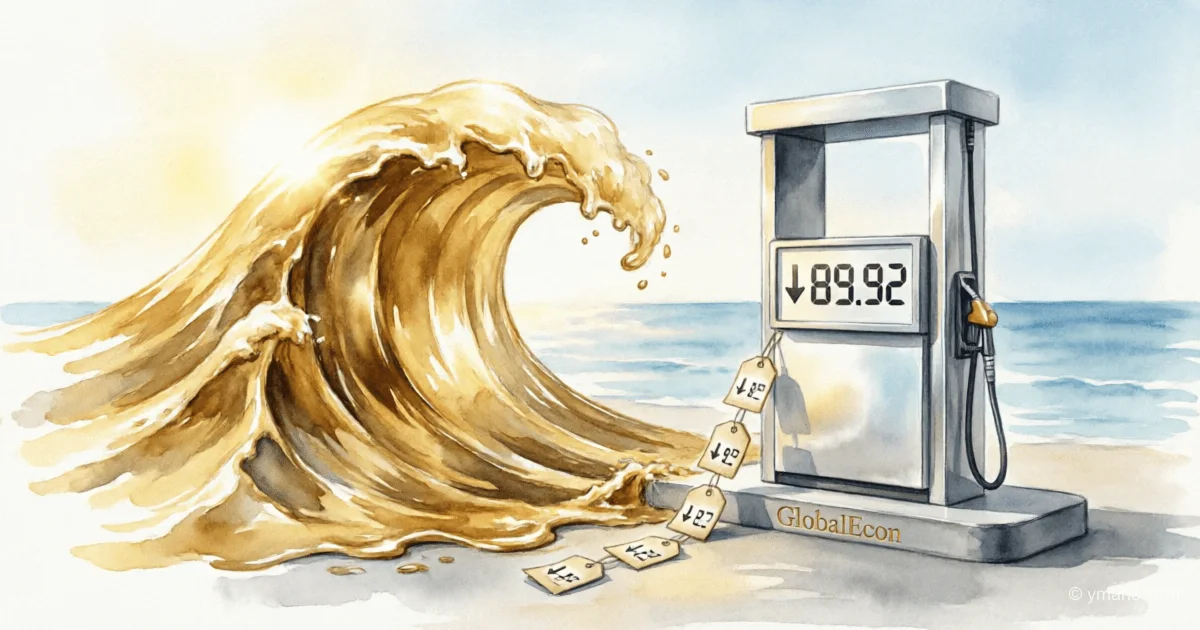
Oil Waves Reach Ukraine: Why Gas Prices Are Dropping and What It Means for You
Fuel prices at Ukrainian gas stations have started to fall, and this isn't just a local story. Global shifts in the oil market ripple across the globe like ocean waves, affecting costs everywhere from New York to Sydney. Whether you're filling up your car or buying groceries, it impacts you directly—oil is the engine of the modern economy.
Why Oil Is the Pulse of the Global Economy
Think of oil as the bloodstream that fuels the entire economic body. When oil prices drop, it’s like the system gets a fresh breath of air: transportation becomes cheaper, manufacturing costs go down, and ultimately, the price of many goods falls. The recent decline in global oil prices has persisted for nearly a week, and those changes are now finally making their way to Ukrainian pumps.
Experts note that wholesale diesel has already dropped by 4.78 UAH per liter, while gasoline fell by 93 kopecks. So why is the retail side reacting more slowly? It’s straightforward: gas stations are still selling fuel they purchased earlier at higher rates. It’s like buying apples at a steep price, only for the market rate to drop—you wouldn’t instantly slash your own stall’s prices.
How Global Prices Reach Your Local Pump
International oil prices hit us through a few key channels. First, directly: when crude gets cheaper worldwide, imported refined products follow suit. Second, through currency exchange rates. In Ukraine, for instance, the US dollar strengthened by 54 kopecks over the past week (reaching 44.12 UAH), while the euro climbed by 87 kopecks (to 51.87 UAH). This means that even as global oil prices dip, a stronger dollar partially offsets the savings—since oil is traded globally in US dollars.
This explains why retail prices in Ukraine have fallen more modestly than wholesale rates:
- Diesel dropped just 60 kopecks at the pump (average price: 89.92 UAH/L)
- Gasoline fell by 42 kopecks (72.71 UAH/L)
- Liquefied petroleum gas (LPG) edged down by only 5 kopecks (48.99 UAH/L)
What’s Holding Back Faster Price Cuts?
Gas stations can’t slash prices overnight for three main reasons:
- Expensive Inventory: Most operators stocked up on fuel back in April at peak prices, anticipating shortages. They’re now forced to sell that existing stock at today’s lower market rates, eating into their profits.
- New Shipments Under Old Contracts: Some fuel batches arrive under agreements signed before prices crashed, locking them into higher historical costs.
- Thin Margins: Profit per liter is already slim, so even a minor price cut could push retailers into the red.
As analysts point out, these exact factors are "dragging" the price decline—slowing its momentum. Take LPG, for example: wholesale prices plummeted by nearly 1.6 UAH per liter, yet retail prices only dipped by 5 kopecks. That’s a massive gap!
Key Things to Know About Oil Market Swings
The oil industry runs on its own rules, and its volatility touches everyone. Here’s what matters most:
- Global Interconnectedness: A price drop anywhere ripples through every country, even those that don’t produce crude themselves. Ukraine is a prime example, relying heavily on fuel imports.
- Reaction Lag: Retail prices always trail behind because of logistics and existing stockpiles. It typically takes one to two weeks for market shifts to actually show up at the pump.
- Currency Impact: A weakening national currency can easily wipe out the benefits of cheaper oil. If the dollar strengthens faster than oil prices fall, pump prices could actually tick upward.
- Seasonal Trends: Diesel demand usually spikes in spring due to agricultural work, but this year it came in softer than expected, which amplified the overall price drop.
So, what does this mean for everyday drivers and shoppers?
The global oil price decline will eventually trickle down to your local gas station, but don’t expect an overnight crash—the adjustment will take a few weeks. You might also see a slight dip in grocery bills, since freight and logistics costs will ease. Just keep in mind: if your local currency weakens significantly, that relief could be partially canceled out.
— Editorial Team









