Satellites Detect Oil Slick Near Iran's Key Export Terminal on Kharg Island
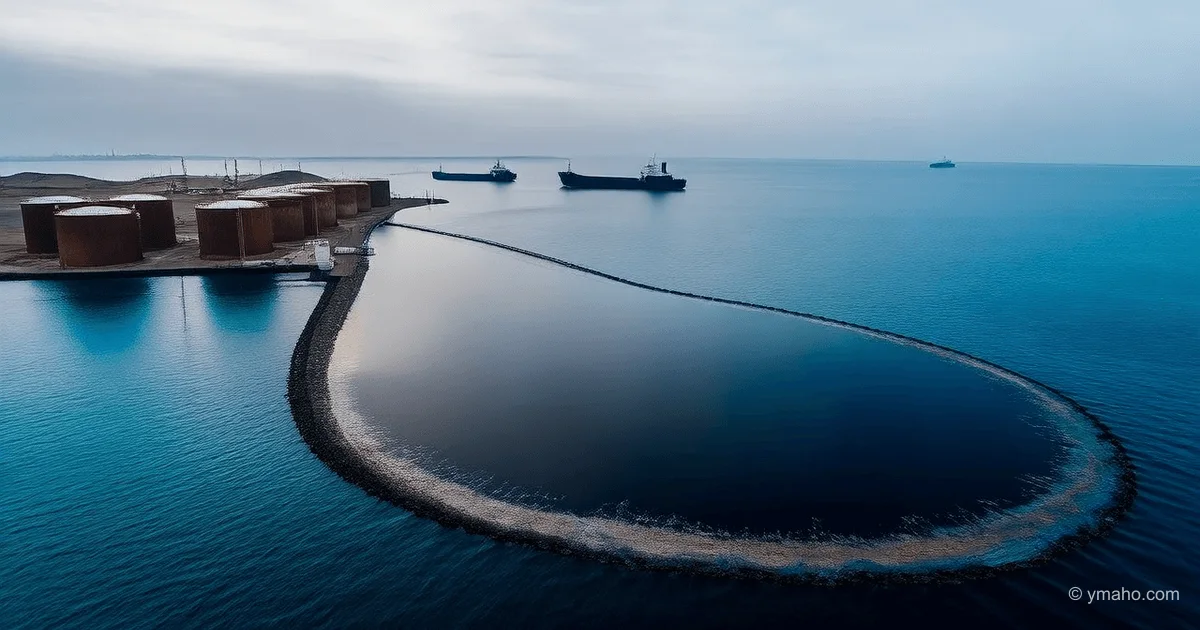
Satellite images have shown an oil slick spreading off the coast of Iran's Kharg Island. The slick was estimated to cover over 52 square kilometers, but later shrank significantly. The cause of the leak has not yet been determined.
The oil slick off Kharg Island is no ordinary spill and no accident. It is a visible symptom of a deep infrastructure collapse caused by the compression of Iran's export valve under the pressure of a naval blockade. While headlines are rife with debate over whether the slick existed or not, the real story is unfolding on the shore, in the steel labyrinths of oil storage facilities where pressure is approaching a critical breaking point.
The Essence: What Is Really Happening
Sentinel-1 and Sentinel-2 satellites detected an anomaly not near the berthing wall, which would indicate a loading error, but west of Kharg Island. The signal's nature—a sharp drop in the backscatter coefficient below -25 dB on radar images—confirms it is not a natural phenomenon but an oil film. The slick covered an area of more than 52 square kilometers and began drifting toward Saudi Arabian territorial waters. Official Tehran categorically denies the incident, claiming that field inspections "did not find even the slightest traces of a leak."
However, the essence lies not in ecology but in arithmetic. At the current level of the blockade enforced by the US Fifth Fleet, Iran has lost the ability to freely export approximately 1.5 million barrels per day. Onshore storage facilities, designed for 86 million barrels, are filled to capacity. According to Kpler, if production rates are maintained, Iran has only 12 to 22 days of usable storage capacity left. This means that the infrastructure on Kharg Island is operating in overload mode, exceeding the safe threshold of 80% fill.
Timeline and Context
The chain of events points to a systemic failure rather than a one-time accident:
- Mid-April 2026: The US imposes a naval blockade on Iranian ports, backed by a carrier strike group and destroyers. Tanker traffic collapses, and the "dark fleet" tries to maneuver outside AIS visibility zones.
- Late April: A frantic transfer of crude to floating storage (FSO) begins. The 30-year-old tanker M/T Nasha and other aging vessels are reactivated.
- May 6-8: Satellites detect a massive slick off Kharg. Independent consultant Data Desk calls it "potentially the largest spill in 70 days of conflict."
- May 9-11: Iran blocks any external inspections and conducts its own investigation. MEMAC (the regional marine emergency response center on behalf of Gulf states) also cannot access the incident area.
The cause of the spill has not been officially named, but energy expert Dalga Khatinoglu, in a comment to the NYT, pointed to the most likely scenario: it is not a hole in a single tanker but "a possible rupture of an old underwater pipeline to the Abuzar field." With onshore tanks overflowing, pressure in the system increases, and aging pipeline strings become the first victims of water hammer.
Who Wins and Who Loses
Losers:
- Iran and its budget. Even a small leak of 3,000 barrels is a drop in the ocean compared to systemic losses. Each day of Kharg's downtime costs Tehran at least $120 million in lost export revenue.
- International environmental funds and Gulf coastal communities. The oil is drifting south toward Saudi Arabian shores. Desalination plants and fisheries are under direct threat.
- Insurers and reinsurers. Pollution incidents, especially in war zones, lead to exclusions from P&I (Protection and Indemnity) policies, leaving shipyards and terminals across the region without insurance coverage.
Winners:
- Bearish energy traders. Every rumor of a spill or its denial adds at least $3-4 of risk premium to a barrel of Brent.
- US shale oil producers. While Kharg is blocked, the discount on Urals or alternative grades narrows, and Asian demand shifts to supplies from the Gulf of Mexico.
What the Media Is Not Saying
Most outlets have focused on the dispute: "is there a slick" or "is there no slick." This debate is utterly meaningless in the face of a non-obvious inside story concerning the nuclear deal.
Sources close to the negotiation process report the preparation of a 14-point Memorandum of Understanding that could begin to be discussed in Islamabad as early as next week. The leak at Kharg occurred precisely at the moment of a "shadow" discussion on lifting the blockade. And here is what matters: Kharg is not just an export hub. It is a storage site for unaccounted condensate stocks that the IRGC uses for its programs and proxy group budgeting. Flooding or damaging these stocks benefits a certain part of the Iranian general staff, which seeks to remove these flows from IRGC control and centralize them in the hands of the new president's technocrats.
The slick is not just an accident. It is a marker of the struggle for control over Iran's last liquid resource. The destruction of the landscape around Kharg makes it physically impossible for the "dark fleet" to secretly export condensate, forcing Tehran to enter into official agreements with the West.
Forecast: The Next 30 Days and 90 Days
Next 30 days (until June 11, 2026):
The slick will dissipate, but the infrastructure crisis will continue to escalate. Storage fill will reach 90-95%. We will see at least one more major accident on an aging underwater pipeline over 30 years old. Iran will be forced to cut production by another 200-300 thousand barrels per day to avoid a complete shutdown of wells and their irreversible sealing. Brent will remain in the $103-110 USD range.
Next 90 days (until mid-August 2026):
The key issue will be the physical processing of "locked-in" oil volumes. If Iran does not negotiate a relaxation of the blockade in Islamabad, old storage facilities on Kharg will have to be decommissioned forcibly, dumping excess crude in a controlled manner. This will cause an environmental disaster of regional proportions. The US administration will use the threat of new spills as leverage against the EU and China to fully isolate Iranian exports. If negotiations fail, by the end of August 2026, Iranian exports will drop to zero, and "gray" shipments via Malacca will completely cease due to the impossibility of loading at Kharg.
— Editorial Team









