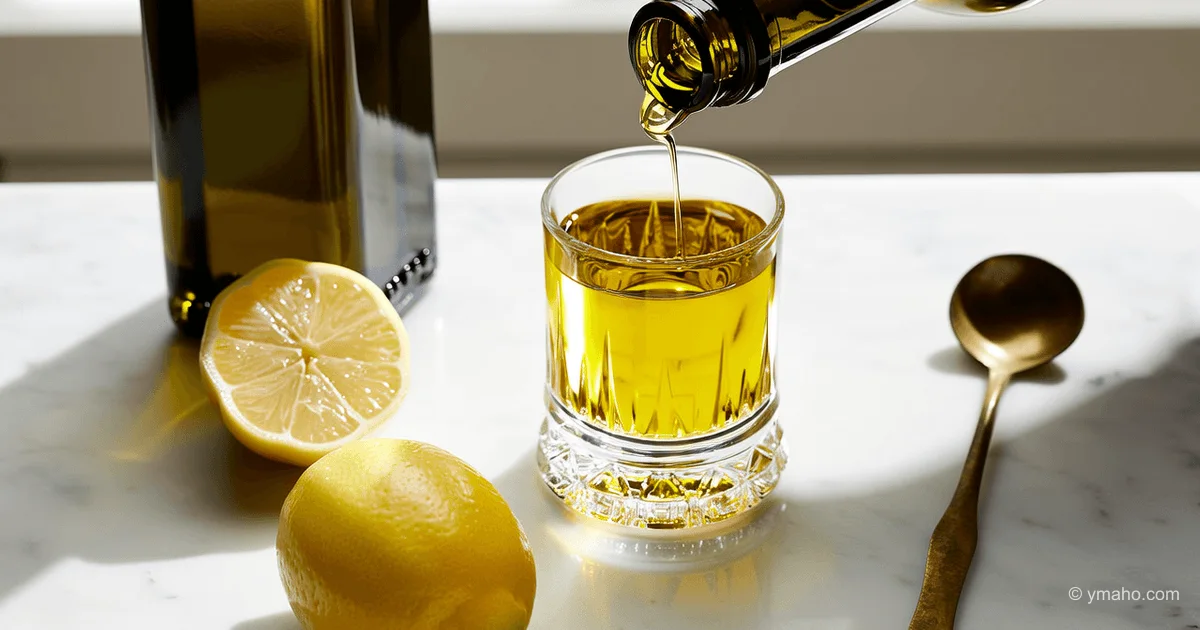
Lemon Olive Oil: The New Viral Wellness Ritual of 2026
A simple morning ritual—taking olive oil with lemon juice—is gaining popularity on social media. Vogue calls it a miniature wellness habit that turns self-care into a short, visually appealing action sparking lively discussions.
Lemon Olive Oil: How a Sip of Olive Oil Became the Top Wellness Ritual of 2026 and What's Behind It
What's Really Happening
At first glance, it looks like another viral TikTok flash mob: people drink a tablespoon of olive oil with lemon juice before breakfast or bedtime and claim it changes their lives. But the reality is more complex. We're witnessing not just the birth of a new morning ritual, but a fundamental shift in how consumers perceive self-care—a move away from "big" health systems toward compact, doable, visually appealing actions that fit into a 15-second clip.
This trend isn't about miraculous healing with olive oil. It's about a new consumer logic where health care is no longer a long-term program but a micro-gesture you can perform right here, right now, capture on camera, and tag with #morningritual.
Timeline and Context
The story evolved rapidly—from niche wellness blogs to Vogue. In January 2026, Vogue published "Why Everyone Is Taking a Shot of Olive Oil and Lemon Before Bed," describing the ritual as a "gently cleansing antioxidant blend" that supports immunity, stimulates collagen production, and helps the body "reset" overnight. By May 2026, the trend moved into analytical reviews: Made-in-China Insights included the "olive-lemon shot" in its list of key micro-trends of the year, placing it alongside squishy toys and kandi bracelets.
An infrastructure for promotion formed in parallel. Terra Delyssa, an extra virgin olive oil brand, published detailed recipes—"Beauty Shot" with honey and black pepper, "Immunity Shot" with ginger and cayenne—turning a folk ritual into a product with a measurable sales funnel. In China, the analytical center Zhimeng, in its 2026 consumer trends report, identified "healthy switching" as one of ten key vectors: 60.9% of consumers increased health spending over the year, and 78.6% have specific goals—from sugar control to muscle gain.
It's important to understand that olive oil with lemon is not an invention of 2026. The Mediterranean diet has used both ingredients as dietary staples for centuries. Users from Portugal, Spain, and Turkey ironically comment, "We've been doing this every day for centuries." The novelty lies not in the recipe but in its repackaging: from an everyday culinary practice, it has become a ritual with clear rules—one tablespoon of oil, juice of half a lemon, morning or evening, on an empty stomach.
Who Wins and Who Loses
Winners—extra virgin olive oil producers. Terra Delyssa is already capitalizing on the trend by publishing recipes and promoting the product as "the perfect base for a morning shot." Small and medium oil producers, especially from the Mediterranean region, get free global advertising: every video with #oliveoilshot works as native integration.
Wellness influencers win too. The "shot" format fits perfectly into the visual aesthetic of short videos: pour oil, squeeze lemon, mix in a small glass, drink in one gulp—it takes exactly as long as needed for a Reel or TikTok. The high "vibe-to-cost" ratio makes such content viral by default.
Losers—pharmaceutical companies and supplement manufacturers. Consumers who believe a tablespoon of olive oil solves digestion and immunity issues are less likely to buy $50 probiotics or $40 vitamin complexes. A $0.30-per-day ritual undercuts product lines with hundreds of percent margins.
Professional nutritionists also lose. A trend built on partial science and big promises blurs the line between evidence-based medicine and wellness folklore. Vogue cautiously notes: there is virtually no evidence that a tablespoon of olive oil with lemon at night noticeably affects skin or sleep. Melatonin concentration in olive oil is negligible. Vitamin C works only if you have a deficiency—with a balanced diet, extra lemon juice provides no measurable effect.
What the Media Isn't Saying
Insight: This trend isn't about health—it's about a 'doable action' in the face of anxiety.
Consumer behavior studies in 2026 record an important shift: health is no longer a "state of absence of disease" but has become an "asset that needs daily maintenance." But maintaining it through regular exercise, balanced nutrition, and proper sleep is hard, expensive, and yields no quick results. Drinking a spoonful of oil with lemon is easy, cheap, and gives an instant feeling of "I took care of myself."
This is the non-obvious mechanics of the trend: it sells not health, but a sense of control. Consumers overloaded with information about risks—from microplastics to burnout—are looking not for a solution but for a ritual that restores a sense of manageability, even for five minutes. The morning shot becomes an anchor: "No matter what happens today, I've already done something right."
Insight number two: Behind this lies a broader 'micro-ization' of the wellness industry.
Made-in-China Insights notes: trends in 2026 have become "more compact." People no longer want to buy a year-long health program; they want to buy small, doable, visually appealing rituals. Olive oil with lemon is a pure representative of this logic: it's not wellness as a lifestyle, but wellness as a miniature. The trend compresses the fantasy of health into one short action that is easy to film, easy to try, and easy to turn into an identity marker.
This also explains why the trend won't die quickly. Even if a user gets disappointed and stops drinking olive oil with lemon after a week, they'll move on to the next micro-gesture—for example, Japanese manicure as "nail plate health" or an electrolyte drink instead of coffee. The logic of "micro-ization" will remain, even if the specific recipe changes.
Forecast
Next 30 days (until mid-June 2026):
The trend will continue expanding into Europe and the US. Extra virgin olive oil in small 100-150 ml bottles—the ideal format for the ritual—will appear in premium supermarkets labeled "for morning shots." Manufacturers will start producing special "wellness sets": oil + glass shot glass + measuring spoon—the price of such a box will be 3-4 times higher than the oil itself, with brand margins of 70-80%.
In parallel, the first critical articles from gastroenterologists will appear: taking oil with lemon on an empty stomach in people with gastritis, reflux, or sensitive stomachs may cause exacerbation. This is an inevitable phase of the hype cycle: after a wave of enthusiasm comes a wave of sobering.
Next 90 days (until mid-August 2026):
By the end of summer, the trend will fragment. Instead of one "oil + lemon" ritual, a dozen variations will emerge: with turmeric, cayenne pepper, apple cider vinegar, manuka honey. Each variation will serve a separate sub-segment: "for skin," "for immunity," "for energy," "for sleep." This is the standard path of a viral wellness hack: from a simple recipe to a product ecosystem.
The key risk is regulatory. If brands start attributing medical properties to the olive-lemon shot (cures acne, restores liver, prevents heart disease), regulators—from the FDA to European agencies—will strike the category. In China, the problem is already noted: wellness advice spreads through live streams and user-generated content, where the line between "sharing experience" and "selling" is blurred, and oversight bodies can't keep up with the speed of dissemination.
Strategic takeaway for the industry: olive oil with lemon is not a product but a signal. A signal that consumers are tired of complex systems and want simple, doable, visual rituals. Brands that can package evidence-based practices into the same compact format—"one action, one emotion, one clip"—will win the attention race in 2026. Those who continue selling "comprehensive health programs" will lose audience to micro-gestures.
— Editorial Team









