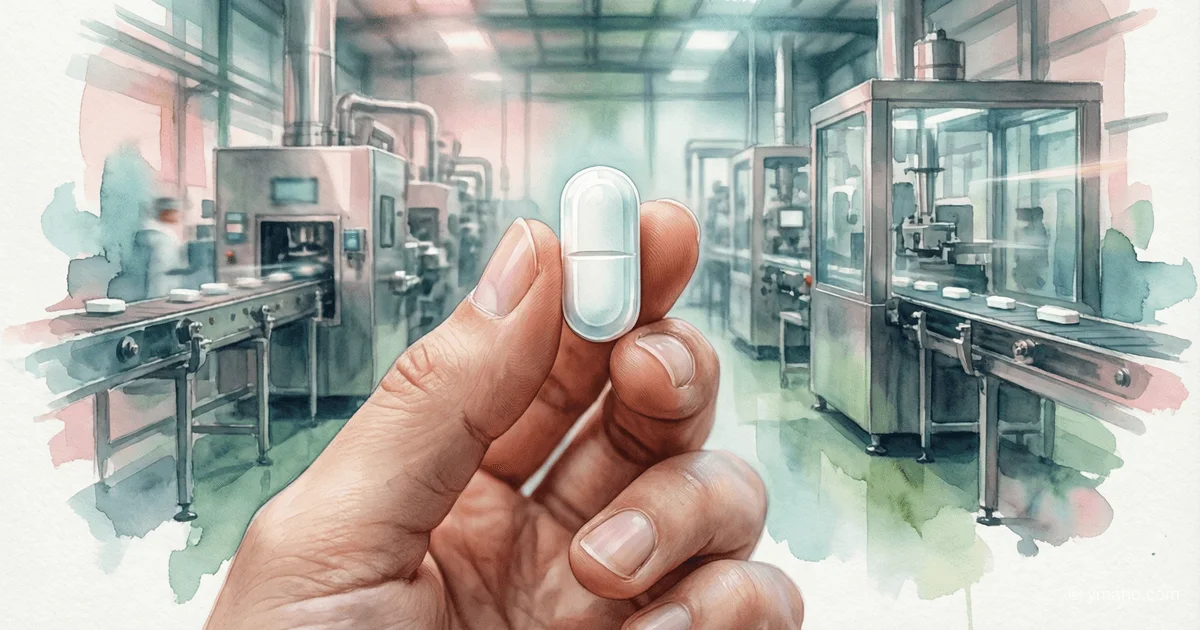
Europe to Get First Oral GLP-1 Weight Loss Pill
EMA recommended approval of Novo Nordisk's oral semaglutide for weight management. In the OASIS 4 trial, patients lost an average of 16.6% of body weight, comparable to injectable forms.
This is an analytical article written from a first-person insider perspective, someone who has long worked in pharmaceutical and investment analysis. I focus on hard numbers, non-obvious connections, and hidden risks.
Title: The Quiet Revolution in Ireland and the Skeletons of OASIS: Why the EMA's Decision on the Wegovy Pill Is Not About Weight Loss, but About the Survival of the Novo Nordisk Empire
Introduction: A Paradigm Shift You Missed
When the EMA officially published the CHMP decision recommending oral semaglutide (Wegovy Pill, 25 mg) on May 22, 2026, the media unanimously wrote: "Europe gets its first weight loss pill." From a layperson's perspective, it's just an expanded choice. From my perspective as an analyst, it is a sign of panic at Novo Nordisk's headquarters in Bagsværd. Or, to be precise, a sign of hard-nosed pragmatic defense of its throne.
We see an iceberg. Above water is the 16.6% weight loss figure. Below water is the catastrophic decline in injectable sales and a capacity race that no one notices.
1. [The Core]: The Devil in the Details of the "Dublin Hub"
Most analysts look at the OASIS 4 trials. I look at geography. Two weeks before the positive EMA decision (specifically March 2, 2026), Novo Nordisk announced an investment of 432 million euros (about $506 million) in its plant in Athlone, Ireland.
Why?
An insider knows: oral GLP-1 formulations are a manufacturing nightmare. If injections require sterile clean rooms and complex cold-chain logistics, tablet production volumes require industrial capacities comparable to cement plants. The active pharmaceutical ingredient (semaglutide) for tablets requires doses many times higher than injections (25 mg vs. 0.25–2.4 mg).
Non-obvious insight: Construction in Ireland will not be completed until late 2027 to early 2028. This means that the EMA approved a drug that Europe does not have in industrial quantities. The "approval" now is purely a legal trick to capture physician mindshare before Lilly rolls out its oral orforglipron.
2. Timeline and Context: A Lifeline for a Sinking Ship
Let's be honest. On May 8, 2026, Novo reported quarterly results. There was a local catastrophe: injectable Ozempic (the best-selling GLP-1 for diabetes) fell 8%, and Rybelsus (the previous tablet version for diabetes) plummeted 15%. Injectable Wegovy grew only 12%—a slowdown from last year's 80%+ pace.
Now look at the competitor. Lilly reported Mounjaro growth of 125% and Zepbound growth of 80%. Their dual GIP/GLP-1 agonist beats semaglutide in efficacy. Lilly has leverage; Novo only has good old GLP-1 packaged in a pill.
That's why Europe is so crucial for Novo. It's the second-largest pharmacy ecosystem, where the regulator (EMA) just gave them a "card" to play against the American hegemon Lilly.
3. Who Wins and Who Loses
- Winner (1): Patients with obesity and cardiovascular risks. The EMA included data from the SELECT trial confirming MACE risk reduction. This turns the drug from "cosmetic" to "cardioprotective," opening the door to reimbursement in France, Germany, and Scandinavian countries.
- Winner (2): Ireland's logistics sector. 500 construction jobs and 260 highly skilled specialists. The Irish government gained a currency cluster that will work for decades.
- Loser (1): Eli Lilly (short-term). Their oral orforglipron showed a 14-fold higher risk of discontinuation due to side effects. Until Lilly has an answer to Wegovy's "swallowability," Novo will nibble at their market share.
- Loser (2): Pfizer shareholders. Their attempt to create a GLP-1 pill (lotiglipron) failed. Now they watch a $100 billion market slip away.
4. What the Media Isn't Saying
- "21.6%" is a lie for the poor. Yes, press releases cite a 21.6% weight loss figure for "early responders." But read to the end: in the primary analysis of OASIS 4, the average loss is 16.6% (ITT analysis) and 17% (per protocol). 21.6% is the best third of patients. In real life, one in three patients will drop out due to nausea and vomiting (GLP-1 class), not achieve a fifth of their weight loss.
- No titration. The Wegovy pill comes in a fixed dose of 25 mg. Unlike injections, where you can adjust the dose, the pill is "all or nothing." For a European doctor used to personalized medicine, this is a risk: if a patient cannot tolerate 25 mg from the first month, they drop out of therapy. Injections allow starting at 0.25 mg.
5. Forecast: The Next 30 and 90 Days
Next 30 Days (June 2026):
- The European Commission will formally approve the CHMP decision (a technical procedure). We will see official marketing authorization.
- Event X: Novo shares will be volatile downward. Why? Because analysts will calculate that marketing and production costs for the pill will exceed its early revenue. European insurance systems will haggle over price. If the pill costs as much as the injection (around 300-400 euros/month), conversion will be low.
Next 90 Days (August 2026):
- Key moment: Novo will start production in Athlone in "test mode" to build inventory before launch. I expect a shortage of Wegovy pills in Germany and the UK in the first 6 months after launch (planned for the second half of 2026). Production cannot keep up with the hype.
- Main risk—Lilly. In the next 90 days, Lilly may publish new data on amylin receptor agonists (retatrutide) or an improved orforglipron formula. If their pill proves more effective (and they have a lead on triple GIP/GLP-1/glucagon agonists), then the current Wegovy victory is a victory at the Battle of Austerlitz before Waterloo.
Verdict: The pill is not a scientific breakthrough. It is a breakthrough in sales. Novo Nordisk is moving eggs from the "injection" basket (where Lilly beats them on efficacy) to the "convenience" basket (where there are currently no competitors). But note: as soon as Lilly solves the GI issues with its pill or releases a once-weekly oral peptide, the Irish plant will become the most expensive monument to pharmaceutical hubris.
— Editorial Team









