How a Ukrainian Bank Is Trying to Make Russia Pay: Global Economic Implications
When one country seizes another country’s banks, it’s not just someone else’s problem—it’s a crack in the foundation of the global economy. Ukraine’s Oshchadbank has filed a new claim against Russia in international arbitration, seeking compensation for seized branches. Why should this concern you—even if you live in Argentina or Japan? Because cases like this determine how safe your retirement savings or mortgage loan really are: global rules apply to everyone.
What’s Happening: Not a Dispute—A Battle for Trust in the Global System
Oshchadbank has formally demanded compensation for assets lost in the Donetsk, Luhansk, Kherson, and Zaporizhzhia regions following Russia’s invasion. According to bank CEO Yuriy Katsiion, the claimed amount has already exceeded $1.3 billion—not new money, but a continuation of the legal fight launched after Russia’s 2014 annexation of Crimea.
The key here isn’t the number—it’s the mechanism. Countries around the world are bound by “bilateral investment treaties” (BITs)—think of them as international business rules. If you build a factory in another country, the treaty guarantees you won’t be cheated. Oshchadbank is reminding Russia: “You signed that treaty—and now you’re seizing foreign assets.” But how do you compel an aggressor to pay when it ignores court rulings? The bank is hunting for Russian assets abroad—like a global treasure hunt.
Why This Concerns Everyone: Three Global Reasons
Many assume: “This is just a Ukraine–Russia conflict.” They’re wrong. Here’s why the outcome affects you:
- Safety of Your Savings: Pension funds and insurance companies invest overseas. If asset seizures go unpunished, investors will grow more cautious. That means less capital flowing into the economy, higher borrowing costs, and rising prices—from mortgages to medicines.
- Rules Over Force: If Russia can be made to pay through foreign courts, it strengthens trust in international treaties. Conversely, weak enforcement encourages other countries to confiscate foreign assets. Imagine your country builds a hospital in Africa—only for local authorities to seize it.
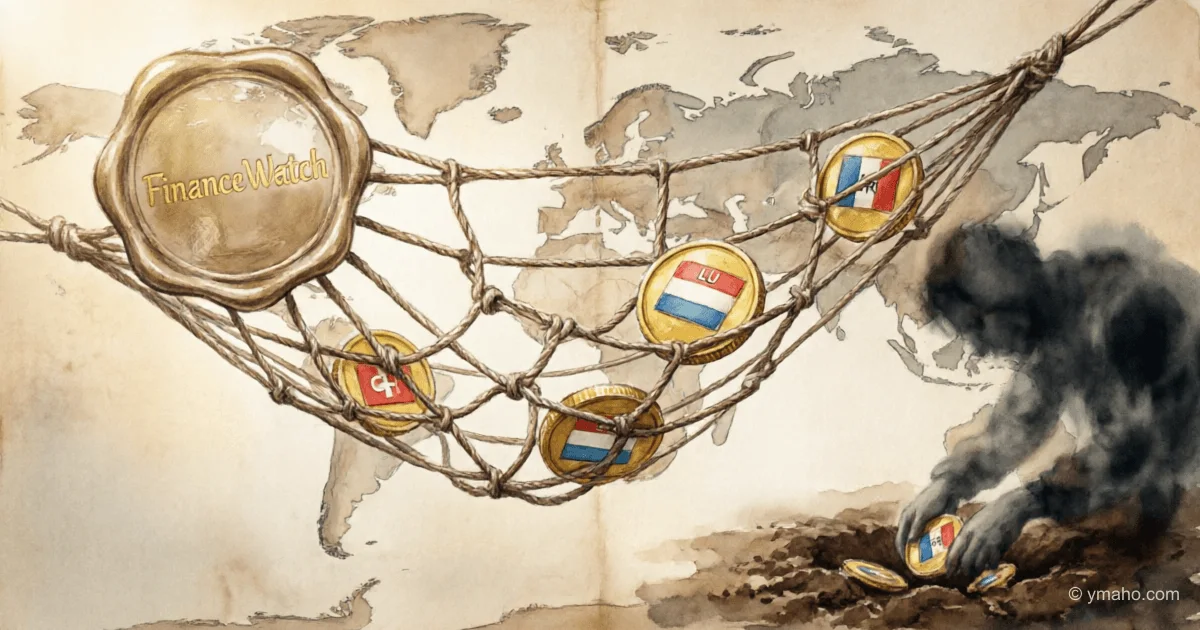
- Sanctions Become More Precise: Successful enforcement through foreign courts represents a new level of economic pressure. If Oshchadbank locates Russian assets in Switzerland or Luxembourg, those assets can be frozen. That hits the global financial system: banks may grow wary of doing business with “high-risk” countries—raising transfer and payment costs for everyone.
Key Facts
- Oshchadbank is demanding compensation not only for Crimea (as in its 2018 case), but also for the four newly occupied regions—expanding the legal precedent.
- Russia is ignoring arbitration rulings, but the bank is pursuing Russian assets in third countries for enforcement.
- The case relies on a 1993 bilateral investment treaty—now under review worldwide as countries modernize such agreements.
- A successful outcome could serve as a model for Georgia, Moldova, and other nations affected by aggression.
- Even with a legal win, collecting payment will be difficult—Russia hides assets via offshore structures and complex ownership schemes.
What This Means for Ordinary People
If international courts learn to hold aggressors financially accountable, the world becomes more stable: companies will invest more confidently in new markets, creating jobs. But if rulings are routinely ignored, risk rises—and you’ll pay the price through inflation and instability. In the long term, cases like this decide whether the world operates by rules—or by force.
— Editorial Team









