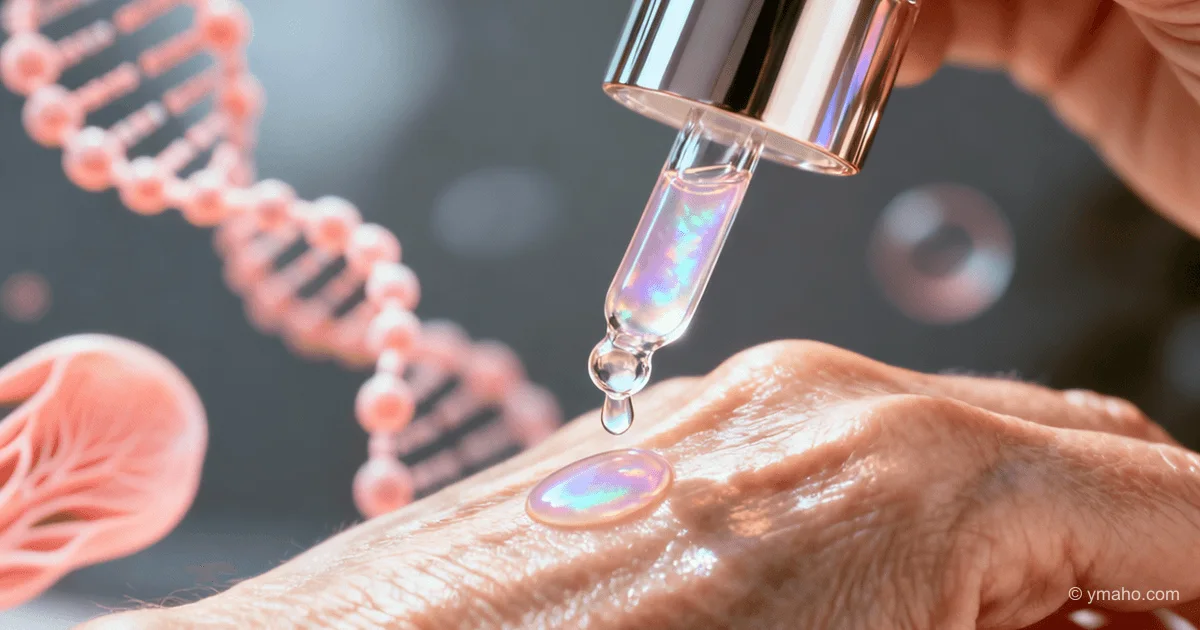
PDRN Serums and Peptides from K-Beauty Take Over Anti-Aging Care for Mature Skin
Beyond retinol and vitamin C, Byrdie experts highlight peptide serums with PDRN as the new must-have for restoring skin firmness after 40. The popular Medicube PDRN Peptide Serum strengthens the barrier and stimulates collagen production, becoming an alternative to injectable treatments.
The Gist: Salmon Vector and the End of the Dermatologist's Monopoly
The promotion of PDRN serums like Medicube PDRN Peptide Serum as "alternatives to injections" is not just another K-beauty trend. It's a tectonic shift in the boundaries between cosmetics and medicine. PDRN (polydeoxyribonucleotide) is a fragment of salmon DNA that, in professional cosmetology, is injected mesotherapeutically for tissue regeneration. Now this substance appears in a $38 pump bottle. The medical enclosure is being breached: injectable molecules are flowing into home care, changing the economics of the anti-aging market more than any marketing budget.
The real reason for the hype is not the serums' efficacy, but consumer fatigue with pain, bruising, and recovery time after mesotherapy. A woman over 40 no longer wants to walk around with bruises for three days for the sake of firmness. She seeks a "needle without a needle," and Korean labs give her that illusion.
Timeline and Context: From Fish DNA to Mass Market
The history of PDRN in cosmetics began in South Korea in 2015-2016 with injectable products like Rejuran. They quickly became the "gold standard" of anti-aging therapy in Seoul, earning the nickname "baby face injection" for restoring elasticity at a level unattainable by fillers. A course of three Rejuran Healer treatments cost between $900 and $1,500. The market instantly recognized the potential: why not extract maximum value from the molecule by bringing it into a topical format?
The first adaptation round in 2019-2021 failed. The PDRN molecule is too large (average molecular weight 50-1500 kDa) to penetrate the stratum corneum without transdermal delivery systems. Early PDRN creams worked at the hydration level, not regeneration. The breakthrough came in 2024-2025 when Korean R&D centers integrated peptide shuttles and microsomal encapsulation. That's when hybrids emerged: PDRN + acetyl hexapeptide-8 (botox-like) + copper tripeptide-1. The Medicube PDRN Peptide Serum, which soared in Byrdie's recommendations in May 2026, is the flagship of this wave.
Who Wins and Who Loses
Korean R&D labs holding patents on stabilized PDRN complexes win. PharmaResearch (owner of Rejuran) quietly licenses technologies to cosmetic brands, earning margins from both segments: clinics and Olive Young shelves. Essentially, they profit from cannibalizing their own medical business, understanding that the market will inevitably shift to the home segment.
Western dermatological brands that built their positioning on retinol and acids lose. SkinCeuticals, SkinMedica, and Obagi spent decades convincing consumers that retinol is the only scientifically proven anti-aging ingredient. Now the Korean alternative with a "salmon DNA" story sounds more innovative, even though clinical studies of topical PDRN on large samples are still critically scarce. The West loses its narrative monopoly on "evidence-based cosmetics."
What the Media Isn't Saying
Non-obvious insight: The total dependence of the Korean PDRN industry on aquaculture makes it vulnerable to epidemics among salmon. PDRN raw material is extracted from the sperm and milt of Oncorhynchus keta (chum salmon). An outbreak of infectious salmon anemia (ISA) on farms in Korea and Chile in 2025 has already raised raw material costs by 22%. Major producers have frozen stocks for 18 months, but smaller brands will face shortages or a switch to synthetic analogs whose efficacy is unproven.
The second silence: the ethical status of the product. PDRN is obtained from the gonadal tissue of farmed fish. In an era where clean beauty and veganism are gaining momentum, neither Medicube nor its competitors emphasize the origin of the raw material. The packaging says "salmon DNA" but does not specify that it is an extract of reproductive organs. As soon as a major sustainability auditor or PETA draws attention to this, brands will have to either change the formula or lose the European market, where requirements for ingredient origin transparency are particularly strict.
Third: the concentration of PDRN in a $38 serum is 40-60 times lower than in a $300 injectable product. Brands use the term "parts per million" (ppm) but do not indicate how much PDRN actually reaches the dermis. In effect, the consumer gets microdosing comparable to homeopathy. Marketing sells the word "DNA regeneration," science says: "another 5-7 years of transdermal delivery research are needed."
Forecast: Next 30 Days and 90 Days
Within 30 days, we will see a counterstrike from European brands. French labs, recognizing the threat, will aggressively promote alternatives—biofermented growth factors (EGF, FGF) derived from yeast rather than animals. This will allow them to hit K-beauty on two fronts: vegan formula and no ethical risks. Expect launches of serums with "synbio PDRN-like peptides" from L'Oréal Group under the SkinCeuticals brand.
Within 90 days, regulatory escalation will occur. The FDA and European Commission will turn their attention to the borderline status of PDRN in cosmetics. A molecule with proven pharmacological action in a cream is a gray area. If regulators decide that PDRN makes the product a drug rather than a cosmetic, we will see a wave of market withdrawals or relabeling requirements. Medicube will have to either change the formula for Western markets or register as a medical device, raising the price from $38 to $90-120.
Meanwhile, TikTok will be flooded with DIY mesotherapy: consumers will buy microneedling rollers and self-administer PDRN serums, mimicking clinical procedures. This will cause a spike in infectious complications and a new round of debate about where care ends and medical risk begins. US and European cosmetology associations are already preparing press releases with warnings. The market is in for turbulence, with stakes of $340 million—the global PDRN care segment's projected value by the end of 2026.
— Editorial Team









