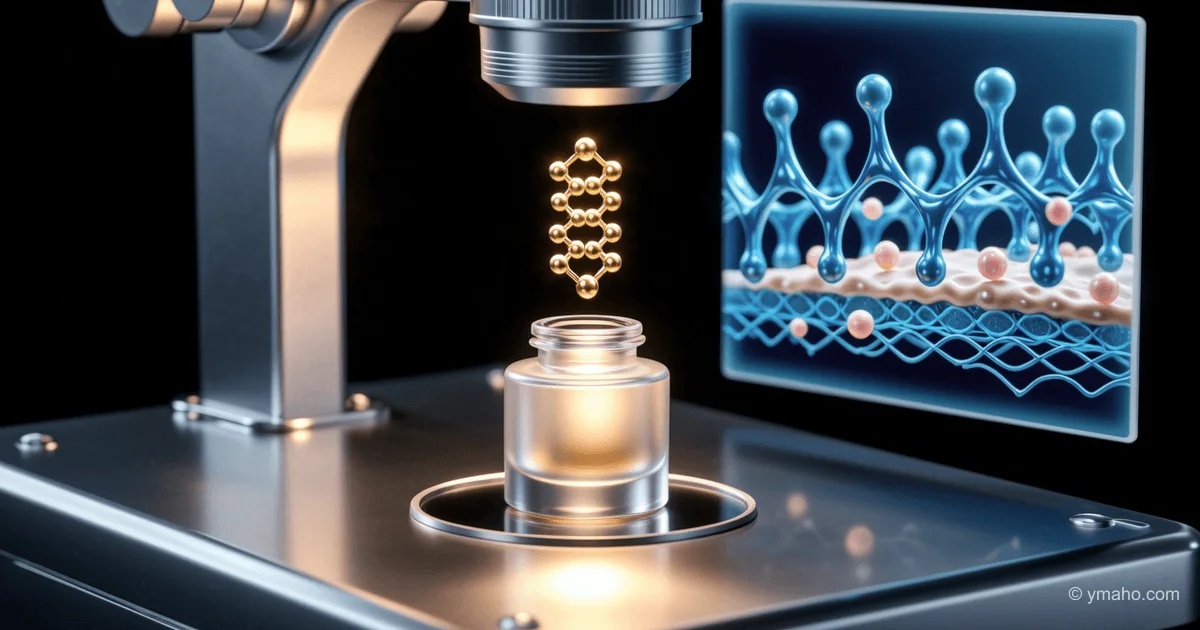
Peptides — the 'Backbone' of 2026 Skincare: Multifunctional Engineering Replaces Single Ingredients
LookFantastic reports a 79% increase in peptide searches: the industry is shifting to complex peptide complexes that simultaneously trigger firmness, repair, and skin energy without irritation.
As an insider working at the intersection of biotech and cosmetic development, I'll tell you straight: that 79% surge in peptide searches recorded by LookFantastic isn't about a trend ingredient. It's about capitulation to retinol. We've entered the era of the "peptide renaissance" not because peptides suddenly work better. Peptides have triumphed because consumers are dead tired of irritation, and manufacturers are tired of lawsuits. This is a quiet revolution of comfort, reshaping the ingredient budget across the global $1.1 trillion industry.
The Core: What's Really Happening
We are witnessing a historic replacement of the "core" of cosmetic formulas. For decades, retinoids and acids stood at the center of anti-aging as the chief commanders of cell renewal. Peptides were always the supporting act—expensive, finicky, poorly penetrating molecules added at 0.001% for a marketing checkbox. Now everything has flipped. LookFantastic explicitly calls peptides the "backbone" of 2026 skincare, noting the shift from single peptides to multifunctional engineering. This is not evolution; it's a revolution.
Why now? The answer lies in three events from the past two weeks. First, on February 27, 2026, the HHS announced the reclassification of 14 peptides, including the legendary GHK-Cu, from prohibited Category 2 back to Category 1—a decision two years in the making and officially pending publication in the Federal Register. Second, on May 5, LookFantastic published a report where the CEO of Skin Design London spoke of "systems that simultaneously trigger firmness, repair, and skin energy." Third, on May 4, Frost & Sullivan released a market analysis of bio-identical actives, naming peptides one of four priority families for biotech investment, with the market projected at $7–12 billion.
Coincidence? No. This is a synchronized launch of a new paradigm where peptides are no longer an "active ingredient"—they are the systemic architecture of the formula. Medical spas and dermatologists are already discussing the return of GHK-Cu to clinical practice after a two-year ban. Frost & Sullivan analysts note explosive growth in deals within the "precision-engineered peptides" category. And consumers see a new product promising "no irritation, but retinol-like results."
Timeline and Context
May 9–11, 2026—the moment three lines converged. LookFantastic published the +79% search figure. Simultaneously, Frost & Sullivan presented an analysis at a London conference naming AI-designed peptides as the main growth driver in the bio-identical actives category. That same day, at a closed session of the Pharmacy Compounding Advisory Committee (PCAC), the FDA discussed the publication timeline for the final reclassification of GHK-Cu—the document that will legalize the return of this copper peptide to prescription cosmetics.
What happened a month earlier? AB4S—a coalition including BASF, L'Oréal, and Evonik—published its annual "Molecular Manifesto," declaring peptides one of four priority families for biotech scaling. It states in black and white: "Biotechnology is the only viable path for complex long-chain molecules (40–50+ amino acids) that traditional chemistry cannot efficiently synthesize." Behind this phrase lies a shift of tens of millions of dollars in investment: the industry stops trying to "chemically" synthesize peptides in flasks with toxic solvents and switches to precision fermentation—microbes assemble molecules according to genetic instructions, much like pharmaceutical insulin production.
This is the key. Peptides have become 40–60% cheaper to produce thanks to synthetic biology. Previously, a kilogram of precision signaling peptide cost $50,000 or more; now it's trending toward $15,000. Formulators who once added 0.001% peptide for marketing can now afford working concentrations of 2–5%. That's the real reason behind the +79% search surge: it's not that consumers suddenly love chemistry; it's that manufacturers can finally put enough peptide in to make it work.
Who Wins and Who Loses
Winners:
- Biotech platforms holding patents on precision fermentation. Companies like AHB Lab with their SBPP platform, as well as giants like Evonik and BASF. They've invested about $200 million in new fermenters and now dictate pricing. Their peptides have "precision sequencing," not random hydrolysates. The difference is like homemade moonshine versus a pharmacopoeial drug.
- Dermatological compounders and medical spas. The return of GHK-Cu to legal territory opens the prescription anti-aging cosmetics market, frozen for two years by the FDA. This is a goldmine: copper peptide is one of the few ingredients with proven skin remodeling ability in clinical studies. Spa clinics that first gain access to legal formulations will cream off pent-up demand.
- Consumers with sensitive skin and rosacea. Previously told, "no retinol—tolerate aging." Now multifunctional peptide complexes activate the same collagen synthesis pathways without triggering TRPV1 receptors (responsible for burning and inflammation).
Losers:
- Classic retinol mono-brands. Their "one hero ingredient" model is collapsing. Consumers burned by retinol are switching to peptide complexes for good. I estimate the audience outflow from retinol intolerance at $80 million annually in the US market alone.
- Manufacturers of "empty" peptide serums. Those who sold water with 0.0001% hydrolyzed collagen and called it "peptide skincare" will be caught out. Consumers have learned to read ingredients: the 79% search surge means people are Googling specific sequences—Palmitoyl Tripeptide-1, GHK-Cu, Acetyl Hexapeptide-8. Fake products labeled "peptide complex" without breakdown will die out.
- FDA and regulators. They find themselves in a tough spot. On one hand, they've just returned 14 peptides to legal status. On the other, the market has exploded with dozens of new synthetic peptides created by AI, for which no regulatory framework exists. Frost & Sullivan notes AI-designed molecules are already entering products, yet the FDA hasn't even developed evaluation criteria.
What the Media Isn't Saying
The most inconvenient fact missing from all glossy retellings of LookFantastic is the "500 Dalton problem." In April 2026, the University of Copenhagen published a study in Biochemical Pharmacology that sobering: most molecules heavier than 500 Da cannot passively penetrate the stratum corneum. Large peptides—40–50 amino acids—have a mass of 4000 Da and above. Without delivery systems (microneedling, liposomes, peptide shuttles), they remain on the skin's surface, acting as expensive moisturizers rather than signaling molecules.
The industry knows this but stays silent. Instead of discussing delivery, we're sold a narrative about "multifunctional systems." Marketing is years ahead of pharmacology. The exception is GHK-Cu: a short tripeptide (molecular weight ~340 Da) that truly crosses the skin barrier. That's why the FDA is preparing its return, and why medical spas are so excited. GHK-Cu is not hype; it's one of the few peptides with proven transdermal delivery and clinical data on skin remodeling.
The second silence: the peptide race has sparked a war over "sequences." AHB Lab patents not molecules but specific amino acid chains produced by their SBPP platform. It's like patenting sentences. Major chemical conglomerates (BASF, Croda, DSM) have libraries of thousands of patented sequences. When LookFantastic says consumers want "complex systems" rather than "single heroes," it really means: "we'll sell you a blend of 5 patented sequences, each adding $8 to the product cost." Cost rises linearly; retail price rises exponentially.
Forecast: Next 30 Days and 90 Days
Next 30 days (by June 10, 2026):
The FDA's official publication of peptide reclassification in the Federal Register is expected. This will lift the two-year ban on GHK-Cu and other medical peptides. That same week, we'll see an avalanche of press releases from medical spas: "Now legal! Our patented GHK-Cu peel." In effect, the prescription anti-aging cosmetics market will be unfrozen. Simultaneously, LookFantastic and other retailers will launch a "clinically positioned peptide systems" category—a dedicated shelf for products with stated concentration and proven delivery. Prices for premium peptide serums with "precision sequencing" will jump 25–30%, reaching $120–180 per bottle.
90 days (August 2026):
We'll see the first scandal over "AI peptides that don't work." Some brand will release a product with a beautiful story about an AI-designed molecule. Chemically educated bloggers will test it and find: molecular weight exceeds 3000 Da, skin doesn't absorb it, zero effect. The reputational hit will cost the industry about $15 million in lost sales and spark a debate on the need to validate AI discoveries before market entry. Major players (L'Oréal, Estée Lauder) will respond by launching their own validation protocols, effectively creating a barrier to entry for small indie brands. The peptide market will consolidate: 3–4 biotech giants will become the sole suppliers of "certified" sequences. The era of consumer anarchy will end; the era of regulated biotech monopoly will begin. And then peptide cosmetics will become what pharma has long been: a business of patents, not beauty.
— Editorial Team









