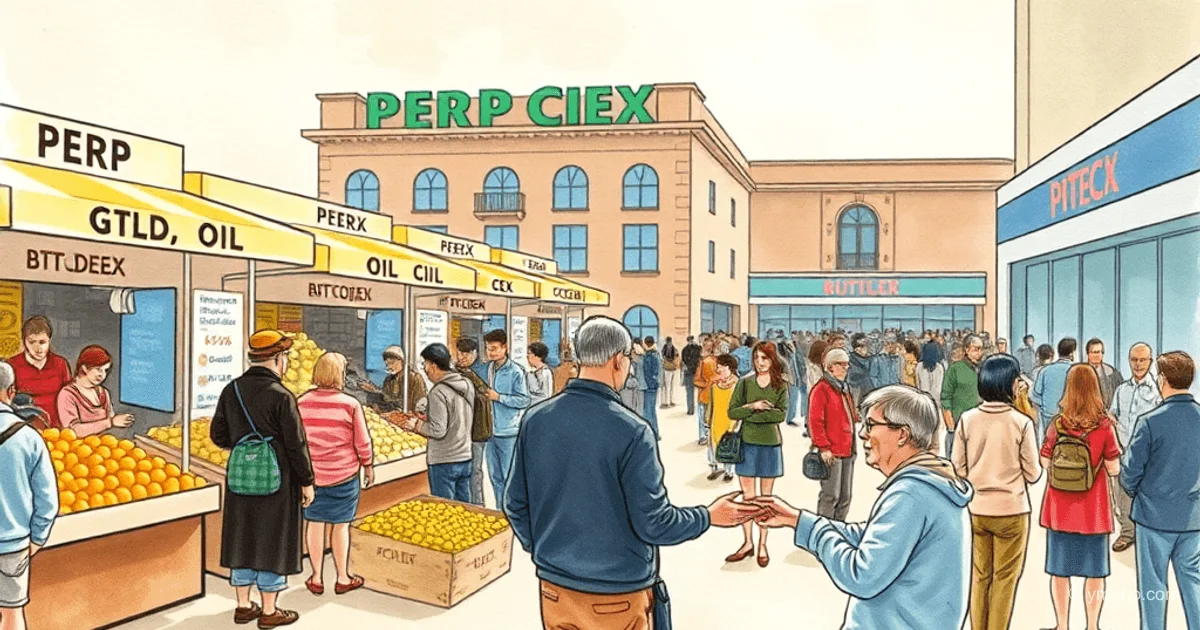
Why Your Next Crypto Trade Might Happen on a Public Square Instead of a Supermarket
Imagine trading stocks or gold without handing your money to a company. That’s the quiet revolution happening right now in crypto – and it could reshape how everyday people access financial markets. Decentralized perpetual exchanges (Perp DEXs) now handle over 10% of all crypto futures trades, up from just 2% two years ago. Why should you care? Because this shift isn’t just about tech geeks – it’s making trading more transparent and open to anyone with a smartphone, while challenging the way Wall Street has operated for decades.
What Even Is a Perpetual Futures Trade?
Think of it like a never-ending bet on whether bitcoin’s price will rise or fall. Unlike traditional futures contracts that expire monthly, perpetuals let you hold positions indefinitely – similar to keeping a stock in your portfolio. Now picture two ways to place that bet:
- Centralized exchanges (CEXs): Like a supermarket. One company controls prices, holds your money, and decides which products to stock. You trust them to be fair.
- Decentralized exchanges (Perp DEXs): Like a public farmers market. Anyone can set up a stall (list new assets), all transactions are visible on blockchain ledgers, and no single entity controls the space.
When you trade on a Perp DEX, your money stays in your own digital wallet – not with a company. It’s like paying directly to the farmer instead of through the supermarket cashier. This matters because you avoid risks like exchange bankruptcies (remember FTX?), but requires understanding new tools.
The Quiet Takeover You Haven’t Noticed
Data shows decentralized perpetual trading volume exploded from $82 billion to nearly $740 billion in just two years. That’s like every person in California suddenly trading the equivalent of a new car’s value – every single day. One platform, Hyperliquid, processed over $1.5 trillion in trades recently – more than the entire GDP of Switzerland.
But this isn’t about replacing traditional exchanges yet. Perp DEXs are currently attracting three specific groups:
- Speed traders: Like race car drivers switching to a track with fewer potholes, they’re moving for faster order execution and transparent pricing
- New-asset hunters: When meme coins or novel tokens launch, Perp DEXs list them in hours – not weeks – like a pop-up market appearing overnight
- Transparency seekers: They verify every liquidation and price feed themselves, like checking a restaurant’s health inspection report before eating
Meanwhile, centralized exchanges still win for most people because they offer:
- Simple bank transfers (no crypto wallet setup)
- Customer service that actually answers calls
- Familiar interfaces similar to stock trading apps
- Protection against accidental trades (like a "are you sure?" popup)
The Real Battle: Trading Gold and Oil on Blockchain?
Here’s where it gets fascinating. Both types of platforms are now racing to let you trade traditional assets:
- Centralized exchanges (like some major platforms) now offer forex pairs and gold prices settled in crypto
- Decentralized platforms are building open frameworks where anyone can create perpetuals for oil, S&P 500, or even weather derivatives
It’s like two rival food chains suddenly deciding to sell both pizza AND sushi. The difference? One chain (CEXs) gets ingredients from approved suppliers during business hours, while the other (Perp DEXs) lets anyone bring dishes 24/7 – but with no health inspectors.
Why This Road Is Bumpy
Three big hurdles stand in the way of mainstream adoption:
Liquidity potholes: Try selling a house in a ghost town – that’s trading large amounts on thin markets. Traditional assets need deep pools of buyers/sellers to avoid wild price swings.
Oracle risks: Blockchain oracles are like weather stations feeding price data. If one reports snow during a heatwave, trades go haywire. Gold and stock prices need ultra-reliable feeds, especially during market chaos.
Regulatory fog: Selling crypto perpetuals is one thing – but offering oil futures might require Commodity Futures Trading Commission approval. Many platforms use legal workarounds that could vanish overnight.
Most importantly: Your dentist won’t suddenly start trading bitcoin perpetuals. Traditional investors trust familiar brokers with FDIC insurance – not experimental platforms.
What Does This Mean for Regular People?
You likely won’t trade on Perp DEXs tomorrow, but this evolution could eventually give you:
- Cheaper access to global markets through your crypto wallet
- More control over your money with verifiable transactions
- New ways to hedge everyday risks (like fuel prices) through simple apps
Key Takeaways
- Perp DEXs grew from 2% to 10% market share in crypto futures in two years
- They attract speed traders, new-asset hunters, and transparency seekers
- Both DEXs and CEXs now compete in traditional asset trading
- Liquidity depth and regulation remain major hurdles
- This isn’t about replacing Wall Street – it’s creating parallel financial streets
What Does This Mean for Regular People?
This technology won’t replace your stockbroker soon, but it’s building infrastructure that could eventually make financial services cheaper and more accessible. Think of it like the early internet – clunky at first, but laying groundwork for tools we now can’t live without. The real win? More options for controlling your financial life without middlemen taking huge cuts.
— Editorial Team









