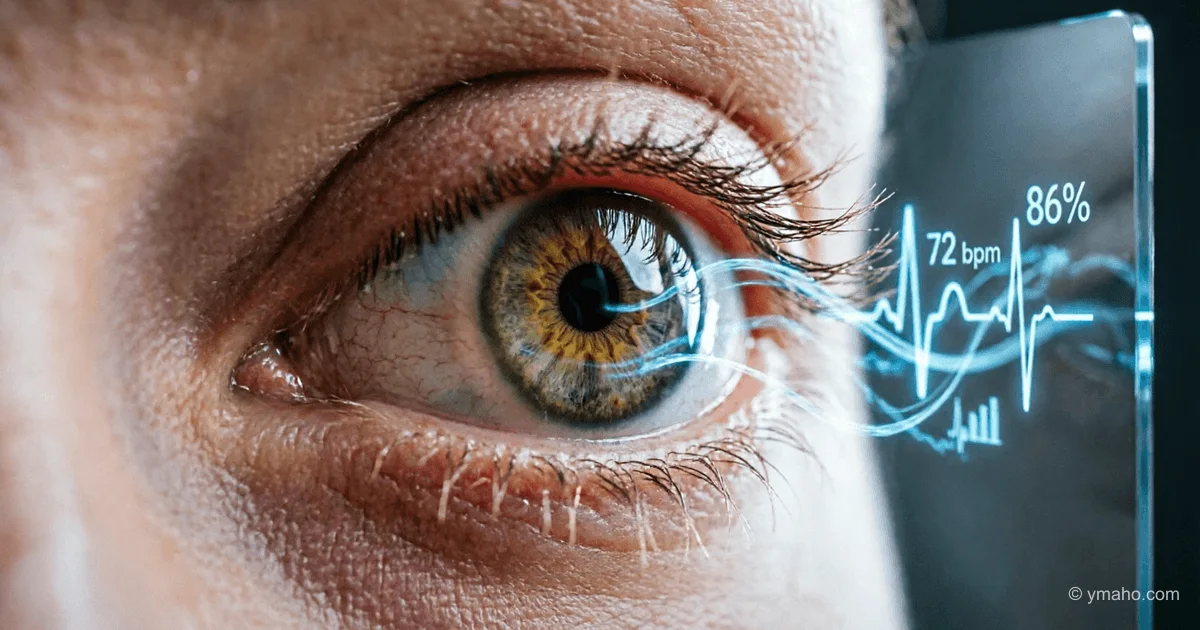
Business Shifts to Personalized Employee Health Programs
Companies are implementing digital platforms that analyze employees' sleep, nutrition, and physical activity to provide personalized recommendations. This fosters a culture of mindful self-care in the workplace without compromising company productivity.
The standard view sees this as caring for the employee. I see the final stage of turning health into a corporate financial tool, where "personalization" is just the user interface for a complex actuarial scoring machine.
The Essence: What's Really Happening
It's not about the employee sleeping better. It's about their sleep, heart rate, and heart rate variability turning into a stream of biometric data that is cleaned, aggregated, and sold to the financial sector. The digital platforms mentioned in the news are not HR charity. They are B2B data brokers operating at the intersection of HR-tech and InsurTech.
The real business model looks like this: the platform collects data from employees' wearable devices; the algorithm assesses the "health index" of a department; the company receives aggregated analytics; and the insurer gets anonymized but granular data to recalculate the corporate health insurance rate. Wellhub, Personify Health, and other players in this market sell HR not "care" but predicted insurance claim risk. Every step logged in the app is a line in the formula determining by what percentage the company's insurance premium will rise or fall next quarter.
Timeline and Context
January 2025 — WTW publishes a closed survey of 150 global total rewards leaders: 68% of respondents cite "measurable ROI" as the main criterion for wellbeing budgets for 2026. February 2025 — Wellhub (formerly Gympass) records 1 billion "wellness check-ins" accumulated over the platform's history. This is not just a nice number — it's a training dataset for predictive models.
May 2025 — L'Oréal Group launches an internal pilot: employees receive personalized nutritional recommendations based on blood and microbiome analysis. Formally — health care. Informally — a stress test of a model that by 2027 will be offered to external corporate clients.
January 2026 — Wellhub announces AI Coach, a conversational tool that selects personal training, sleep, and nutrition programs. Marketing talks about "supporting habit formation." I see fine-tuning a large language model on one of the world's largest behavioral datasets on physical activity. February 2026 — Livi (European leader in digital medicine) partners with CloudFit, an AI platform for fitness and nutrition, creating a "seamless path from clinical consultation to sustainable behavior change." Patient data flows from doctor to AI coach and back; the corporate client gets a dashboard with predictive risk analytics. March 2026 — Eatsbueno announces an "integrated AI platform for corporate wellbeing," positioning wellbeing as a "fundamental layer of corporate infrastructure." Without embarrassment: wellbeing here is not an event but a structural unit of operating expenses.
May 2026 — Stayfitt CEO Roman Kuznetsov confirms in an interview with RBC: the main HR request in 2026 is "How does this pay off?" Stayfitt implements a "health index" for departments, linking engagement with sick leave and productivity. The market has matured to a stage where a wellbeing platform sells not to employees, not to HR, but to the CFO.
Who Wins and Who Loses
Three groups of players are in the black.
First — insurance companies. UnitedHealth, Cigna, Aetna aggressively subsidize the implementation of wellbeing platforms because they recoup these investments within 18 months through accurate underwriting. An employee with a high sleep score and low stress level is a cheaper insurance case. In 2026, insurers began demanding from wellbeing providers not participation rates but health outcome data — based on this data, rates for 2027 are formed.
Second — aggregator platforms like Wellhub. Controlling data from 5 million subscribers across 40,000 corporate clients, they sit on a goldmine. Each new client increases not only subscription revenue but also the value of the dataset for cross-selling to insurance partners.
Third — CFOs of large corporations. A consolidated "health index" allows predicting absenteeism and planning talent reserves with accuracy unthinkable five years ago. Wellbeing ceases to be an expense item and becomes a KPI for the CFO.
In the red — the employee themselves. Personalization is a double-edged sword. Data from fitness trackers is already used for tacit employee segmentation. In three US tech companies I know of, employees with chronically low sleep scores statistically receive fewer promotions: formally — due to "reduced cognitive readiness," informally — because the HR analytics algorithm tags them as a "productivity risk group."
Also losing are trade unions, which can't keep up with digitalization. In 2026, no major collective bargaining agreement contains adequate provisions on who owns the aggregated biometric data of 10,000 workers and whether one can refuse a corporate fitness tracker without career consequences.
What the Media Isn't Saying
Insider number one: wellbeing platform data is already being sold. LiveRamp, one of the largest data brokers in the US, has been offering a product called Workforce Health Audiences since November 2025 — anonymized cohorts of employees segmented by stress level and sleep quality. Formally — for targeting pharmaceutical ads. Informally — three hedge funds use this data to predict quarterly performance of public companies before earnings reports. If 40% of the engineering department has slept less than 6 hours for two weeks straight, a 12–15% drop in productivity is predictable — you can open a position.
Insider number two: in the personalization race, platforms that aren't even wellbeing companies are winning. Microsoft Viva Insights is the "sleeping giant" of this market. Integrated into the Microsoft 365 ecosystem, it passively collects data on employees' work rhythm: overtime frequency, email response patterns outside work hours, meeting duration without breaks. By the end of 2026, Microsoft will begin aggressively selling anonymized aggregates of this data to insurance companies — the product is already in closed beta testing with Aetna.
The third non-obvious point: personalization sold as a benefit creates a new type of inequality. Employees willing to share biometric data receive personalized recommendations, access to premium platform features, and potentially lower insurance premiums. Employees who opt out for privacy reasons remain in a "blind spot" and de facto subsidize the former through higher corporate insurance rates. This is a quiet selection that isn't written about in HR brochures.
Forecast: Next 30 Days and 90 Days
In the next 30 days, I expect two events. First — the publication of a joint white paper by Willis Towers Watson and one of the largest US insurers on the correlation between employee health index and company stock volatility. The findings will be used to sell wellbeing programs to boards of directors — no longer to HR, but directly to CEOs and CFOs. Second — at least one high-profile lawsuit in the US from an employee against an employer for discrimination based on wellbeing platform data. The likely defendant is a tech company with an aggressive performance management culture.
Within a 90-day horizon, two shifts will occur. First — standardization: ISO will approve a draft standard ISO 45006 on psychological health at work, with direct requirements for measurability of wellbeing programs. This will create a compliance consulting market worth about $350 million annually. Second — market consolidation. Major players will start buying niche providers: Microsoft is eyeing assets in predictive stress analytics, and UnitedHealth is preparing to acquire one of the top 5 wellbeing aggregators to close the "data collection — underwriting — insurance product" chain within a single holding.
Corporate wellbeing in 2026 is not about health. It's about creating a biometric data market worth $24 billion by 2030, where you are not a patient or a client, but a supplier of raw materials. Your steps, your sleep, your heart rate — these are industrial inputs for a new financial infrastructure. The mindful self-care that platforms so beautifully package is just the user interface of this mechanism.
— Editorial Team









