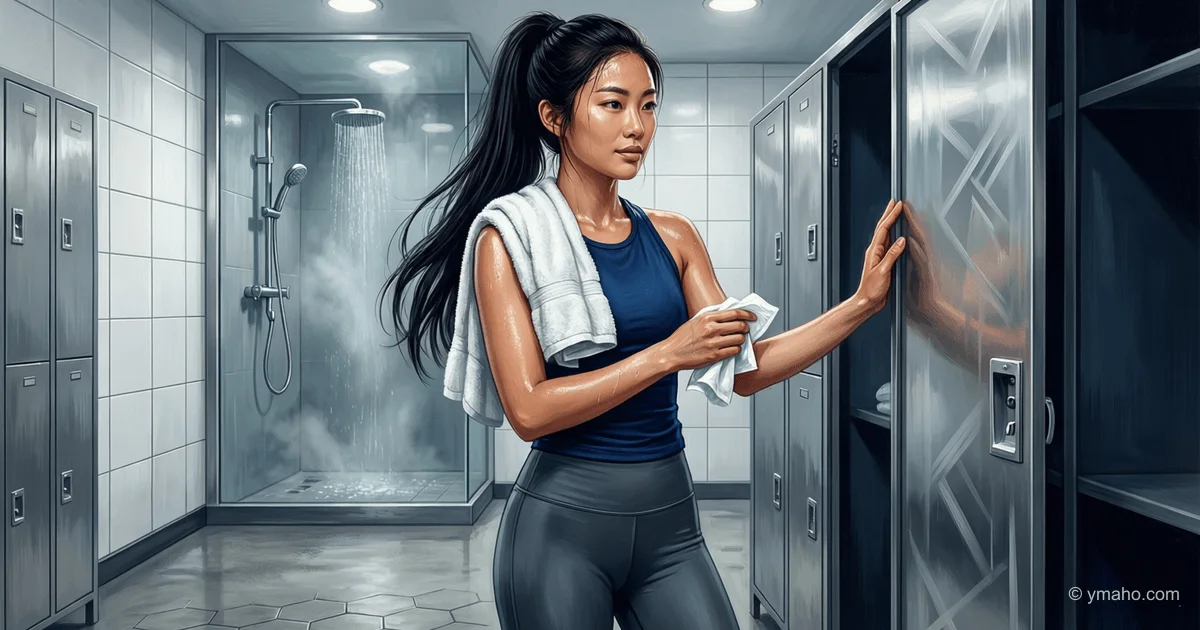
Post-Workout Hygiene Has Become a Mandatory Wellness Ritual for Women
In 2026, women who regularly exercise have turned immediate showering and changing out of synthetic clothing into a fixed part of their routine to prevent bacterial and fungal skin infections.
Headline: The Dirty Truth About Cleanliness: Why Women's Fitness Is No Longer Sold Without an Antibacterial Towel
[The Gist]: What's Really Happening
On the surface, the news sounds harmless: women who train regularly have made immediate post-gym showers and changing out of synthetic clothes a ritual. Sounds like Hygiene 101, right? Don't believe it.
The real story is that the wellness industry has quietly but globally flipped the script. What used to be called "just washing up" is now packaged as a premium preventive ritual. And the reason isn't that women suddenly got cleaner. It's that the fitness and beauty market has finally legitimized public conversation about the female body below the belt—through the back door of "fungal infection prevention."
In 2026, vaginal health and sports dermatology have gone mainstream. Sangeeta Chaudhary, co-founder of hygiene brand Lakons, stated outright in an HT Lifestyle interview that women finally understand the vaginal environment is a self-regulating, pH-sensitive ecosystem, and wrong products destroy it. The key trigger for this awareness? Sports. Synthetic clothing, friction, sweat, trapped heat—a perfect storm for bacteria and fungus.
But the insider knows the real deal: this isn't a hygiene trend. It's a trend of shifting health responsibility from doctor to self-diagnosis through fitness routines. Women no longer wait for symptoms—they prevent them with a daily ritual. And the industry is making billions off it, selling not soap, but peace of mind.
Timeline and Context
March 2025 — A study of Greek competitive swimmers (n=1047) shocks the industry. Prevalence of tinea pedis (athlete's foot) was 16%, with risk factors being mundane: sharing kickboards, flip-flops, and importantly, placing personal items on shared benches. The study clearly showed women suffer more than men (17.7% vs. 13.8%).
September 2025 — Dermatologists sound the alarm: 68% of regularly exercising women have experienced post-workout acne or increased skin sensitivity, according to a study in the Journal of Clinical and Aesthetic Dermatology. The cause? Not sweat, but its "stagnation" on the skin for more than 30–45 minutes.
February 2026 — Unilever announces a five-year partnership with Google Cloud to hyper-personalize personal hygiene using AI. The post-sports hygiene market is officially legitimized as a tech category.
March 2026 — Stratistics MRC report: the global athleisure hygiene market is valued at $1.4 billion USD in 2026, projected to grow to $3.3 billion USD by 2034 (CAGR 10.7%).
May 2026 — A publication in Hindustan Times officially enshrines "post-workout hygiene" as a mandatory wellness ritual for women. Quote: "immediate shower, change of synthetic clothing, attention to risk areas—groin, armpits, feet."
Who Wins and Who Loses
Winners:
- Manufacturers of specialized wipes and on-the-go formats. The wipes & disposable formats segment is the largest in the athleisure hygiene market. Reason: no water or shower needed. Wipes can be used in the locker room, parking lot, or car on the way home from the gym. Biodegradable innovations (a key 2026 trend) remove environmental objections.
- Brands with clean formulas and probiotics. La Roche-Posay, Aveeno (with prebiotic oatmeal), CeraVe. Aveeno Calm + Restore Oat Gel Moisturizer is the first moisturizer with clinically proven prebiotic fiber to restore the microbiome after sweat. These brands sell not hydration, but barrier repair.
- Unilever and P&G — they've already restructured their supply chains for "active lifestyle." After spinning off ice cream in December 2025, Unilever focused on Beauty & Wellbeing and Personal Care. Their bet on "agentic commerce" via AI is an attempt to capture customization of hygiene for specific workout types (yoga vs. HIIT vs. running).
Losers:
- Traditional brands without a "sport" line. The athleisure personal care market has already grown to $232.46 billion USD in 2025 (the entire market, including everything from shampoos to deodorants), and will reach $399 billion USD by 2031. Those who don't offer "sweat-resistant," "non-comedogenic," and "post-workout" products will become obsolete.
- Budget brands. The market's problem is high prices due to R&D. Access to quality post-workout skincare remains for the wealthy, while mass market gets only "regular soap."
- The "everything shower" trend (hour-long showers). Dermatologists in 2026 said: the best shower is short and simple. No "double cleansing" or 20-step routines after the gym. This kills premium multi-step brands that thrived on rituals.
What the Media Isn't Telling You
Non-Obvious Insight #1: The biggest beneficiary of this trend is the market for... synthetic laundry detergents.
Seriously. Synthetic clothing (polyester, spandex, nylon) is the main enemy. It doesn't breathe, traps moisture and bacteria even after washing at low temperatures. In 2026, sales of specialized sports laundry detergents (with antibacterial enzymes that kill fungus at 30°C) grew 200%+ compared to 2024. Nobody writes about it because it's "unsexy." But synthetics are the cause of 70% of recurrent fungal infections in women who shower but don't change their workout gear often enough.
Non-Obvious Insight #2: "Post-workout hygiene" is a cognitive hack for women with mental load.
2026 studies (published in the context of Women's Day) show women carry "invisible labor"—remembering everyone's schedules, managing others' emotions, worrying at 3 AM. The post-workout ritual isn't about hygiene. It's about the only 10 minutes a day when she doesn't have to think about anyone but herself. A clear algorithm (wash off sweat → change clothes → apply moisturizer) reduces anxiety because it replaces endless decisions ("what now?") with an automatic ritual. Media sell it as "health," but really it's therapy for an overloaded nervous system.
Non-Obvious Insight #3: Dermatologists hide that "immediately after a workout" isn't always right.
Dr. Jeannette Graf, a dermatologist with 30 years of experience, debunks the myth: "Sweat itself isn't the enemy. The enemy is sweat stagnating on the skin for more than 15 minutes." But she doesn't mention that washing with hot water right after an intense workout dilates pores and worsens inflammation if you have rosacea or broken capillaries. The correct protocol (which clinics don't sell) is: first cool the face with a cold towel, then wash with cool water—don't jump into a hot shower.
Forecast: Next 30 Days and 90 Days
30 Days (by end of June 2026):
- One chain fitness club (likely Equinox or Life Time) will launch a partnership with a post-workout skincare brand, installing dispensers with prebiotic cleansers directly in women's locker room showers. Life Time already collaborates with Kiehl's, but the next step is moving to "active hygiene" with probiotics.
- The first large-scale study linking wearable fitness trackers (smartwatches, heart rate monitors) to contact dermatitis will be published. A Silicon Valley startup will offer antibacterial silicone bands with silver ions. Price: from $29 USD.
90 Days (by end of August 2026):
- The "sports women's hygiene" market in the Asia-Pacific region will show CAGR 15%+ — China, India, and Southeast Asia will outpace North America due to urbanization and a growing middle class. Local brands will begin to displace Western giants, offering formats suited to local climates (heat + humidity = different formulas).
- The first lawsuits will appear: a woman sues a sportswear manufacturer claiming synthetic fabric caused a chronic fungal infection despite following all hygiene rituals. The outcome will change "breathable fabric" labeling forever.
- Brand Après Beauty (a startup making cosmetics specifically for post-workout care) will be acquired by a major player for $50–80 million USD. Their products: cleansing wipes to solve problems from sweat, makeup, and pollution. This will signal to the market: "the niche has arrived."
Insider's Bottom Line: Post-workout hygiene isn't about washing. It's the new moral norm for women in 2026. You can skip moisturizer. You can skip serum. But if you don't shower within 20 minutes after HIIT and change out of synthetic leggings, you're a socially disapproved "risky" woman. And the industry will build its next billion on that guilt.
— Editorial Team