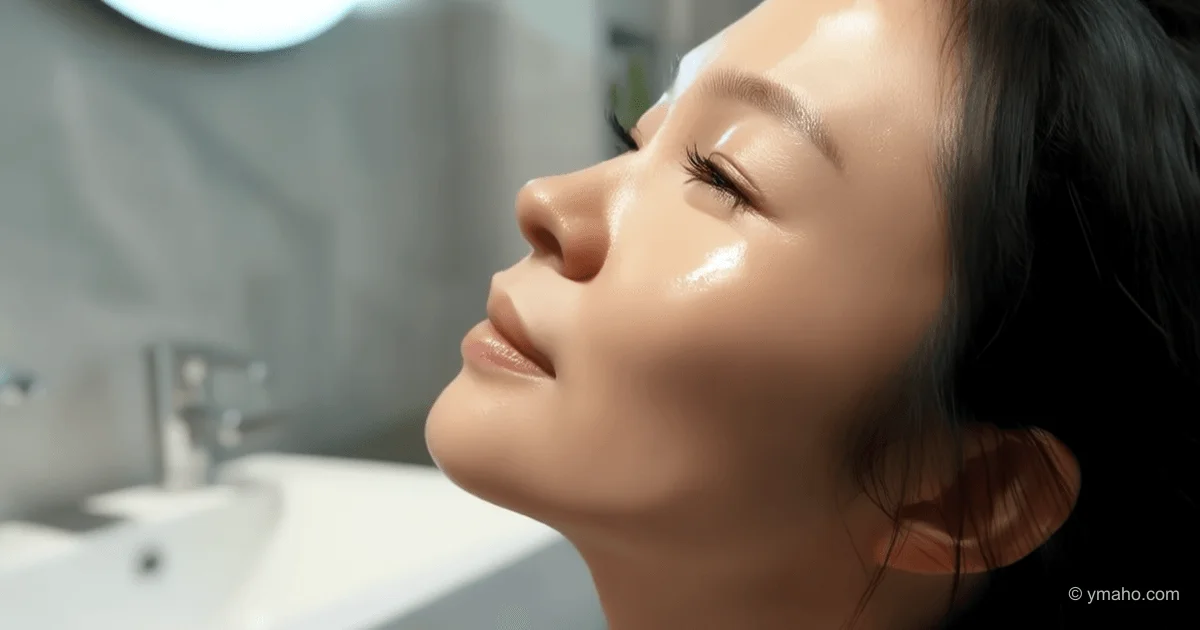
Skin Microbiome and Probiotic Sprays: A New Frontier in Skincare
The market is seeing a surge in sprays containing live bacteria, designed to restore the facial microbiome after aggressive cleansing, promising reduced inflammation and a strengthened skin barrier.
We're used to thinking of bacteria on our face as enemies to be washed off, wiped away with alcohol, or burned off with acid. The skincare industry has built itself on this fear for decades, promoting "squeaky clean" cleansing. But right now, in mid-May 2026, this foundation is cracking. A new category of products is hitting the shelves of luxury department stores and dermatology clinics: probiotic sprays with live bacterial cultures. These are not serums or tonics in the classic sense. They are aerosol concentrates of life, meant to be applied to the face immediately after washing, to colonize the skin with "good" strains before pathogens from the environment can get in.
At first glance, this seems like just an evolution of the "microbiome-friendly" cosmetics trend that has been buzzing for years. But the reality is much more complex and interesting. What's happening now is not an improvement on an old idea, but a complete paradigm shift: from cosmetics that "don't harm" bacteria to cosmetics that actively populate them.
The Core: What's Really Happening
The point is not that someone added bacterial lysates to a cream. That's yesterday's news. The new sprays contain dormant but viable forms of bacteria that activate upon contact with moist skin. The technology has roots in cryobiology and vaccine logistics: bacteria are placed in micro-droplets of an oil emulsion without oxygen, allowing them to remain stable at room temperature for up to 18 months.
Why a spray? Because live cultures are critically sensitive to preservatives. Mixing them with a cream that contains emulsifiers and parabens would kill them in the jar. The aerosol format with a sealed pump isolates the bacterial solution from the external environment and from unnecessary chemicals.
This is not just "next-generation hydration." It's an attempt to create a controlled ecosystem on the face that will itself produce antimicrobial peptides, regulate pH, and modulate local immunity. Manufacturers are essentially asking women to abandon sterility as a goal and embrace the concept of a "healthy facial biocenosis."
Timeline and Context
By May 2026, the technology has matured thanks to the convergence of three independent factors.
First, dermatological research from 2023-2025 has definitively confirmed that rosacea, acne, and atopic dermatitis correlate not just with "bad" bacteria, but with a loss of microbiome diversity. Skin that hosts 100 species of bacteria is almost always healthier than skin dominated by 5-10 species, even if they are conditionally "good." Diversity turned out to be more important than composition.
Second, the 2024 scandal involving antibacterial cleansers that destroyed up to 90% of the facial microbiome in a single use forced even conservative dermatologists to admit: aggressive care creates a "vacuum" that pathogens colonize faster than commensals.
Third, startups from the food tech sector (fermentation, gut microbiome) received their first rounds of venture funding for "skin probiotics" in 2025. Companies like S-Biomedic, Mother Dirt, and Esse Skincare are no longer niche and have begun negotiations with Estée Lauder and Shiseido for acquisition.
And now, on May 13, 2026, we see the first mass-market push: three brands from the top 10 luxury segment simultaneously announced the launch of "live" sprays for the third quarter. The synchronicity is no coincidence—they were waiting for the packaging and logistics technology to become cheap enough for the mass market.
Who Wins and Who Loses
The direct beneficiaries are obvious. Manufacturers of airless aerosol packaging are experiencing a gold rush. Aptar Group, which holds patents on airless spray systems with contamination protection, has already reported a 40% increase in orders specifically from the beauty segment.
Dermatologists who previously treated acne with antibiotics now have an alternative protocol. This doesn't mean antibiotics will disappear, but their use may shift to second-line therapy. Clinics that are the first to implement skin microbiome analysis before selecting a probiotic spray will benefit. This is a new diagnostics market worth approximately $1.4 billion by 2028, and the race to claim a share is on.
But there are also those who are losing ground. Brands that invested millions in marketing "sterile cleanliness" and antibacterial ingredients are at a disadvantage. Lines like Clinique Anti-Blemish Solutions, built on the idea of killing bacteria, now look conceptually outdated. They will either have to rebrand as "balancing" or lose the younger audience that is already learning about the microbiome on TikTok.
Another loser is the aggressive peel industry. If a patient starts rebuilding their bacterial layer, they cannot strip it away with acid once a week. Home care protocols will need to be rewritten, which means sales of acid peels could drop by 10-15% in the next six months.
What the Media Isn't Saying
Risks. Almost no one is writing about them because the industry is making money on positivity. But the insider community of dermatologists is quietly discussing several scenarios that could explode in the next 90 days.
First: bacteremia on damaged skin. Live bacteria are safe for healthy skin, but what happens with micro-tears from shaving or aggressive exfoliation? Theoretically, commensals could enter the bloodstream and cause local infections. No major study has yet published data on the frequency of such incidents with daily use of live-culture sprays. Manufacturers cite the GRAS status of the strains (generally recognized as safe), but that status is for food products, not for application to micro-injured skin.
Second: selection. If the spray contains only 3-5 strains, won't regular application lead to a monoculture on the face? That is, the very reduction in diversity we are trying to combat? No one is studying the microbiome of users after six months of daily application. This is a blind spot, and when the first data emerges, it may turn out that "probiotic" care actually impoverishes the ecosystem to a few commercially viable strains.
Third, the most subtle point: storage stability. Even airless packaging does not guarantee that a spray left on a bathroom shelf at 35°C and 90% humidity in summer will retain the claimed 10^7 CFU. Insiders from quality control labs say that actual viability after six months often drops by 2-3 orders of magnitude. The buyer gets just water with dead cells, not a "live" spray. But the label is already printed.
Forecast: The Next 30 and 90 Days
In the next 30 days, we will see a wave of "exposé" posts from beauty bloggers with microscopes trying to test bacterial viability using home methods. This will fuel interest but create reputational risks for brands that have not ensured a cold supply chain.
In 90 days, by August 2026, market segmentation will occur. Two classes of products will emerge: mass-market sprays with lyophilized lysates (safe but less effective, essentially "dead") and premium sprays with live cultures, sold in special thermal boxes like probiotics from a pharmacy. The price difference will be enormous: $35 vs. $180 per bottle. The margin in the premium segment will allow investment in cold logistics, while mass-market will trade on promise rather than reality.
Also in 90 days, the first regulatory moves are expected. The FDA and EMA will start asking questions about standardization: how to measure bacterial viability in cosmetics, what percentage of die-off is acceptable, whether the label should state not "added 10^8 CFU" but "remaining after 6 months of storage." This will change the rules of the game for everyone.
The most non-obvious forecast: probiotic sprays will become a gateway to personalized cosmetics. Imagine: you take a swab from your face, the lab analyzes your unique microbiome profile, finds deficient strains, and grows a spray specifically for you. This sounds like science fiction, but in Zurich, there is already a pilot project offering such a service for $2,900 per year. Once the price drops to $500—and that's a matter of 18 months—personalized probiotic care will no longer be niche.
The market stands on the threshold of the most profound transformation in skincare since the invention of retinoids. And those who understand that the face is not a canvas but a garden to be cultivated, not sterilized, will reap the harvest in the next 24 months.
— Editorial Team









