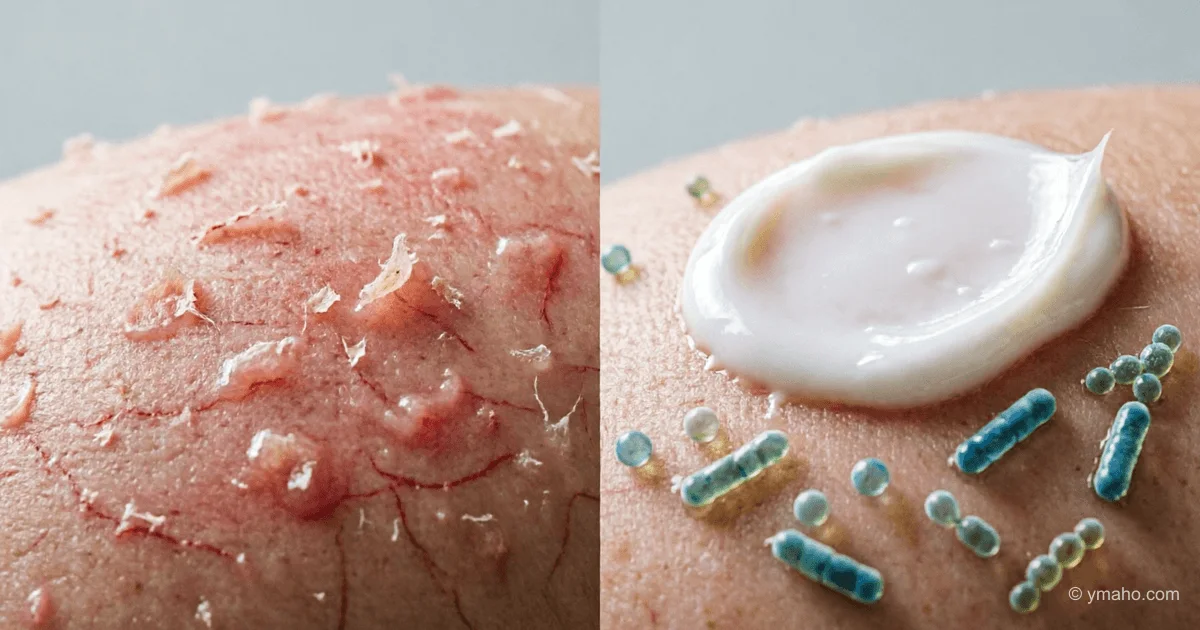
Skin Microbiome and Conscious Care: How Probiotics Became the New Must-Have
Demand is growing for cosmetics with probiotics that restore the skin's own microflora and strengthen its barrier. The trend is moving away from aggressive cleansing in favor of 'smart' formulas capable of restoring skin after stress and improving its immunity.
Skin Microbiome and Conscious Care: How Probiotics Became the New Must-Have
Introduction
For a long time, the cosmetics industry was built on a logic of warfare: cleansing was seen as destroying bacteria, and ideal skin was imagined as a sterile surface. Today, this paradigm is crumbling before our eyes. The aggressive approach is being replaced by conscious care, centered on restoring and supporting the skin's own microflora. Probiotic cosmetics, which seemed like a niche experiment just yesterday, have become one of the most dynamic segments of the beauty market in 2026, and their main asset is not a single ingredient, but an entire philosophy of microbiome care.
Event Details and Timeline
Fresh analytical data paints a picture of explosive growth. According to The Business Research Company as of February 2026, the global microbiome skincare market reached USD 1.35 billion in 2025 and is expected to grow to USD 1.6 billion in 2026, with a compound annual growth rate (CAGR) of 18.7%. The forecast through 2030 is even more ambitious — USD 3.15 billion, maintaining a CAGR of 18.5%.
TechSci Research estimates the microbiome cosmetics market more modestly — USD 445.77 million in 2025, with a forecast of USD 834.68 million by 2031 (CAGR 11.02%), but emphasizes that the difference in figures is due to calculation methodology and the breadth of coverage of adjacent categories. More importantly, analysts are unanimous in assessing the growth drivers.
The key catalyst is a deep transformation of consumer consciousness. As noted in the GII Research industry review, growth is largely driven by increased consumer understanding of skin health biology and a preference for dermatological ingredients that offer barrier restoration rather than just aesthetic enhancements. In other words, buyers have stopped chasing instant visual effects and have become interested in the biology of their own skin.
At the same time, the industry is responding with technological innovations. In July 2024, Unilever, in partnership with the Watsons chain, launched the Microbiome Analyzer device in Southeast Asia — a device that analyzes the microbiome profile from a skin swab in 60 minutes and provides personalized care recommendations. This launch was a milestone: microbiome diagnostics is no longer the prerogative of dermatology clinics and has entered the retail environment.
The scientific community has also become more active. In April 2026, the journal Skin Research and Technology published a review by Taléns-Visconti and colleagues, critically evaluating the evidence base for 'microbiome-friendly' cosmetics. The authors' conclusion is cautiously optimistic: most traditional cosmetics do not cause significant dysbiosis on healthy skin, and formulas with probiotics, prebiotics, and postbiotics show promising results in clinical trials — though researchers lack standardized criteria for the 'microbiome-friendly' label.
Impact and Significance
For the industry. The shift to microbiome cosmetics is not just launching a new product line, but a change in the fundamental approach to formula development. The key technological challenge is creating preservative systems that ensure product stability on the shelf but do not kill the live bacteria for which the product is purchased. Manufacturers face a paradox: standard parabens and preservatives destroy probiotic strains, while abandoning them creates risks of microbial contamination. Solving this puzzle requires investment in cold supply chains and expensive packaging solutions, slowing entry into the mass market.
For the consumer. Probiotic care fits perfectly into the broader trend of skinimalism, which in 2026 is recognized as the leading skincare trend. The ideology of 'fewer products, but smarter formulas' directly aligns with the microbiome approach: instead of suppressing the skin with aggressive actives, it offers gentle restoration of its own defense mechanisms. For consumers with sensitive, reactive, or acne-prone skin, this means abandoning endless product trials in favor of one or two effective formulas with probiotics and ceramides.
For medicine. The increasing prevalence of dermatological diseases — eczema, rosacea, atopic dermatitis — is accelerating the adoption of microbiome solutions. The modern lifestyle with its environmental stressors leads to chronic disruption of the skin barrier, and products that actively restore bacterial balance are becoming de facto therapeutic, not just cosmetic.
Reaction of Key Players
Strategies of major market participants are built along three axes.
Giants bet on acquisitions and R&D. L'Oréal acquired the Danish company Lactobio in December 2023, specializing in precision probiotics and live bacterial formulas for skin and hair care. The result was swift: in its half-year report for 2024, L'Oréal's dermatological division, which includes key microbiome brands, showed like-for-like sales growth of 16.4%. Beiersdorf recorded organic growth of 8.3% in its dermatological division over the same period, while Unilever reported Beauty & Wellbeing revenue of EUR 6.5 billion.
Technology platforms take the lead. Oddity Tech, the parent company of brands Il Makiage and SpoiledChild, published financial results in August 2025 with net revenue of USD 241 million in the second quarter — 25% year-over-year growth, driven by an AI-managed brand portfolio. Hyper-personalization through genomic analysis and machine learning is becoming a key competitive advantage: brands are learning to map the individual consumer microbiome and offer recommendations targeting specific bacterial imbalances.
Niche and local players build educational ecosystems. The Singapore market, valued at USD 11.12 million in 2023 with a forecast of USD 13.88 million by 2027 (CAGR 5.82%), demonstrates a model where local brands — Sigi Skin, Kew Organics, Porcelain — compete not on price but on educational content and clinical approach. Hosting specialized congresses, such as the Microbiome Asia / Skin Health & Microbiome Congress, turns the city-state into a regional hub for microbiome innovation.
Forecast and Conclusions
The segment's development will be determined by several factors.
In the short term. The technology race will shift to delivery systems. Microencapsulation, lyophilized powders, and 'instant activation' formulas will become the standard for preserving probiotic viability. At the same time, regulators will begin developing criteria for the 'microbiome-friendly' label — the lack of standards is currently recognized as the main market brake.
In the medium term. Microbiome care will extend beyond the face. 'Skinification' of the body and hair — a trend where the scalp and body receive the same level of care as the face — is actively gaining momentum. Sales of the Skin Protection division of Japan's Kao Corporation grew by about 30% in 2024, precisely due to functional body care. Probiotic deodorants, microbiome shampoos, and intimate hygiene products are the next frontiers of expansion.
Long term. The line between cosmetics and dermatology will continue to blur. When a consumer uses a product that not only masks a problem but restores the skin's bacterial balance, they are essentially performing a therapeutic intervention — albeit in a cosmetic format. It is this convergence that L'Oréal and Beiersdorf are already monetizing through their dermatological divisions.
The main takeaway: probiotic cosmetics are not an ingredient trend, but an indicator of a systemic shift in the relationship between humans and their skin. From a model of 'control and suppression,' the industry is moving to a model of 'support and restoration.' The microbiome has ceased to be a narrow topic in dermatology journals and has become the language in which beauty brands speak to the conscious consumer of 2026. Those who master this language first will gain not just market share, but the loyalty of an audience tired of being a field for endless cosmetic experiments.
— Editorial Team









