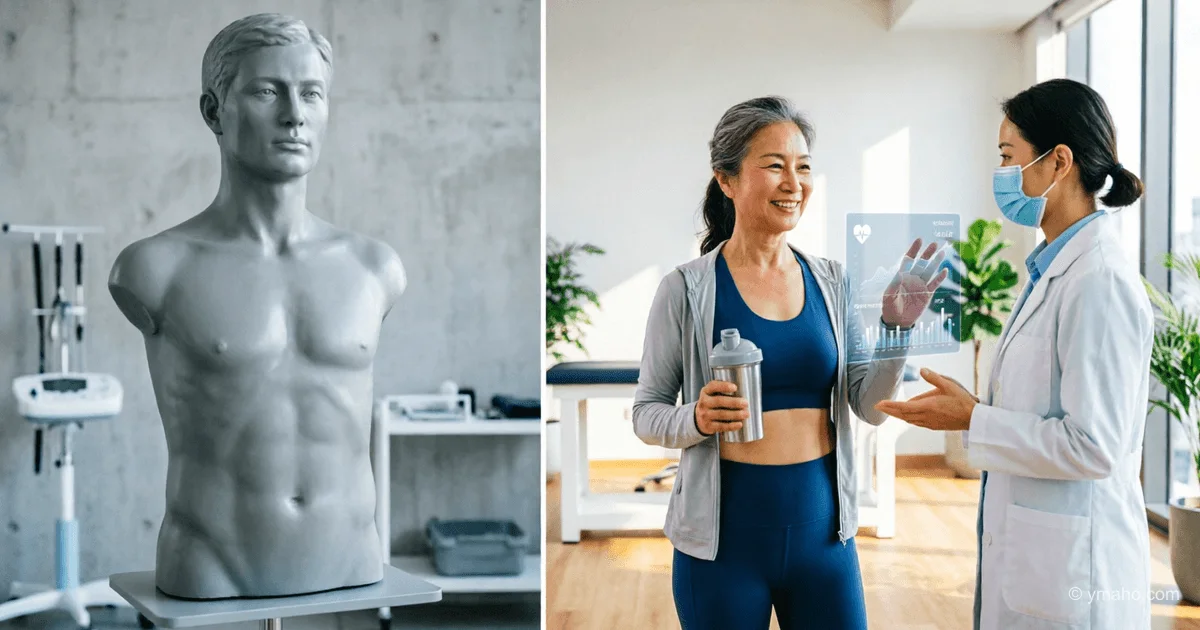
The Rise of Women's Health: Protein and Menopause
Women's health is becoming a key focus: for the first time, women have surpassed men in consuming added protein (51%). Demand is also growing for specialized solutions for perimenopause and health management, reshaping market dynamics.
Protein, creatine, and rethinking menopause: how women's health became a driver of the global wellness economy
Introduction
For years, the healthcare system and wellness industry were built on a "one-size-fits-all" model that took the male body as the baseline. Women's health was treated as a niche category, limited to reproductive function. By 2026, this approach is recognized as outdated and systematically flawed.
We have witnessed a tectonic shift: women's health is emerging from the shadows and becoming a key driver of the global wellness economy. The data is undeniable: for the first time, women have surpassed men in consuming added protein, accounting for 51% of consumers. At the same time, there is explosive demand for specialized solutions for perimenopause, hormonal support, and longevity management.
What lies behind this transformation? It's not just a fad for supplements. It's the result of three factors: the accumulation of scientific knowledge about sex differences in aging, the proactive stance of female consumers demanding personalized solutions, and businesses recognizing the huge potential of a previously ignored market. In this article, we will examine the chronology of this shift, its impact on society and the industry, the response of key players, and how the approach to women's health will change in the coming years.
Event Details and Timeline
The transformation of women's health from a marginal topic to the mainstream happened gradually, but 2025-2026 marked the "critical mass" moment.
Stage 1: Awareness of the "gender gap" in medicine (2020-2023).
Research showed that aging processes in women and men differ fundamentally. It turned out that for a long time, scientific studies and medical approaches were based primarily on data from the male body—and this was recognized as a systemic error. Women are more prone to autoimmune diseases, osteoporosis, and dementia, and declining ovarian function significantly accelerates overall aging.
Stage 2: Paradigm shift—from reproduction to longevity (2024-2025).
The focus shifted from the menstrual cycle and fertility to perimenopause and long-term health. Industry attention turned to "healthspan" (the period of life free from chronic disease) as a more important metric than simple lifespan. The market began to form around issues such as hormonal aging, cognitive health, and muscle mass maintenance.
Stage 3: Supplement boom and conscious protein consumption (2025-2026).
A key marker of the shift was protein consumption. In 2026, women surpassed men in added protein intake for the first time. According to Vitaquest International, the "women's health" category entered the top 7 major trends in the supplement segment, highlighting three key areas: menopause, urinary tract health, and fertility. At the same time, demand for creatine—a supplement traditionally considered "male" for muscle growth but proven critical for postmenopausal women—surged.
Stage 4: Institutionalization and investment boom (2026).
The market has fully established itself as mainstream. The Global Wellness Summit included "focus on women's longevity" in its list of key trends for 2026. The global menopause market is valued at $490.15 billion in 2025 and is projected to reach $708.67 billion by 2032, with a CAGR of 5.40%. Investments in women's health, which declined in 2025, are expected to recover in 2026 according to Deloitte. The women's digital health market (FemTech) is set to reach $5.28 billion in 2026.
Impact and Significance (for the world, industry, society)
Impact on industry and economy:
The economic effect of this shift is enormous. Food and supplement manufacturers are restructuring their portfolios: the focus is shifting from universal products to gender-specific solutions. The protein intake standard, long set at 0.8 g/kg of body weight, has been officially raised to 1.2–1.6 g/kg in 2026, especially for perimenopausal women. This is changing the formulas of sports nutrition, protein bars, and ready-to-eat meals.
The creatine market is experiencing a rebirth. Previously marketed as a supplement for muscle mass gain, it is now promoted as a means to support hormonal health, bone tissue, and cognitive function in postmenopause.
Impact on medical practice and perception:
The very approach to aging is being reconsidered. Women no longer view menopause as an "end" or a "disease" to be endured. There is a demand for active management of this period: personalized hormonal support protocols, nutraceuticals, and lifestyle changes.
The Global Wellness Summit notes an important paradox: technology has made the body's state fully measurable, but this has led to increased anxiety. Therefore, the modern approach to women's wellness combines high-tech diagnostics with a return to bodily sensations, inner comfort, and a rejection of perfectionism.
Impact on society:
The shift toward women's health is breaking down long-standing taboos around open discussion of menopause, hormonal changes, and age-related issues. It gives women tools for active longevity rather than passive aging. As a result, there is growing demand for specialized clinics, cycle and menopause tracking apps, and educational programs.
Response of Key Players
Supplement and sports nutrition manufacturers.
Vitaquest International, a leading CDMO, has officially included women's health in its top trends for 2026. The company highlights three key segments: menopause, urinary tract health, and fertility. Popular ingredients include chasteberry, maca, vitamin D, as well as black cohosh, HMR lignan, and Siberian rhubarb for menopause support.
Medical and fitness institutions.
Bupa UK, in its 2026 trends report, emphasizes the explosive growth of interest in creatine among women. Search queries for "benefits of creatine for women" and "creatine and menopause" have tripled. Bupa experts explain: with the loss of estrogen during menopause, bone density decreases, and creatine helps maintain muscle strength and prevent osteoporosis.
Analytical agencies.
360iResearch forecasts the global menopause market will grow from $490.15 billion to $708.67 billion by 2032. The report highlights that women are increasingly seeking not just relief from vasomotor symptoms, but comprehensive support for cognitive function, bone health, mood stability, and quality of life.
FemTech and digital health.
Citeline Insights notes that after a decline in 2025, investments in women's health will recover in 2026, driven by interest in menopause, cardiovascular diseases, and mental health. The women's digital health market will reach $5.28 billion in 2026 and $11.47 billion by 2030.
Forecast and Conclusions
What awaits us in the coming years in the women's health segment?
- Integration of approaches. The future lies in multidisciplinary clinics where endocrinologists, gynecologists, nutritionists, and trainers work together to create personalized protocols for each stage of a woman's life.
- Growth of the "well-aging" segment for women. The concept of "good aging" will dominate. Women will invest not in rejuvenation "at any cost," but in maintaining functionality, mobility, and quality of life. The "healthspan" metric will become the main marker of success.
- Innovations in ingredients. We will see new forms of creatine adapted for female metabolism, combined formulas like "protein + collagen + vitamin D" for muscle, bone, and skin support, and breakthroughs in postbiotics for the gut-brain-hormone axis.
- Digitalization and personalization. Cycle and menopause tracking apps will become smarter, integrating with wearable devices and AI diagnostics. This will allow symptom prediction and personalized recommendations for nutrition, supplements, and lifestyle.
Conclusion:
We are on the threshold of a new era in women's health. The era of "just put up with it, it's normal" is fading. In its place comes an era of conscious management: women don't just want to live longer; they want to live better, more actively, and healthier at every stage—from reproductive age to deep postmenopause.
Protein and creatine are just the first signs. They will be followed by new hormonal support protocols, personalized nutrigenomics, and technologies to extend healthspan. The market that long ignored half the world's population has finally realized its enormous potential. And it's not just companies that will benefit, but millions of women gaining the tools for a long, healthy, and fulfilling life.
— Editorial Team









