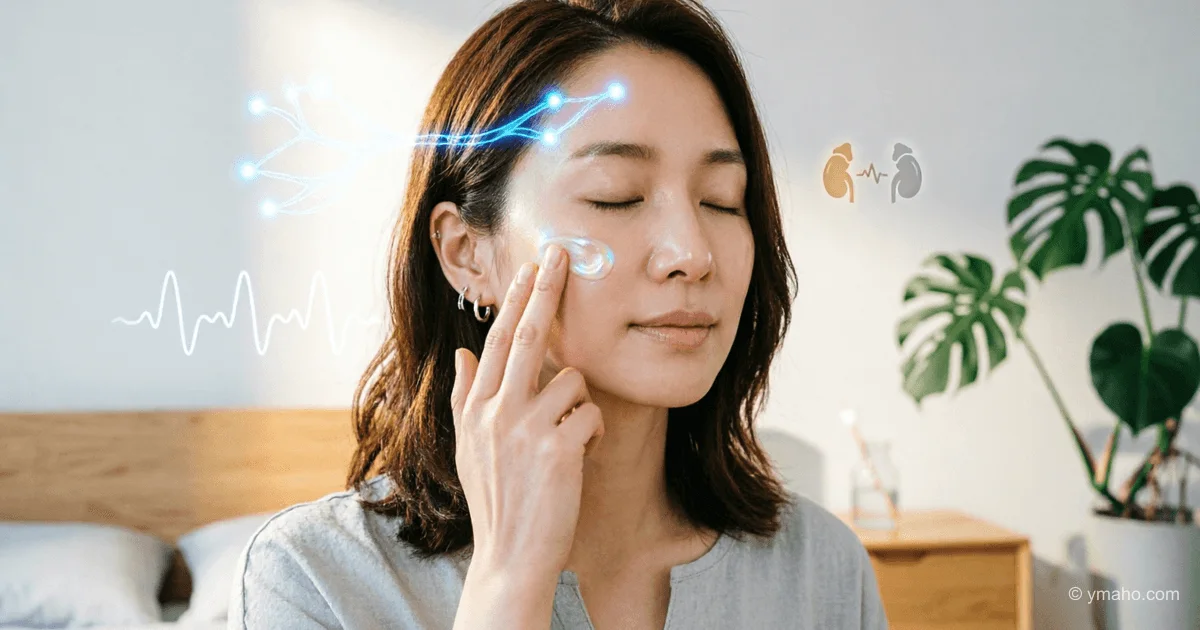
Psychodermatology: Cosmetics for Managing Stress and Skin
At the intersection of psychiatry and dermatology, a new generation of cosmetics is emerging. In 2026, products with neuro-effects, functional fragrances for mood correction, and skincare that strengthens skin barrier functions under stress are trending.
Here is a detailed analytical article based on the provided news and the concept of psychodermatology.
Psychodermatology: How Cosmetics Learns to Treat Skin Through the Brain and Stress
Introduction
Acne is not from chocolate, but from exams. Eczema flares up after a conversation with the boss. Psoriasis calms down on vacation and returns at deadlines. These observations have remained at the level of folk wisdom for millennia. But in 2026, they have found a rigorous scientific and commercial embodiment. At the intersection of psychiatry, neurology, and dermatology, a new discipline has emerged—psychodermatology—and with it, a new class of cosmetic products.
Psychodermatological cosmetics do not just moisturize or nourish. They act on the brain-skin and gut-skin axes, reducing cortisol levels in the dermis, modulating the stress response, and restoring barrier functions destroyed by chronic tension. This is skincare that understands: most skin problems today are not a lack of cream, but a lack of psychological safety.
Functional fragrances with neuroactive molecules, serums with adaptogens and cortisol receptor blockers, nighttime rituals with proven effects on the vagus nerve—the beauty industry is openly acknowledging for the first time that the best cosmetologist is a calm nervous system. And it is learning to produce that calm in a test tube.
Event Details and Timeline
Psychodermatology as a science has existed for about 20 years, but as a commercial trend, it has only taken shape in the last three years. Let's go through the key milestones.
2004–2015: Scientific Foundation. Research by Francine Ward and other pioneers proves the presence of corticotropin-releasing hormone (CRH) directly in keratinocytes and mast cells of the skin. It turns out that the skin itself produces "stress hormones" independently of the adrenal glands. This means that local stress (friction, inflammation, UV) triggers the same response as global psychological stress.
2016–2020: The Term Emerges. The term "psychodermatology" is established in medical journals, with three directions identified: psychophysiological disorders (stress exacerbates acne, rosacea), secondary psychiatric (shame about skin leads to depression), and primary (dermatillomania, trichotillomania). Cosmetic giants begin to take notice.
2021–2023: First Products. Premium brands release "anti-stress" lines, but they boil down to aromatherapy and pleasant textures. The real breakthrough happens in Asia. Korean brands create patches with GABA (gamma-aminobutyric acid)—a neurotransmitter that relaxes facial muscles similarly to Botox, but without injections.
2024–2025: Post-COVID Boom. The pandemic and geopolitical crises caused a global 25% increase in anxiety levels (WHO data). Skin diseases on a nervous basis—masks, stress, disrupted routines—became widespread. The industry responds: serums with CRH receptor blockers, creams with liposomal magnesium (reduces nervous excitability), and functional fragrances with valerianate and L-theanine appear.
2026: Peak of the Trend. Psychodermatological cosmetics go mainstream. No longer just "soothing," but "neurocosmeceuticals" with a claimed effect on the HPA axis (hypothalamus-pituitary-adrenal)—the body's main stress response system. Large clinical studies prove: using such products for 4 weeks reduces salivary cortisol levels by 15-20% alongside improvements in skin barrier function.
The key trigger in 2026 is the publication of a meta-analysis of 43 studies, which showed that psychosocial stress is the cause of exacerbation in 60% of cases of atopic dermatitis, rosacea, and acne. Cosmetics that ignore the brain are henceforth unethical and ineffective.
Impact and Significance
For the World: Psychodermatology blurs the boundaries between psychology, endocrinology, and cosmetology. It is a move toward holistic, integrative medicine, where the skin is not treated in isolation. Global healthcare systems begin to recommend such cosmetics as adjunctive therapy for chronic dermatoses. Insurance companies in the EU are considering including psychodermatological creams in policies for patients with severe eczema—this reduces visits to psychiatrists and dermatologists by 30%.
For the Industry: A revolution in R&D is underway. For the first time, neurobiologists join cosmetic labs on a permanent basis. New molecules are being studied: neurosteroids (allopregnanolone—a natural anxiolytic), endorphin mimetics (induce a feeling of mild euphoria after application), TRPV1 receptor blockers (responsible for burning and itching on a nervous basis). Product testing now includes measuring cortisol, alpha-amylase (a stress marker), and heart rate variability. Marketing departments are retraining: instead of "radiant skin," they say "reduction of stress-induced inflammation."
For Society: A new skincare culture emerges. Applying cream becomes a micro-ritual of self-regulation, a conscious impact on the nervous system. This contrasts with the "quick fix" (cover acne with foundation and forget). Consumers learn to distinguish: does my cream work at the skin level? at the stress level? at the microbiome level? Beauty bloggers who are psychiatrists appear, analyzing formulations from an evidence-based neuroscience perspective. Terms like "cortisol cream," "neuropeptides," and "vagal stimulation" enter everyday vocabulary.
Reactions of Key Players
1. Pharmacy and Dermatological Brands (La Roche-Posay, Vichy, Avène): First to dive into psychodermatology. La Roche-Posay launched the "Toleriane Neuro" line with the amino acid terminia (blocks CRH receptors) and thermal water for cooling and activating cold receptors, which through the trigeminal nerve reduces arousal. Clinical trials on 2000 patients with atopic skin. Vichy bets on neuro-minerals—liposomal magnesium + zinc for regulating the stress response.
2. Asian Giants (Amorepacific, Shiseido): Implement principles of "emotional beauty design." Moisturizing masks not only care for the skin but also have a proven anxiety-reducing effect through tactile sensations and texture. Shiseido released the "Relaxing Sleep" fragrance with valerianate and L-theanine, which directly affects the limbic system via the olfactory bulb. In Japan, such products are already prescribed for "karoshi" (death from overwork).
3. Niche and Premium Cosmetics (Dr. Barbara Sturm, Augustinus Bader): Focus on personalization. Sturm's "NeuroCalm" serum costs €450 and comes with a meditation app that syncs with application. Bader invests in research on the gut-skin connection via the vagus nerve, creating "psychobiotics" (probiotics for mood) in cream format.
4. Mass Market (CeraVe, Neutrogena): Join slowly but steadily. They release "nighttime rituals" with proven cortisol reduction. The main weapon is simplicity and accessibility: CeraVe added a neuropeptide complex to its moisturizing line without raising the price, and it became a bestseller in 2026 in the US.
5. Russian Market: Still in its infancy. There are isolated products: "Neuro-Relax" cream from Emolium Laboratory (with magnesium and GABA), candle fragrances from Aroma-Neuro with a proven alpha-rhythm effect. However, clinical research is far off. But interest is enormous: search queries for "cosmetics for stress" grew by 180% in 2025.
Forecast and Conclusions
The next 3–5 years will be the golden age of psychodermatology. Here are the main development directions.
1. Integration with Wearable Devices. Smart bracelets will track stress levels (via heart rate variability, galvanic skin response) and send a signal to a "smart bottle" of cream. The bottle will release a dose of the neuroactive component precisely at the moment of greatest stress. First prototypes are already being tested in Korea.
2. Cosmeceuticals as Prevention. Psychodermatological creams will be prescribed not when a problem has already arisen, but preventively—during exams, flights, divorces, job changes. This will become as routine as brushing teeth.
3. Legalization of Neuroactive Molecules. The question will arise: where is the line between cosmetics and medicine? If a cream reduces cortisol by 20%, is it still cosmetics? Regulators (FDA in the US, Ministry of Health in Russia) will be forced to create a new category—"neurocosmeceuticals"—with soft but mandatory requirements for evidence base.
4. Crisis of Traditional Skincare Cosmetics. Brands that continue to sell "moisturizing for moisturizing's sake" will lose market share. The 2026 consumer is spoiled: they want to understand how a cream affects their brain, nerves, and microbiome. Purely aesthetic skincare becomes archaic.
Conclusion. Psychodermatology is not just another marketing gimmick, but a profound shift in understanding the human body. We have finally stopped dividing ourselves into "soul" and "skin," into "psychological" and "physical." The new generation of cosmetics does not hide problems but treats their cause—chronic stress destroying barriers from within. This is skincare that acknowledges: the most beautiful skin is the skin of a calm person. And the industry has finally learned to produce that calm. It remains to be seen whether it will turn neuroscience into just another pretty wrapper. So far, the signs are encouraging.
— Editorial Team









