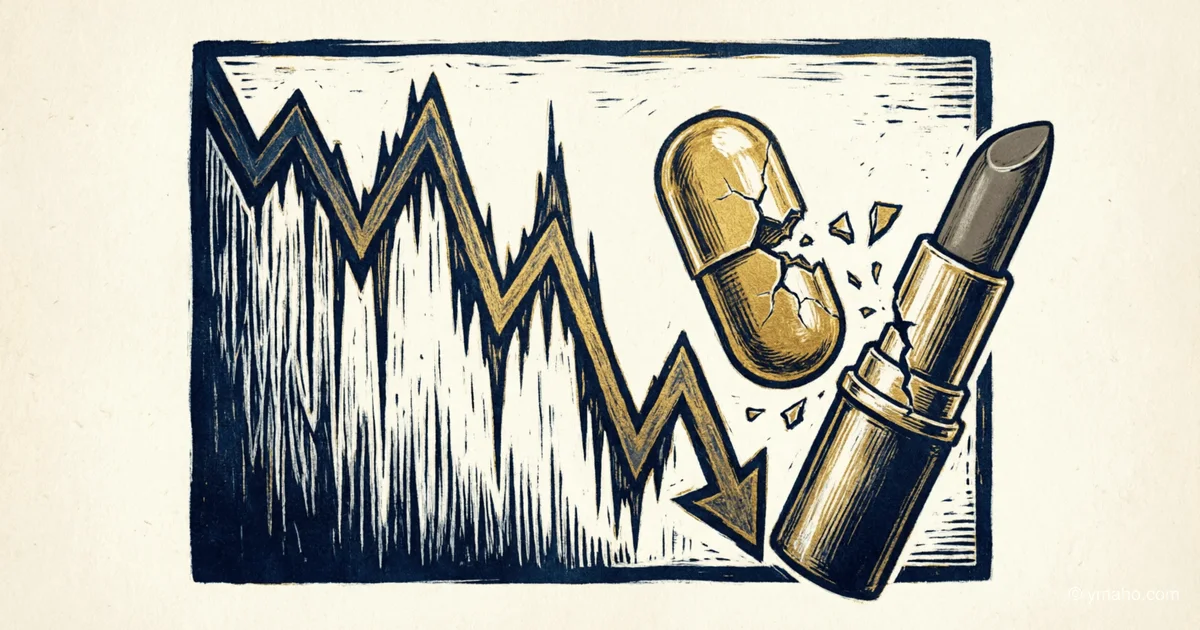
Puig Brands Plunges 13.4% on Collapse of Merger Talks with Estee Lauder
Shares of Spanish cosmetics maker Puig Brands became the worst performers in the Stoxx Europe 600 index, crashing 13.4% on news that merger talks with American giant Estee Lauder have been terminated. The parties failed to agree on the terms of the combination.
Beauty Queen vs. Two Empires: How Charlotte Tilbury Killed a $40 Billion Deal with One Clause
Opinion by an independent analyst, May 25, 2026
While the media buzz with headlines about Puig Brands falling 13-15% and Estee Lauder rallying 10-13%, a casual observer sees only a classic story: "deal falls through, stocks get punished." But as an analyst tracking deal structures in the consumer sector, I argue that on May 22, 2026, something far more significant occurred. In essence, we witnessed the first instance in the industry where a single minority shareholder—the founder of a brand with a 21.5% stake—used a legal loophole to block a merger of two dynasties.
Let's break down why Puig's collapse is not a catastrophe but a symptom, and who is really celebrating victory.
[The Core]: A Weapon of Mass Destruction Called Change-of-Control
What actually happened? On May 21, 2026, Marc Puig (Chairman of Puig) and William Lauder (Chairman of Estee Lauder) had a phone call, after which advisors exchanged messages with a skull emoji. The deal to create a $40 billion giant combining Tom Ford, Carolina Herrera, and Clinique was dead.
The official version is "failed to agree on terms." The real reason is Charlotte Tilbury, the British makeup artist and founder of the eponymous brand, in which Puig bought a controlling stake in 2020 for $1.2 billion.
Non-obvious insight:
Tilbury retained a 21.5% stake in her brand. The contract included a change-of-control clause. If Puig itself becomes an acquisition target, Tilbury has the right to demand an immediate buyout of her stake at a pre-agreed premium. Jefferies estimates this check would amount to €900 million. Estee Lauder, which is already laying off 10,000 employees and cutting costs by $1-1.2 billion, simply refused to pay.
In other words: one woman with winged eyeliner blocked the merger of two public corporations because her lawyers inserted one smart phrase into a contract six years ago.
Timeline and Context: How the Talks Died
March 2026: News of the talks leaks into the Spanish press. Puig shares surge 5.48% (to €18.67), Estee Lauder falls—investors see the deal as toxic for the Americans.
April 2026: Puig postpones its Capital Markets Day, scheduled for April 14. A warning sign.
May 2026: The price tag becomes known. Tilbury hires a separate advisor and begins renegotiating her contract. She demands not just money, but a revision of the terms of her minority stake.
May 21, 2026, evening: The final call between Puig and Lauder. Estee Lauder issues an ultimatum: either Puig resolves the Tilbury issue at its own expense before the deal, or there is no deal. Puig cannot find €900 million without destroying its credit line.
May 22, market open: Puig falls to €15.19 (lowest since February), Estee Lauder surges 12-16%.
Who Wins and Who Loses
Losers (hard):
- Puig shareholders. In one day, the Spanish company's market capitalization evaporated by roughly €1.3 billion. This is the worst day since its IPO in May 2024.
- Marc Puig personally. The strategy of "buy niche brands, leave founders with minority stakes" has cracked. Now any future partner will demand due diligence on all "hidden" clauses.
Winners (triumphant):
- Estee Lauder and CEO Stephane de La Faverie. Investors greeted the deal's collapse with applause. BofA called it a "positive catalyst." RBC Markets analyst Nick Modi said bluntly: "We feel relief." Now Lauder can calmly cut costs (up to 3,000 additional layoffs) and rebuild in China without being distracted by integrating the Spanish portfolio.
- Charlotte Tilbury. She has just proven that her stake is worth not a hypothetical €400 million, but at least €900 million in a liquidity event. She is the #1 beneficiary.
What the Media Isn't Saying
The media writes about "broken talks" but fails to explain Puig's structural vulnerability.
- 70% of Puig's revenue comes from fragrances. The fragrance market is normalizing after the post-COVID boom. Without access to Estee Lauder's Asian channels (travel retail in China, which is broken at Lauder but nonexistent at Puig), Puig remains a European player with a growth ceiling.
- This is not the first such clause. Puig has minority shareholders in brands Byredo and Loto del Sur. The question for investors now: "How many more such bombs are hidden there?"
- Kering and L'Oreal are watching with interest. Ten days before the collapse, on May 12, Kering sold its beauty business to L'Oreal for €4 billion. The market is consolidating. Puig is left alone, with a toxic asset (the Tilbury clause) on its balance sheet that no one will want to touch.
Forecast: Next 30 and 90 Days
30 days (June 2026):
Puig shares will consolidate in the range of €14.50 – €16.00. Fundamentally, the company is worth €19.28 (Simply Wall St estimate), but trust is lost. To salvage the situation, the board will announce a share buyback of €200-300 million by end of June. If this doesn't happen, expect a drop to €13.11 (52-week low).
90 days (August 2026):
Estee Lauder will update its restructuring plan. With high probability (70%), they will announce an additional program to reduce warehousing and logistics in Asia, giving a +5-8% boost to their shares from current levels. Puig, meanwhile, will be forced to seek alternatives: either selling a minority stake to a sovereign fund (Middle East) to raise €900 million to buy out Tilbury's stake and "clean up" the balance sheet for the next deal.
Editorial Forecast
Asset: Puig Brands shares (PUIG.MC)
Direction: Weak rebound in the first 24 hours after this article's publication (technical correction on oversold), then continued decline over the next 48-72 hours.
Key levels: Resistance – €15.80 (breakout impossible without news). Support – €14.50, if broken – €13.50.
Confidence: Medium (65%) – the market has already priced in bad news, but the risk of a "second wave of selling" remains.
Main risk: An unexpected statement from Charlotte Tilbury that she is willing to agree on a fixed amount (e.g., €600 million) would instantly send shares back to €17+. But the probability is less than 10% – she is in a position of strength.
This is an editorial opinion and not an investment recommendation.
— Editorial Team









