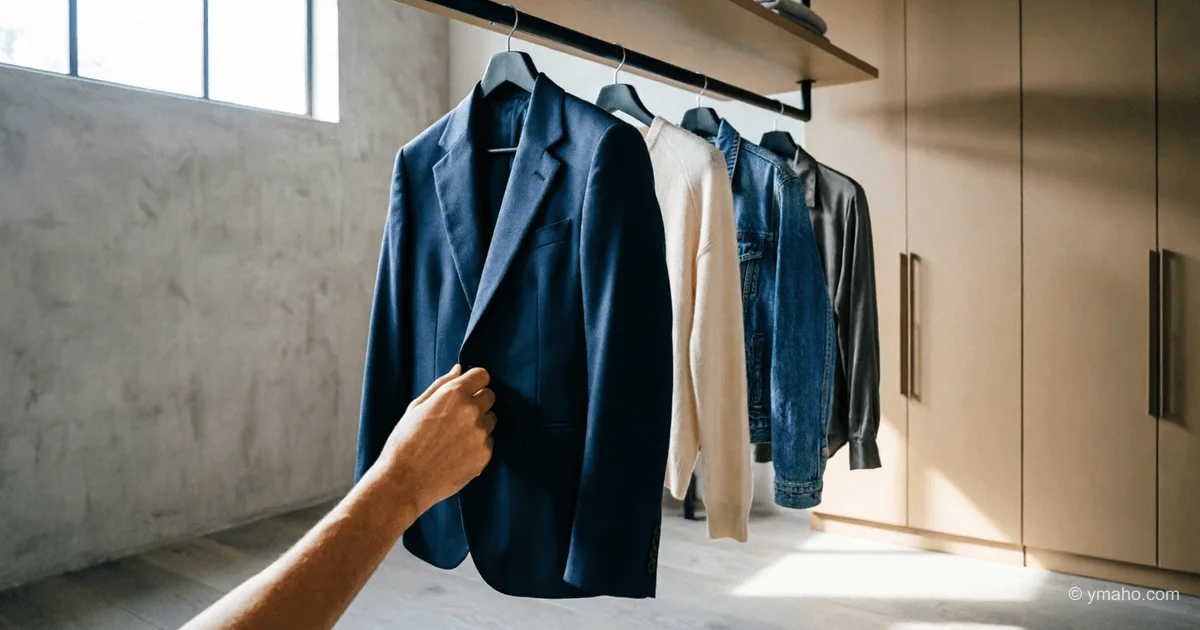
The Return of 'Quiet Luxury': Focus on Investment in a Capsule Wardrobe and Skincare
The lifestyle trend of mindful consumption is shifting toward expensive, multifunctional basics and minimalist skincare. Consumers are willing to pay for quality and durability, abandoning impulse purchases in favor of thoughtful investments.
The Return of 'Quiet Luxury': Focus on Investment in a Capsule Wardrobe and Skincare
Introduction
2026 marks a fundamental shift in consumer consciousness. After a decade of visual noise, logomania, and micro-trends that change faster than the seasons, the era of conscious choice has arrived. 'Quiet luxury' is returning—but not as a buzzword, but as a mature philosophy of consumption. Its essence is simple: fewer items, higher quality, longer lifespan. Consumers are voting with their wallets for durability—both in their wardrobes and in their self-care routines.
Event Details and Timeline
Recent events paint a clear picture of this trend.
In December 2025, an analytical piece by Source Fashion noted an 'aesthetic reset.' The term 'quiet luxury,' which became a visual cliché in 2024-2025—beige tones, absence of logos—is transforming. It is being replaced by 'Refined Clarity': minimalism built not on repetition, but on structural precision, contrast, and individual choice. Consumers are tired not of restraint, but of uniformity.
January 2026 brought concrete market signals. TheIndustry.beauty published a forecast: the beauty industry is entering an era of 'high performance with low effort.' Multi-step routines are giving way to multifunctional products that work effectively without complex manipulation. Lookfantastic analytics showed that consumers seek credible, results-led performance claims—reliable, evidence-backed promises, not marketing noise.
In March 2026, Russian publications noted the same trend. Pravda.ru described 2026 fashion as 'tired of chaos': oversized silhouettes are giving way to precise structure, loud logos to clean-line aesthetics. The publication Samara-news specified the trend for the 40+ audience: 'Quiet luxury means reducing the number of bright trends in favor of classic items that look expensive and refined but are not burdensome on the budget.'
By April 2026, the concept had taken shape in practical guides. Yourlifestylegirl articulated the season's key principle: 'Personalized Longevity.' This is not just about buying quality items, but building a wardrobe that lasts five years or more. The MARYLING spring-summer 2026 collection became an artistic manifesto of the movement: creative director Avshalom Gur described the approach as 'constant subtraction—of unnecessary seams, folds, loud prints—until only a pure dialogue between fabric and body remains.'
Impact and Significance
For the consumer. Quiet luxury in 2026 is not an aesthetic in itself, but a rational strategy for managing personal finances. The concept of cost per wear becomes the main purchase criterion. A $500 jacket worn a hundred times in a season turns out to be more economical than five $100 dresses bought impulsively and forgotten after the first wear. This logic extends to beauty routines: one multifunctional product replaces three narrowly specialized ones.
For the fashion industry. Brands face a challenge: consumers armed with knowledge about materials, cut, and seam quality no longer respond to logos. As Material Source notes, 'consumers have evolved from expressing identity through constant novelty to expressing it through curation.' This means competition not in loudness, but in integrity—honesty of materials, transparency of production, and real, not declared, durability.
For the beauty industry. A shift is occurring that TheIndustry.beauty describes as 'simplifying routines without compromising effectiveness.' Consumers no longer want ten jars on the shelf—they want three, but with proven clinical efficacy. This creates demand for hybrid formulas that combine skincare and makeup, protection and repair.
For society. The trend reflects a broader cultural shift—from conspicuous consumption to mindful consumption. The discussion of 'quiet luxury' in the media, once associated with elitism, has democratized: it's not about the price tag, but about the philosophy of choice. 'One perfect skirt is better than ten mediocre ones'—this principle from style guides becomes a life stance.
Key Players' Reactions
Luxury brands are rethinking design strategies. MARYLING built an entire collection around the concept of 'silence': clothing that does not shout, but accompanies—quietly, without intrusiveness. The focus shifts from decoration to construction: seamless cutting ('Diamond Cut'), architectural precision of the shoulder line, fabrics that work with the body rather than masking it.
Mass market and mid-segment brands are betting on 'enriched classics.' Yourlifestylegirl lists 10 investment pieces for spring 2026: a soft-cut navy blazer, raw denim jeans, a slip dress in heavy silk. Prices range from affordable ($50 for a Saint James top) to premium ($2,000+ for a Burberry coat), but the logic is the same: the item must last at least five years.
Beauty brands are investing in evidence. As TheIndustry.beauty notes, consumers are increasingly ingredient-literate—they understand components, seek clinical arguments, not advertising promises. Growing demand for peptides, PDRN, and synergistic complexes (rather than single 'hero' ingredients) reflects this demand for verifiable efficacy.
Forecast and Conclusions
The quiet luxury trend of 2026 is fundamentally different from its version two years ago.
In the short term (1-2 years). The cost-per-wear concept will finally become a consumer standard. Retailers will begin to indicate the expected lifespan of a product—similar to how fabric composition is listed today. Hybrid beauty formulas (skincare-makeup, SPF-care) will displace narrowly specialized products in the mass segment. Lookfantastic analytics already show that skin tints and BB creams significantly outpace traditional foundations in growth rates.
In the medium term (3-5 years). The industry will face the challenge of verifying 'durability.' Brands will have to prove that a product will actually last its stated lifespan, rather than losing shape or effectiveness after the third use. Independent 'investment attractiveness' ratings for consumer goods will emerge—similar to credit ratings.
Long-term conclusion. The return of quiet luxury is not a temporary trend, but a structural shift in consumer psychology. Fashion is tired of chaos, and so is the consumer. They no longer want to be a field for endless marketing experiments—they choose clothing in which they can forget themselves, and care that works without loud promises. Brands that master this language of 'quiet confidence' will win the battle for the long-term loyalty of the most discerning customer of 2026.
— Editorial Team









