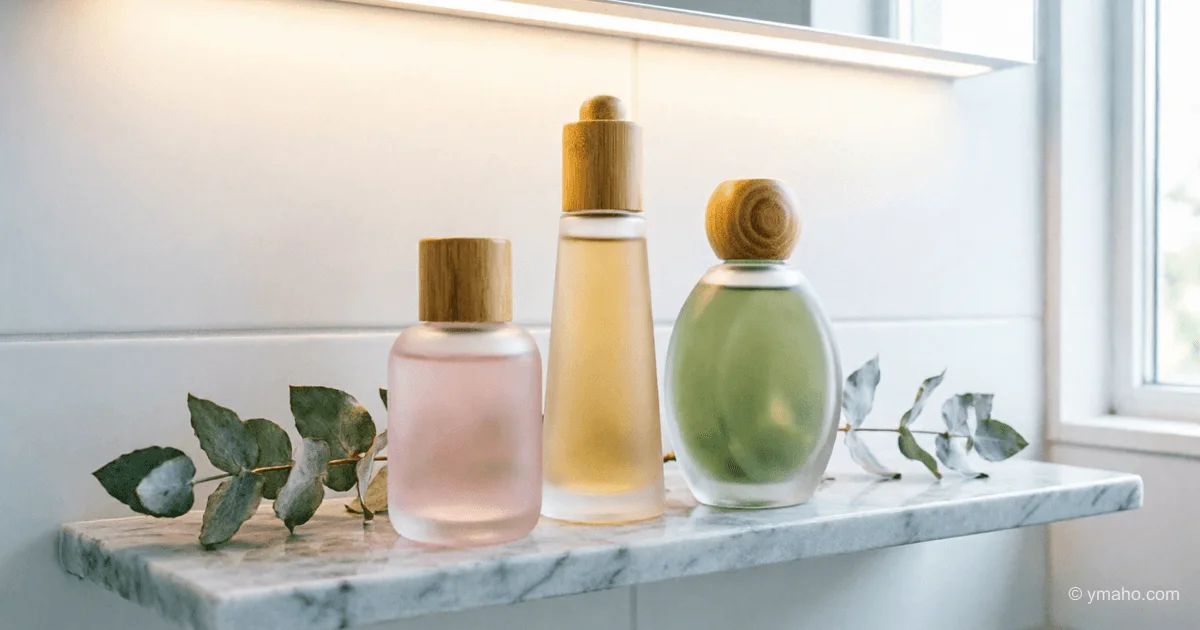
The Quiet Luxury and Skinimalism Trend in Skincare
The era of "conspicuous consumption" in cosmetology is over, giving way to minimalism. The main trend is healthy, glowing skin with no visible signs of intervention, as well as simplifying daily skincare (skinimalism) with a focus on product quality rather than quantity.
From Abundance to Meaning: How Quiet Luxury and Skinimalism Are Redefining Skincare in 2026
Introduction
Just a few years ago, the beauty industry lived by the rule "more is better." Ten-step Korean routines, vanity counters lined with dozens of bottles, endless serums, toners, essences, and sheet masks—all of this was not just skincare but a kind of initiation ritual into the world of beauty. Consumers took pride in the number of steps in their daily routine, and brands competed to offer more stages and products.
But today, in 2026, this paradigm pendulum has swung in the opposite direction. The era of "conspicuous consumption" in cosmetology is ending, giving way to new concepts—quiet luxury and skinimalism. The main trend of our time is healthy, glowing skin without visible signs of active intervention, along with a significant simplification of daily care focused on product quality rather than quantity.
In this article, we will explore how this shift from "more" to "better" occurred, its impact on the industry and society, how key players are reacting, and what awaits us in the era of minimalist yet technologically advanced skincare.
Event Details and Timeline
The formation of the trend toward conscious minimalism in skincare happened gradually, passing through several key stages.
Stage 1: The Birth of Skinimalism (2021-2023).
The term "skinimalism" first emerged as a reaction to the ten-step routines popularized by Korean cosmetics. Consumers began to realize that multi-step rituals not only take a lot of time but can also harm the skin by disrupting its protective barrier. This led to initial attempts to reduce the number of products used.
Stage 2: Scientific Validation (2023-2025).
Research confirmed what dermatologists had long been saying: an excess of active ingredients often does more harm than good. According to NIH data, consistent simplified skincare regimens lead to better long-term skin outcomes than complex multi-step procedures. Studies showed that people using 3-4 products experienced 40% less skin irritation compared to those using 8 or more products daily.
Stage 3: Economic Context and "Radical Simplicity" (2025-2026).
Global economic difficulties and declining consumer confidence became additional catalysts. According to the NielsenIQ and CEW UK report "The 2026 Beauty Reset," 33% of consumers said recent years made them realize "less is more." 52% of global consumers (and 62% of Gen Z) are willing to pay more for products that make tasks simpler or less time-consuming.
Stage 4: "Skinimalism 2.0" and Convergence with Quiet Luxury (2026).
By 2026, the trend evolved into "Skinimalism 2.0"—a more mature concept that emphasizes not just reducing the number of products but maximizing their efficacy and mindfulness. Concurrently, the concept of "quiet luxury," borrowed from fashion, transformed the perception of beauty: status is now demonstrated not by an abundance of products and procedures but by flawless skin quality and the thoughtfulness of each step.
Impact and Significance: From Cluttered Bathrooms to Healthy Attitudes
Impact on the Industry:
The shift toward minimalism is fundamentally changing the business models of cosmetic companies. While profits were once built on selling more and more products to a single consumer, the focus is now shifting to creating "hero" products that truly deserve a place in a simplified routine.
As Rachna Bahadur, founder of the brand Flout, notes: "The era of proud layering has lost its appeal. What people want today is not more steps, but skincare that feels intuitive and actually delivers results."
Innovation is now focused on hybrid products, especially those combining makeup with advanced skincare. Tinted serums, SPF tints, moisturizers with niacinamide performing multiple functions (skin control, barrier repair)—these are the new market stars.
Impact on the Perception of Luxury and Status:
"Quiet luxury" in skincare reflects a broader cultural shift toward restraint and mindfulness. Just as in fashion, where logos have given way to quality cuts and materials, in beauty, status is now demonstrated not through the number of products or flashy packaging but through the condition of the skin itself.
The hashtag #quietluxury in the context of skincare has amassed over 480 million views on TikTok. Content creators promoting minimalist routines show 32% higher engagement rates than accounts with glam content. This indicates that audiences are tired of noise and are seeking authenticity, knowledge, and real results.
Impact on Sustainability:
Minimalism in skincare directly correlates with environmental responsibility. Fewer products mean less waste, less packaging, and more conscious consumption. The trend toward multifunctional products that replace 3-4 specialized items naturally reduces the ecological footprint. As Petronille Oudar from Sequential emphasizes, "Well-formulated, well-tested products that work as intended reduce the likelihood that consumers will experiment, frequently change products, or discard partially used ones."
Reactions of Key Players
Large Corporations and Research Data:
NielsenIQ, in its report for CEW UK, officially identified "radical simplicity" as one of five critical shifts defining success in the beauty industry. Innovations are now aimed at creating products that save consumers time and money without sacrificing efficacy.
Creation of New Brands:
Brands are emerging that are built from the ground up on the philosophy of quiet luxury and minimalism. For example, Amber & Oud Cosmetics, launched in January 2026, positions itself as a brand with a "quiet ritual" philosophy. Its founder, Hajar Madani, states: "I'm not here to overwhelm people with endless choices. I'm here to offer fewer, but better, products designed for seamless integration into a well-lived life."
Dermatologists and the Scientific Community:
The professional community actively supports the shift toward skinimalism. Dr. Stefanie Ho, a consultant dermatologist with 25 years of experience, explains: "Skinimalism allows us to simplify our routines with a single formula that can hydrate, protect, and repair, instead of long multi-step procedures."
The brand INKEY, specializing in affordable active ingredients, released a full guide to "smart skinimalism," emphasizing that modern minimalism is not just about using fewer products but choosing highly effective, multifunctional ingredients.
Influencers and Content:
Even top influencers are rethinking their approaches. Thought leaders like Hyram Yarbro and Dr. Shereene Idriss build their "beauty empires" around educational content that teaches consumers to understand formulas rather than just buy pretty boxes. Their success proves that the modern consumer wants to know what they are putting on their skin and why it works.
Forecast and Conclusions
What awaits us in the near future in the era of quiet luxury and skinimalism?
- Growth of the Hybrid Product Market. The future lies in "skin-makeup"—products that blur the line between skincare and decorative cosmetics. Tinted serums with SPF, primers with hydration and anti-aging peptides will become the standard, not the exception.
- Personalization through AI. Artificial intelligence will help consumers navigate the world of active ingredients by offering personalized minimalist routines based on skin analysis and individual needs.
- Technological Simplicity. Biotechnologies and precision fermentation will enable the creation of ingredients that do "more" with "less." A single molecule could perform functions that previously required three different products.
- New Formats. Water-free formulas, solid bars (for cleansing, moisturizing), "just add water" powders—all these formats will gain popularity as they reduce packaging, shipping weight, and carbon footprint.
- Verifiable Sustainability. As experts note, sustainability will be defined less by marketing claims and more by evidence of efficacy and biocompatibility. Brands will need to prove that their products do not disrupt the skin microbiome and work as promised.
Conclusion:
The trend toward quiet luxury and skinimalism is not just a temporary infatuation with minimalist aesthetics. It is a deep cultural shift reflecting the industry's maturation and changing consumer values. People are tired of the consumer race, the guilt over unused products, and the endless noise of marketing promises.
The future belongs to a conscious, intelligent approach where luxury lies not in quantity but in quality, not in conspicuous consumption but in genuine results. As aptly noted in the NielsenIQ report, the brands that will win are those that justify their value through scientifically proven efficacy and create multifunctional products that save time and money. In this new world, true luxury is peace of mind, confidence, and the health of one's own skin.
— Editorial Team









