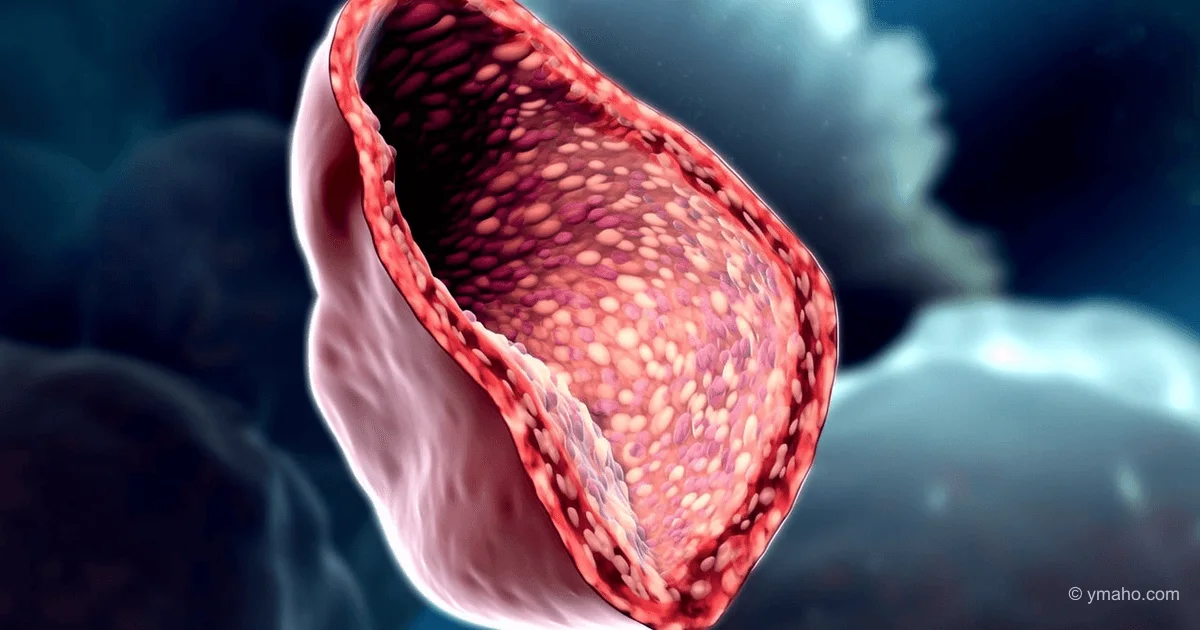
Science Study Explains Heart Cancer Rarity by Constant Mechanical Force of Contractions
Scientists have found that constant contractions of the heart muscle create compressive forces that suppress the growth of cancer cells. Experiments on mice showed that reducing mechanical load allows tumors to grow, and the force itself, via the cytoskeleton, alters chromatin structure in cell nuclei, limiting proliferation.
Not just mechanics: how the discovery of Nesprin-2 rewrites the rules of oncology and opens the era of 'mechanical drugs'
[The Gist]: What's Really Happening
On May 14, 2026, the journal Science published a study that solves a century-old mystery: why the heart is the only organ virtually immune to cancer. The answer lies not in genetics or immunity, but in pure physics. Each heartbeat creates a compressive force that, via the protein Nesprin-2, is transmitted directly into the cell nucleus and repackages chromatin so that proliferation genes are physically blocked.
This is not just an elegant solution to a biological puzzle. It marks the birth of an entire field—mechanical oncology—where physical force is seen as a therapeutic tool on par with molecular inhibitors. Researchers at ICGEB (Trieste) led by Serena Zacchigna not only explained the rarity of heart tumors (0.001–0.03% according to autopsies) but identified Nesprin-2 as the 'Achilles heel' of this protective mechanism and, potentially, a drug target for mimicking mechanical stress.
Timeline and Context
The study builds on several experimental levels arranged in a logical chain.
First, a genetic mouse model with activated K-Ras and deleted p53. Tumors arose in the liver, muscles, but not the heart, despite equal recombination levels. This ruled out the 'signals just don't reach it' hypothesis.
Next, heterotopic heart transplantation in mice: the organ was connected to the bloodstream but did not pump blood—mechanical load disappeared. After 14 days, the transplanted 'unloaded' heart was filled with tumor cells, while the normally working heart was virtually clean.
Then, engineered heart tissues (EHT). An in vitro model where mechanical load can be adjusted. Result: in unloaded or static EHTs, cancer thrived; under physiological load, it was suppressed.
The climax: spatial transcriptomics of human heart metastases and subsequent identification of Nesprin-2 as the key mechanosensor. Knocking out the Syne2 gene, which encodes Nesprin-2, completely abolished the anti-proliferative effect of mechanical force.
Why is this important right now? Because mechanobiology has long been a niche discipline. But parallel work—such as a study on the role of chromatin in confined migration published in Communications Biology in February 2026—shows that mechanical signals shape the epigenetic landscape of cancer cells far beyond the heart. We are entering a phase where 'mechanical drug' ceases to be an oxymoron.
Who Wins and Who Loses
Winners:
- Biotech companies investing in mechanobiology. Cellens already raised $6.5 million in December 2025 for an AI platform that 'senses' mechanical properties of cancer cells. The discovery of Nesprin-2 gives such companies a concrete molecular target for drug screening. The potential market for 'mechanical therapies' could reach $10 billion by 2035.
- Manufacturers of devices for mechanical tissue stimulation. If compressive forces suppress cancer, then implantable or wearable devices that create controlled pressure on tumors represent a new class of medical devices. The first patents in this area are likely already filed.
- Patients with metastatic cancer. The study showed that heart metastases share a common transcriptional profile regardless of primary tumor origin. This means therapy targeting the Nesprin-2–chromatin–H3K9me3 pathway could be effective against metastases from different cancer types.
Losers:
- Manufacturers of histone demethylase (KDM) inhibitors. The study shows that in heart metastases, KDM4C and KDM4D are elevated, demethylating H3K9me3 and promoting chromatin decompaction. If KDM inhibitors increase H3K9me3 levels, they might paradoxically protect the heart from metastases. But these same drugs could have the opposite effect in other tissues—thus their oncology indications are now questionable. Clinical programs of several biotechs that invested in KDM inhibitors may face new regulatory hurdles.
- Companies that bet exclusively on immunotherapy and targeted drugs. The discovery underscores that the physical context of a tumor is as important as its mutational profile. Investors will start asking about the mechanical microenvironment in portfolio companies. BridgeBio Oncology recently received a 'Buy' rating for its RAS inhibitors—but without considering mechanical context, the efficacy of such drugs may be variable.
What the Media Isn't Saying
Non-obvious insight: Nesprin-2 is not just a 'force sensor' but potentially a universal therapeutic target relevant beyond the heart.
Media attention focuses on the heart—and understandably so. But the real value of the discovery lies in demonstrating a complete signaling pathway: mechanical force → Nesprin-2 → chromatin remodeling → H3K9me3 → proliferation arrest. Nesprin-2 is part of the LINC complex connecting the cytoskeleton to the nucleus, and it is expressed not only in the heart. It is found in skeletal muscles, lungs, blood vessels—tissues that also experience mechanical loads.
So why do the lungs, which constantly stretch and compress during breathing, remain one of the most common sites of metastasis? The authors touch on this: breathing creates predominantly negative pressure (stretch), while the heart generates positive compressive pressure. This difference in the type of mechanical stress may explain organ specificity. And from this follows a non-obvious practical conclusion: if a drug can be created that activates the Nesprin-2 signaling pathway even in the absence of physical compression, it could mimic 'heart protection' in the lungs, liver, and bones.
Second non-obvious insight: The study also explains why left ventricular assist devices (LVADs) in heart failure patients are sometimes associated with increased tumor incidence. LVADs unload the left ventricle, reducing mechanical load—just like in the heterotopic heart experiment. Individual case reports have indeed noted higher cancer rates in patients on long-term LVAD support, but until now this was attributed to immunosuppression or age. Now an alternative explanation emerges—direct removal of the mechanical 'brake' on proliferation. This link will inevitably attract regulatory attention, and LVAD manufacturers may face demands for additional post-market monitoring of cancer outcomes.
Forecast: Next 30 Days and 90 Days
30 days (by mid-June 2026):
A flurry of comments and editorials is expected in Nature Reviews Cancer, Cancer Cell, and Trends in Cancer discussing the concept of 'mechanical oncology'. Several key labs—likely Jan Lammerding's group at Cornell (already commented on the Science study) and an MIT group working on mechanobiology—will announce their own experiments aimed at screening small molecules that activate the Nesprin-2 pathway.
Investment bank analysts will begin reassessing companies in the KDM inhibitor segment. Drugs targeting KDM4C/D may receive negative ratings due to potential risk of weakening mechanical tissue protection. The estimated amount of funds reallocated by investors from this segment to companies developing mechanosensor agonists could be $500–800 million within a quarter.
90 days (by mid-August 2026):
The key event will be the first presentation of screening data on mechanical stress-mimicking molecules. If any group shows that a small molecule can activate Nesprin-2-mediated chromatin compaction in vitro, it will trigger a patent race and attract a series of seed rounds.
Simultaneously, the FDA and EMA may request additional analysis of cancer outcomes in long-term LVAD patient registries. Device manufacturers (Abbott, Medtronic) may initiate retrospective studies to preempt regulatory risks. If the link is confirmed, it could cost the LVAD market up to $300 million per year due to stricter warnings in instructions.
Finally, the study by Cucchi and colleagues is almost a guaranteed contender for Science's Breakthrough of the Year in December 2026. This means that by the end of summer, university and biotech press offices will actively 'attach' their projects to this work, shaping a new disciplinary framework. The term 'mechanical oncology' will evolve from lab jargon into a mainstream field, and Nesprin-2 will become as recognizable a target as PD-1 or HER2.
— Editorial Team









