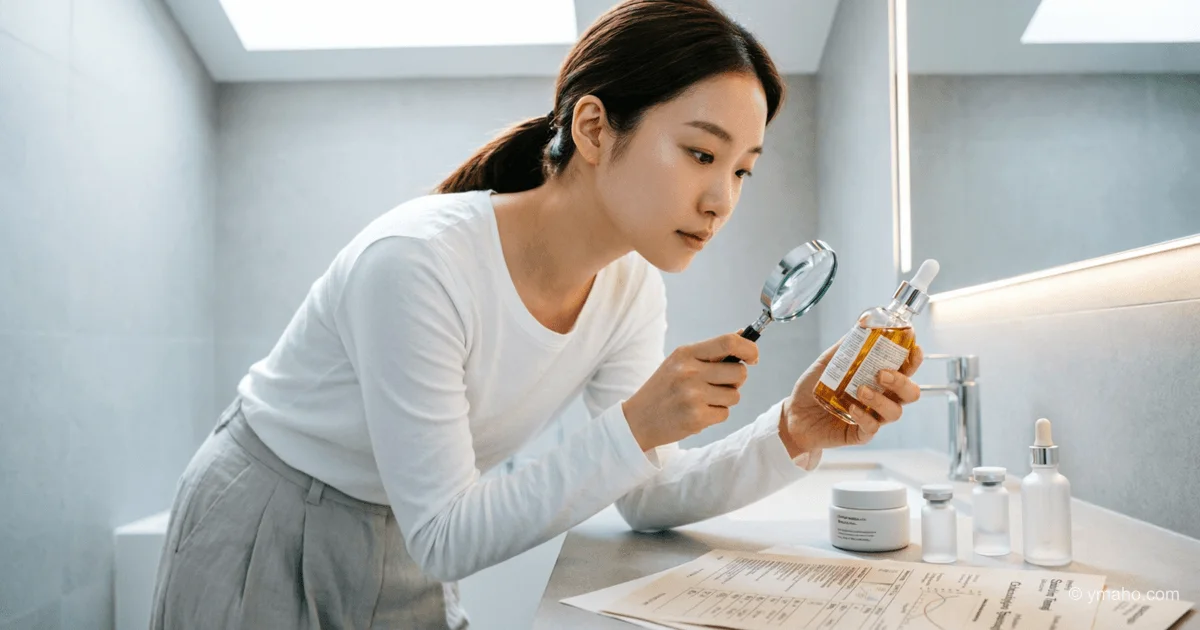
A Rational Approach Comes to the Beauty Industry
The Russian beauty market is shifting to a model of rational consumption: 89% of Russians acknowledge the value of sustainability, but their willingness to pay extra for it is declining. Consumers, especially Generation Z, demand transparency, scientific evidence, and real reviews, while discounts take a back seat.
A Rational Approach Comes to the Beauty Industry: How the Russian Cosmetics Market Is Changing the Game
Introduction
For the past decade, the beauty industry has operated under a law of abundance: new products launched weekly, marketing campaigns touted unique ingredients, and consumers willingly paid a premium for pretty packaging and bold promises. But today, the Russian beauty market is undergoing a tectonic shift. Impulse purchases and the hunt for a "magic jar" are giving way to rational consumption. According to recent data, 89% of Russians say they value sustainability, yet their willingness to pay extra for it is declining. This is just the tip of the iceberg: a new generation of consumers, especially Generation Z, is rewriting the rules, demanding transparency, scientific backing, and real proof of effectiveness from brands.
Event Details and Timeline
The formation of a new consumption model in the Russian beauty market did not happen overnight. The groundwork began as early as 2022–2023, when the departure of several international brands forced consumers to rethink their habits and turn to alternatives—local brands, Asian cosmetics, and parallel imports. This period served as a kind of "stress test," teaching buyers to scrutinize ingredients, read labels, and compare products more carefully.
By 2024–2025, the trend had strengthened: analytical agencies reported a rise in searches for "analogues," "dupes" (budget-friendly duplicates of expensive products), and ingredient breakdowns from beauty bloggers. However, the key turning point came in late 2025 and early 2026, when studies revealed a paradox: despite professed love for eco-brands, the actual willingness to pay a premium for "green" labels had dropped by 15–20% compared to 2021.
Today, in spring 2026, rationality is no longer a trend but the norm. Consumers increasingly make purchases based on real reviews, lab tests, and scientific articles, rather than intuition or flashy ads. Discounts and sales, once the main drivers of sales, have taken a back seat—buyers are willing to pay full price if they are confident in a product's effectiveness.
Impact and Significance (for the World / Industry / Society)
This shift has far-reaching consequences for the entire beauty industry. First, it dismantles the traditional marketing model built on emotions and imagery. The "dream in a jar" no longer works—consumers want clinical trial data, active ingredient concentrations, and independent reviews. Brands that continue to rely on pretty stories without evidence lose trust and market share.
Second, attitudes toward sustainability are changing. While green initiatives were once a standalone advantage, they are now a mandatory but insufficient condition. Consumers view eco-friendly packaging or cruelty-free testing as a "baseline," not a reason for a markup. 89% of Russians consider caring for the planet important, but only as long as it doesn't hit their wallets.
Third, a rational approach is reshaping consumption culture itself. People are buying less but better—study after study confirms that per capita purchase volumes are declining, while the average ticket size is rising due to the choice of higher-quality, more thoughtful products. This reduces environmental impact (fewer half-empty tubes thrown away) and fosters a healthier relationship with cosmetics as a tool, not an object of escapism.
Key Players' Reactions
The Russian beauty market has already begun adapting to the new reality. Major retailers (Zolotoe Yabloko, Letual) are restructuring their product matrices: reducing the number of brands with questionable reputations and expanding lines of so-called "pharmacy cosmetics" and dermatological products, where effectiveness is backed by research. Shelves increasingly feature brands with detailed ingredient breakdowns right on the price tags.
Local manufacturers (e.g., Laboratoriya Heliks, Avon with new lines, Natura Siberika) are betting on "clinical aesthetics"—minimalist design, no fragrances, and precise concentrations of peptides, retinol, and acids. Some companies go further, publishing results of their own blind tests and even inviting consumers on factory tours.
Beauty bloggers and influencers are also having to adapt. Audience surveys show that trust in recommendations has nearly halved over the past two years if the blogger lacks specialized education or fails to show ingredients. In response, a new generation of "scientific beauty influencers" has emerged—cosmetologists, chemists, and technologists who dissect formulas with the same meticulousness as a wine sommelier analyzes a bouquet. Their audience is growing many times faster than that of traditional reviewers.
Even Western global giants (L'Oréal, Estée Lauder) that have maintained or returned to the Russian market through parallel imports or local production are adjusting their communication. They increasingly downplay "French charm" or "Parisian chic" and emphasize clinical data, patents, and decades of scientific research.
Forecast and Conclusions
The future looks predictable and generally positive for the industry and society. Over the next 2–3 years, we can expect the following changes:
- Brand differentiation will finally shift from the aesthetic to the scientific-technological realm. Companies that invest in R&D and can convincingly prove that their cream actually penetrates the right skin layer—rather than just "moisturizing for an hour"—will win.
- Regulators and the state may tighten requirements for cosmetic advertising. Following the trend toward evidence, society may demand a ban on vague claims like "rejuvenates," "restores the skin matrix," or "fights wrinkles" without references to studies. A scenario similar to rules for dietary supplements or drugs is possible.
- Rational consumption does not mean cheap. In fact, the paradox is that an educated consumer is willing to pay a high price for a product with proven effectiveness and a transparent supply chain. But they categorically oppose markups for a "pretty story," "limited-edition design," or "painted-on sustainability" (what is known abroad as greenwashing).
- Generation Z, raised in the information age, will set the tone for the next decade. For them, the question "How do you know this works?" is a natural part of the purchasing process, not a whim. Brands that fail to answer this question honestly and thoroughly will have to leave the market or eke out a miserable existence relying on older generations with different habits.
Conclusion: The Russian beauty market is entering an era of maturity. The beauty industry is transforming from a realm of illusions and desires into a space of facts, logic, and conscious choice. This is not a crisis or a threat—it is an evolution that will ultimately make cosmetics higher quality, safer, and truly effective, and its buyers happier and more fulfilled people who spend money not on hope, but on results.
— Editorial Team









