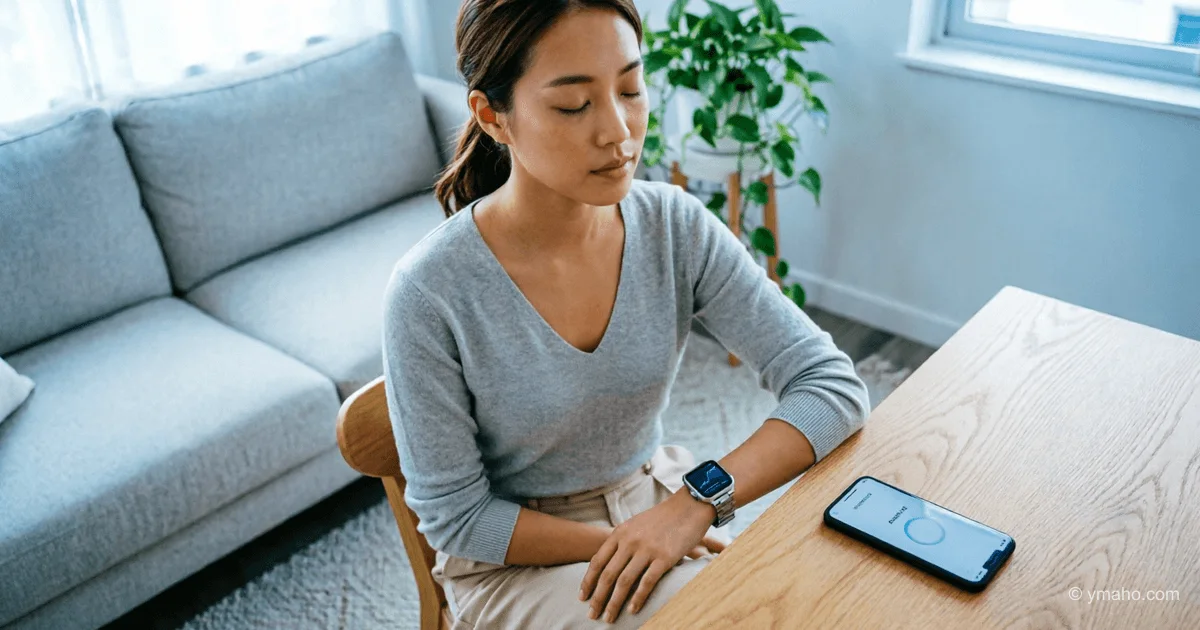
Stress Management in the Metropolis: The Rising Popularity of 'Breath Self-Regulation' Techniques
In the wellness sphere, interest is growing in simple yet scientifically backed breathing techniques for quickly reducing anxiety and cortisol levels. Mobile apps with short breathing exercises are becoming the primary tool for maintaining mental health throughout the day.
Stress Management in the Metropolis: The Rising Popularity of 'Breath Self-Regulation' Techniques
Introduction
The rhythm of a modern metropolis creates a unique type of stress—chronic, background, and silently accumulating. In response to this challenge, a new trend is emerging in the wellness sector: a shift from reactive "firefighting" to proactive self-regulation through short, evidence-based breathing practices. Mobile apps are becoming the primary conduit for these techniques, transforming breathing from an automatic bodily function into a conscious tool for managing the nervous system.
Event Details and Timeline
The formation of this trend is clearly visible in market dynamics and scientific publications from 2026.
The mobile mental health solutions market is experiencing explosive growth. According to a report by The Business Research Company, the global mental health apps market grew from USD 7.98 billion in 2025 to USD 9.44 billion in 2026, with a CAGR of 18.3%. Concurrently, the market for emotional regulation apps, where breathing techniques take center stage, is valued at USD 9.4 billion in 2026, with projections reaching USD 15.8 billion by 2034. The micro-learning anxiety reduction app segment—where breathing exercises are delivered in short 2-15 minute lessons—reached USD 3.1 billion and is forecast to grow to USD 7.2 billion by 2034 (CAGR 11.1%).
The scientific foundation for breathing techniques continues to strengthen. In April 2026, the journal BMC Sports Science, Medicine and Rehabilitation published a randomized controlled trial showing that a 15-minute session of motivational factors, including diaphragmatic breathing, statistically significantly reduced blood cortisol levels—from 8.63 mcg/dL to 5.36 mcg/dL (p<0.05). The study was registered on ClinicalTrials.gov in January 2026.
In March 2026, the Superpower guide, peer-reviewed by an Oxford University specialist, summarized key metrics: slow breathing at a rate of six breaths per minute activates the vagus nerve, increases heart rate variability, and reduces inflammatory markers—interleukin-6 and tumor necrosis factor. The effect is dose-dependent: sessions lasting less than five minutes show limited benefit.
By April 2026, specific technological solutions had emerged. Healthcare Triangle announced the ZoraNex platform, integrating breathing practices and yoga with cognitive-behavioral therapy methods. The launch is scheduled for the second quarter of 2026. Insight Timer's March entry into the Indian market—with 300,000 meditations and 20,000 teachers—confirms the global scale of expansion.
Impact and Significance
For the consumer. Breathing techniques address a key problem for city dwellers: time scarcity. Unlike meditation, which requires 20-30 minutes, breath self-regulation delivers measurable physiological effects in 5-15 minutes. Apps make the practice accessible anywhere—in the office, on the subway, between meetings. Crucially, there is a shift from "emotional suppression" to "emotional fitness": breathing becomes not a reaction to a breakdown, but a daily hygiene practice for the nervous system, like brushing teeth.
For the industry. The wellness app market is undergoing a structural shift. Analysts note that users increasingly prefer multifunctional platforms that combine breathing techniques, meditation, mood tracking, and journaling in a single ecosystem. Competition is intensifying: low entry barriers and an abundance of free apps pressure premium subscription monetization. In response, players are investing in AI personalization and integration with wearable devices—Apple Watch, Fitbit, Oura Ring—which provide real-time biometric feedback.
For healthcare. Breath self-regulation is gradually entering clinical protocols. Studies from 2025-2026 show that mindfulness interventions significantly improve emotional regulation and may reduce cardiovascular risks. This is especially relevant given the rising prevalence of anxiety disorders: according to SAMHSA, 23.4% of American adults (about 61.5 million people) reported symptoms of mental disorders in 2024, driving demand for accessible digital solutions.
Reactions of Key Players
Market participants' strategies are forming along three directions.
App developers are betting on hyper-personalization. In September 2025, Calm launched a separate app, Calm Sleep, and in December 2025, Headspace Health introduced Voice Mode—interaction with the app through natural speech. Lyra Health has been implementing corporate platforms with built-in employee emotional well-being analytics since August 2025.
Wearable device manufacturers are deepening integration. Biometric data—heart rate variability, respiratory rate, blood oxygen saturation—are becoming the basis for personalized recommendations. Apps are learning not just to offer a breathing exercise, but to select its type and duration based on the user's current physiological state.
The corporate sector is driving adoption. Employers are including wellness apps in D&I and mental health program packages, seeing them as tools to reduce burnout and absenteeism. Analysts note that employer-sponsored initiatives are boosting demand for enterprise solutions in the segment.
Forecast and Conclusions
The trajectory of breath self-regulation as a stress management tool is determined by several factors.
Short-term (1-2 years). Breathing techniques will become fully integrated into wearable device interfaces. Smartwatches will not just detect stress but immediately offer a short breathing session with haptic feedback. The mental health apps market, growing at 18.3% annually, will attract new players from adjacent segments—fitness, telemedicine, and corporate wellness.
Medium-term (3-5 years). The boundaries between wellness and clinical application will blur. Breathing techniques, backed by the evidence base of 2025-2026 studies, will be integrated into protocols for managing patients with anxiety disorders and post-stress conditions. Platforms like ZoraNex, combining breathing, cognitive techniques, and yoga, will become the new standard of "self-care therapy"—an intermediate link between wellness apps and clinical care.
Long-term conclusion. Breath self-regulation is not a passing trend but a fundamental shift in stress management culture. In a world where mental disorders affect nearly a quarter of the adult population, the ability to quickly and autonomously regulate one's nervous system state is becoming a basic competency—like physical activity or sleep hygiene. Apps and wearable devices merely clothe this ancient practice in technological form, making it accessible to the 2026 metropolis dweller.
— Editorial Team









