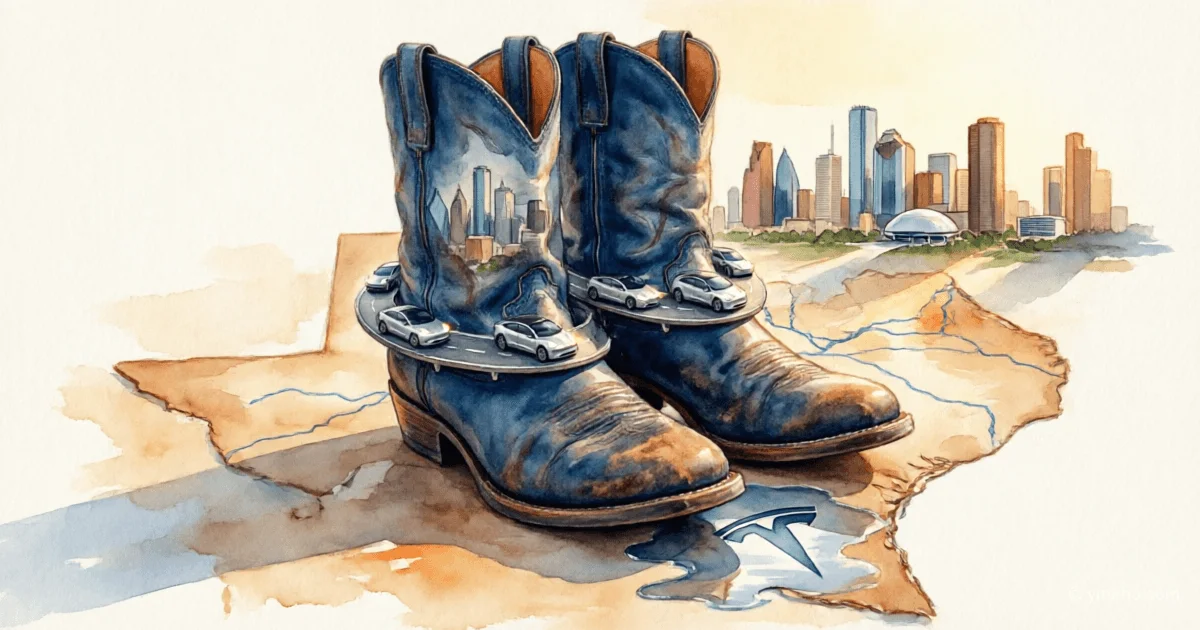
# Tesla Brings Robotaxis to Dallas and Houston: How Will It Change Your Life?
Tesla has quietly launched its robotaxi service in Dallas and Houston—and this isn’t just another ride-hailing option. It’s a potential game-changer for how we move around. Why should you care? Because autonomous taxis could reshape traffic congestion, ride fares, and even gas prices. Picture this: you summon a vehicle that arrives with no driver behind the wheel, and you pay half of what you’d normally spend on a traditional cab. That future is already taking shape on the streets of Texas.
How Do Driverless Cars Actually Work?
Tesla relies on an autonomous driving system that functions like a hyper-intelligent navigation assistant: cameras and radar replace human eyes, while onboard computers act as the brain. Imagine if your GPS suddenly learned to spot traffic lights and pedestrians like a person would, making split-second decisions. Right now in Dallas and Houston, Model Y vehicles are ferrying passengers without anyone sitting in the front seat—just you and the car.
The service initially rolled out in Austin and the San Francisco Bay Area, but always with a safety driver monitoring the trip. Tesla has now removed those observers, signaling full autonomy within designated zones. This marks a crucial milestone: Elon Musk’s company is heavily betting on artificial intelligence rather than just electric vehicles. After all, a massive chunk of Tesla’s trillion-dollar market cap hinges on the success of its robotaxi ambitions. If the technology falls short, Tesla’s stock could plummet—as it has before following underwhelming product reveals.
The Race for the Future of Transportation
Tesla isn’t operating in a vacuum. Waymo (backed by Google) and Zoox (owned by Amazon) are also expanding their fleets. Waymo is already hauling passengers in Phoenix and Las Vegas, while Zoox is testing its own robotaxis in San Francisco. But Tesla holds a distinct edge: millions of its vehicles are already on the road, continuously feeding data to train its AI systems. It’s as if every Tesla driver is secretly coaching tomorrow’s autonomous chauffeurs. The more people drive Teslas, the smarter the algorithms become.
Still, the journey has proven tougher than Musk originally predicted. In 2025, he promised a coast-to-coast robotaxi network across America, but those timelines have slipped. Expansion is now happening step-by-step: first Austin, then San Francisco, and now two of Texas’s largest metropolitan areas. Why the delay? Safety. Self-driving cars must flawlessly navigate unpredictable scenarios—like a child darting into the street or a cyclist riding at night. A single high-profile failure could destroy public trust, much like what happened to Uber in 2018 after a fatal crash.
What Changes on a Global Scale?
Robotaxis aren’t just about convenience. If they achieve mass adoption, the ripple effects will touch everyone:
- Oil Markets: Fewer people will buy personal vehicles, leading to a drop in gasoline demand. Imagine calling a ride for just a few cents per mile instead of owning a car—why bother filling up a tank? Analysts project that autonomous transport could slash global oil demand by 10% by 2035.
- Urban Landscapes: Parking garages and lots could be converted into green spaces, since robotaxis won’t sit idle. Streets may widen to accommodate more bike lanes and pedestrian walkways. In Las Vegas, where Waymo already operates, city planners are already redrawing the downtown layout—removing parking structures and adding recreational zones.
- The Job Market: Traditional taxi and rideshare drivers face displacement, but entirely new roles will emerge, such as remote fleet operators and sensor maintenance technicians. History shows us that when Uber arrived, many cabbies pivoted to delivery driving. The key takeaway? Embrace continuous learning rather than fearing progress.
Key Takeaways
- Tesla is expanding its U.S. robotaxi footprint, positioning autonomous driving as the core engine of its growth. The driverless service is now live in Dallas, Houston, Austin, and San Francisco.
- The strategy’s success is vital to maintaining the company’s ~$1.3 trillion market valuation. A major setback could trigger a sharp stock decline.
- Rivalry with Waymo and Zoox is accelerating innovation, but safety remains the biggest hurdle. Real-world deployment is the only way to refine these systems.
- Widespread robotaxi adoption could significantly reduce oil consumption and transform urban environments by the late 2020s.
- For everyday consumers, this promises cheaper rides and lighter traffic, but it will also require upgraded city infrastructure and workforce reskilling.
So, what does this mean for the average person? Within five to ten years, hailing a cab could become noticeably cheaper, and gridlock might finally ease. But hold off on selling your current car just yet: autonomous fleets are still confined to specific neighborhoods, and human drivers will remain essential in complex or adverse conditions. The bottom line? Stay informed. These shifts will impact anyone who has ever sat behind the wheel or requested a ride.
— Editorial Team









