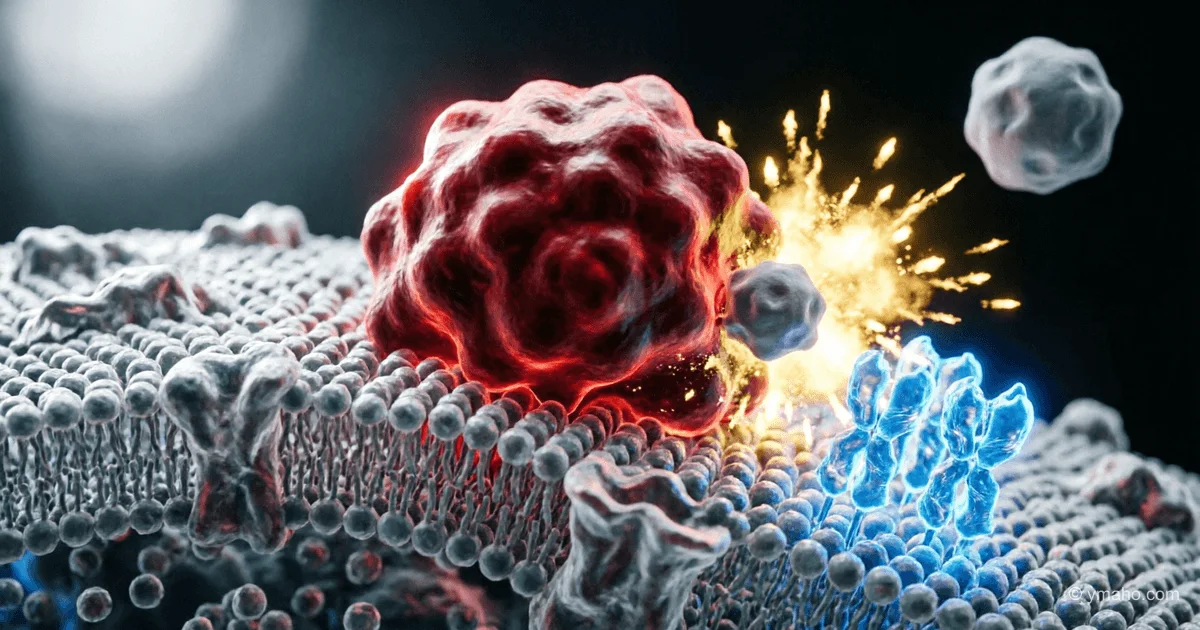
Study Reveals Role of XIAP Protein in Inducing Death Receptors in Cancer
A study in Cancer Gene Therapy showed that reducing levels of the NFκB-dependent protein XIAP is necessary to increase expression of the death receptor DR5, enhancing the cytotoxic effect of the b-AP15 and TRAIL combination.
The Hidden Apoptosis Switch: How Suppressing XIAP Opens Cancer to a Lethal Blow
Introduction
Head and neck cancer is diagnosed in over 900,000 people worldwide each year, claiming about 450,000 lives. Despite decades of improvements in surgical techniques, chemotherapy, and radiotherapy protocols, the five-year survival rate for HPV-negative head and neck squamous cell carcinoma (HNSCC) ranges from 28.8% to 58.7%. The main reason for these numbers is drug resistance, driven by evolutionarily honed cell survival mechanisms. One of the key "gatekeepers" of tumor cells is the NFκB signaling pathway, which triggers cascades that hinder therapy from destroying cancer. Directly attacking NFκB is toxic to healthy tissues, and scientists have been searching for an alternative route for years. In May 2026, an international research team found it: a study published in Cancer Gene Therapy revealed how reducing levels of the XIAP protein—controlled precisely by NFκB—opens the door for the deadly TRAIL signal through DR5 death receptors.
Event Details and Timeline
The study, made publicly available on May 2, 2026, was the culmination of a targeted scientific program. Previously, the same group showed that the small molecule b-AP15—an inhibitor of deubiquitinases USP14 and UCHL5—can suppress NFκB activity in HNSCC cells, making them vulnerable to tumor necrosis factor TNFα and radiation. Now, the researchers asked whether the same tool could make tumors respond to TRAIL—a protein from the same family as TNFα but with exceptional selectivity for cancer cells, barely affecting healthy tissues.
The experimental strategy was multi-layered. First, on a panel of HNSCC cell lines—both HPV-negative and HPV-positive—the scientists confirmed that the combination of b-AP15 and TRAIL reduces cell viability significantly more than either agent alone: the combination index was below 0.6, statistically confirming synergism. Then they searched for the mechanism. It turned out that b-AP15 dose-dependently increases expression of the TRAIL receptor DR5—both at the mRNA and protein levels, increasing its density on the cell surface. Experiments with gene silencing via siRNA conclusively confirmed: if DR5 is removed, the combination therapy loses effectiveness.
The central finding was the molecular chain leading to DR5 appearance. b-AP15 induced the generation of reactive oxygen species (ROS), which in turn activated the stress kinase JNK. JNK then triggered DR5 gene expression. Here, the key role of XIAP emerged: the study showed that reducing levels of this NFκB-dependent protein is a necessary condition for DR5 induction and subsequent sensitization to TRAIL. XIAP, known as X-linked inhibitor of apoptosis, normally suppresses caspases—the executioner enzymes that carry out the cell's death sentence. Its removal clears the path for TRAIL-mediated cell death.
Impact and Significance
For basic oncology. The work significantly contributes to understanding how tumor cells balance survival and death. Instead of a frontal attack on NFκB—an approach fraught with high toxicity—the researchers showed how to manipulate a downstream component of this signaling cascade to achieve a selective effect. The identified axis "b-AP15 → ROS → JNK → XIAP suppression → DR5 expression" is an elegant example of how intervention in the ubiquitin-proteasome system reprograms cell fate.
For therapeutic practice. HNSCC remains an extremely burdensome disease. Standard treatment—surgery, radiation, platinum-based chemotherapy—often comes with severe side effects, from swallowing difficulties to irreversible salivary gland damage. The targeted combination described in the study promises a fundamentally different toxicity profile: TRAIL selectively kills cancer cells, and b-AP15, based on its profile, does not have broad cytotoxicity.
Furthermore, the study showed synergy between b-AP15 and IAP antagonists—a class of drugs already in clinical trials. The cost of a course of checkpoint inhibitors currently used for HNSCC can reach $150,000 per patient per year in the US. Small molecules like b-AP15 could potentially reduce this figure, making therapy more accessible.
For patients. Most importantly, the discovery is aimed at patients who have exhausted standard options. Recurrent and metastatic HNSCC has a very limited therapeutic arsenal, and every new mechanism of action is a chance for those who have not benefited from existing protocols. The fact that the results were reproduced in both HPV-negative and HPV-positive cancer lines expands the potential reach of future therapy.
Reactions from Key Players
Publication in the reputable journal Cancer Gene Therapy, indexed in PubMed, ensured instant visibility of the work to the global scientific community. Open access status means any researcher worldwide can immediately review the methodology and results.
The academic community received the study with marked interest. It fills a gap in understanding the link between deubiquitinases and the extrinsic apoptosis pathway—a topic actively explored but long lacking a clear mechanistic explanation. Previous data showed that XIAP antagonists can enhance the effect of TRAIL and DR5 agonists, but the new work places XIAP at the center of the cascade triggered by a proteasomal deubiquitinase inhibitor.
The pharmaceutical industry also has reason to pay attention. IAP antagonists, including tolinapant (ASTX660), are already in clinical trials for HNSCC—specifically, in combination with radiation for patients ineligible for cisplatin. A study of xevinapant, another IAP inhibitor, showed efficacy in combination with chemoradiotherapy for locally advanced head and neck squamous cell carcinoma. The new work provides additional scientific rationale for these drugs and suggests potential synergistic combinations.
Forecast and Conclusions
The May 2026 study lays a solid mechanistic foundation, but the path from cell line to clinical application takes time. The authors explicitly note the need for preclinical testing in animal models in vivo—this is the immediate next step. Encouragingly, b-AP15 has already shown antitumor activity in xenograft models of other solid tumors, including melanoma and pancreatic cancer. If successful in animals, we can expect initiation of Phase I clinical trials within 3–5 years.
Given the high unmet need for therapy in recurrent HNSCC, regulatory agencies are likely to grant the combination of b-AP15 with TRAIL agonists or IAP antagonists orphan drug status or accelerated review. This is especially relevant for the HPV-negative subtype, where five-year survival remains distressingly low.
More broadly, the principle of "sensitization through XIAP suppression" may be extrapolated beyond HNSCC. The mechanism uncovered by the researchers—removing an NFκB-dependent inhibitor of apoptosis to open the death pathway via DR5—is potentially universal for tumors with hyperactivated NFκB. As the authors note, "the combination between b-AP15 and IAP antagonists was synergistic in HNSCC cells in vitro" and deserves further investigation in preclinical models.
The main lesson of this work can be summarized as follows: a tumor cell is not immortal because it cannot die—it can, but its "apoptosis switch" is blocked by proteins like XIAP. The task of science is to find a way to remove this block, and the study published on May 2, 2026, offers a specific molecular map for doing so. Now it remains to follow that map from the laboratory bench to the patient's bedside.
— Editorial Team









