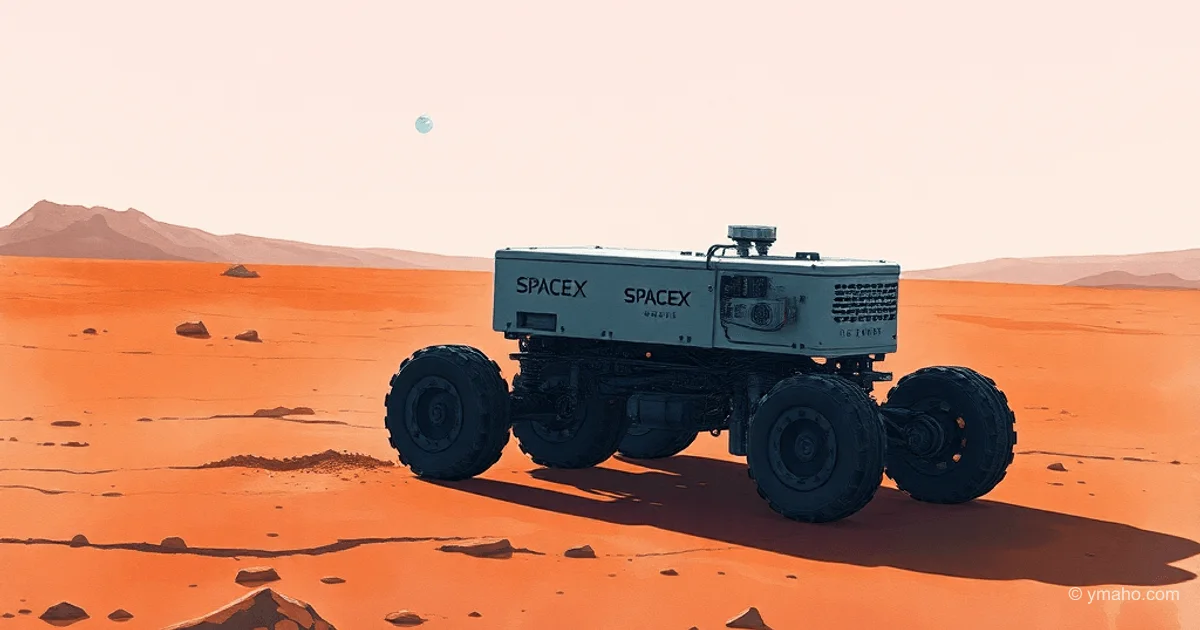
Europe’s Life-Hunting Mars Rover Finally Gets a Ride—On SpaceX’s Falcon Heavy
After more than a decade of delays, political upheaval, and rocket changes, Europe’s Rosalind Franklin rover is finally booked for Mars—and it’s hitching a ride on a SpaceX Falcon Heavy. For anyone who’s ever wondered whether we’re alone in the universe, this mission matters: it’s designed to dig deep into Martian soil and search for signs of past or present life.
A Long Road to the Red Planet
The Rosalind Franklin rover isn’t just another robot—it’s built to drill up to two meters (about 6.5 feet) below Mars’ dusty surface. That’s deeper than any previous rover has gone. Why? Because Mars’ surface is bombarded by harsh radiation that destroys organic molecules. But underground, protected from that cosmic bombardment, clues about ancient microbial life might still survive.
Think of it like archaeology on Earth: you don’t find ancient pottery lying on a busy sidewalk—you have to dig beneath layers of time. Rosalind Franklin is our interplanetary archaeologist.
But getting her to Mars has been anything but smooth. Originally a joint NASA-ESA project, the mission lost its American partner in 2012 due to budget cuts. Russia stepped in, providing a landing platform and instruments—but then invaded Ukraine in 2022, causing Europe to cut ties. The rover sat grounded, packed away, while engineers scrambled for a new plan.
SpaceX Steps In
Now, NASA is back in the picture—and bringing SpaceX along for the ride. In a major announcement, NASA confirmed it will use a Falcon Heavy rocket to launch the rover in late 2028 from Florida’s Kennedy Space Center.
Falcon Heavy isn’t just powerful—it’s proven. Made of three Falcon 9 boosters strapped together, it can lift heavy payloads beyond Earth orbit. It’s already sent missions to the Moon and Jupiter’s icy moon Europa. This will be its first trip to Mars.
NASA isn’t just buying a ticket. It’s also contributing critical hardware: heaters to keep the rover alive during freezing Martian nights, specialized electronics, and a high-precision mass spectrometer—a tool that can identify the chemical fingerprints of life’s building blocks.
Why This Mission Stands Out
Unlike NASA’s Perseverance rover, which collects rock samples for future return to Earth, Rosalind Franklin analyzes samples right on Mars. Its onboard lab can detect organic molecules with incredible sensitivity—something no other rover has done at this depth.
Key upgrades include:
- A drill that reaches 2 meters underground—past the radiation-damaged layer
- A miniaturized chemistry lab inside the rover
- Instruments co-developed by NASA and European scientists
- A landing site at Oxia Planum, a region rich in ancient clay that likely once held water
Water + clay + protected environment = one of the best shots yet at finding evidence of life beyond Earth.
What Does This Mean for Regular People?
Even if you’ll never set foot on Mars, this mission touches something deeply human: the question of whether we’re alone. Finding even microscopic fossils on Mars would reshape our understanding of life in the universe—and our place in it.
Plus, the collaboration shows how space exploration can bridge political divides. After years of setbacks caused by earthly conflicts, scientists from Europe and the U.S. are working together again—not for prestige, but for discovery.
Key Takeaways
- Europe’s Rosalind Franklin rover will launch to Mars in late 2028 on a SpaceX Falcon Heavy rocket.
- It’s the first mission capable of drilling deep enough to access potentially life-preserving layers beneath Mars’ surface.
- NASA is providing key instruments and launch services after Russia’s withdrawal from the project.
- The rover will land at Oxia Planum, a scientifically rich site with ancient water evidence.
- This marks SpaceX’s first-ever contracted mission to Mars—though Starship remains its long-term vehicle for human settlement.
— Editorial Team









