Safety Study of New Breakthrough Epilepsy Treatment for Pregnant Women Launches
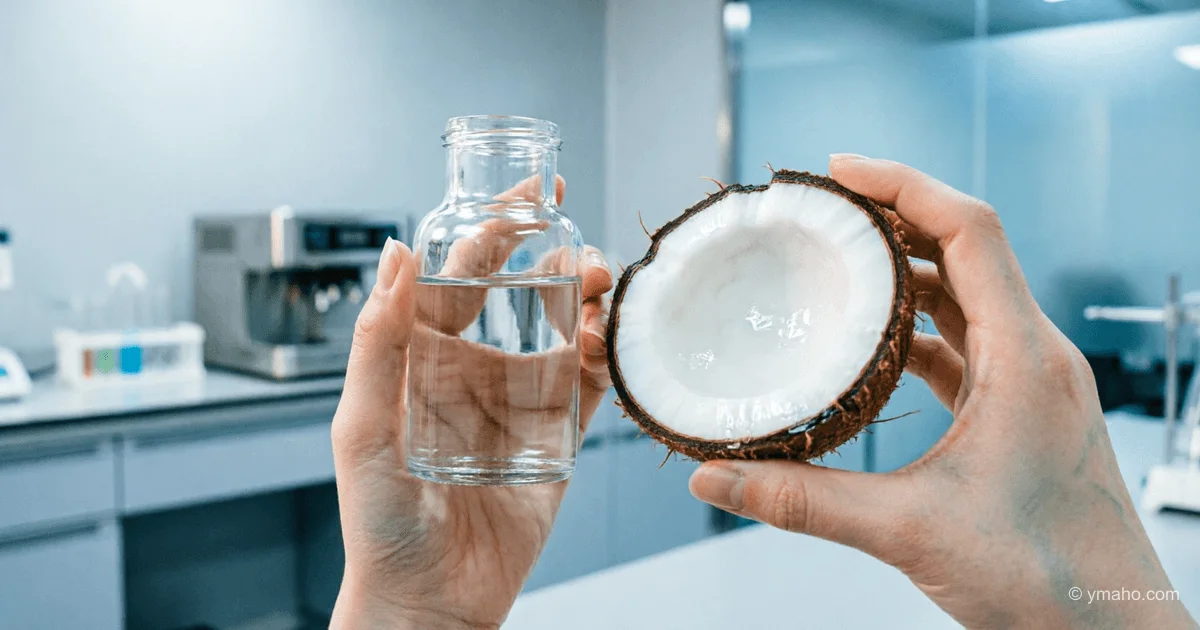
Scientists from Royal Holloway and UCL have begun studying the dietary supplement K.Vita, based on decanoic acid, for treating epilepsy during pregnancy. The goal is to find a safe alternative to current medications that can harm fetal development.
This is not a news brief, but an analysis of a tectonic shift in epilepsy therapy, hidden behind the modest phrase "launch of a dietary supplement study."
The Essence: What's Really Happening
Royal Holloway and UCL have launched a clinical trial not just of an "alternative" to valproate. In reality, we are witnessing the legitimization of metabolic therapy for neurological disorders. This is about rehabilitating decanoic acid—a simple medium-chain fatty acid from coconut milk. But calling it a "dietary supplement" is a deliberate reductionism by researchers to avoid scaring off regulators at the start.
The real point is that Robin Williams' group at Royal Holloway is using the design of a safety clinical trial as a Trojan horse. They need to prove not just the absence of teratogenicity (birth defects), but clinical efficacy in a specific population. This is not a vitamin for wellness enthusiasts. It is a potential replacement for valproic acid—a drug with a proven rate of birth defects from 6% to 20% when taken in the first trimester. For the 50 million people with epilepsy worldwide, half of whom are women of childbearing age, this is not a niche story. It is a multi-billion dollar mainstream.
Timeline and Context
The story dates back to 2013, when Williams' group discovered the mechanism of action of valproic acid—inhibition of phosphoinositides—using a Dictyostelium (amoeba) model. At that time, screening of hundreds of fatty acids began, showing that decanoic acid is more potent than the original and lacks its main flaw. The gap between 2013 and 2026 is simply explained: the patent landscape.
Valproate has long been generic, the pill costs pennies, and pharma giants have no incentive to invest in clinical trials of a substance already found in coconut milk. Intellectual property here can only be built on a specific composition, delivery method, or dosage for a specific indication. Hence the 13-year pause: academics were seeking funding outside Big Pharma. Now, apparently, either large charitable foundations like Epilepsy Research UK or government funding through NIHR have entered the game.
A key preclinical nuance many miss: decanoic acid inhibits beta-oxidation of fatty acids. This property of valproate is considered critical in its mechanism of rare but fatal hepatotoxicity. The question is not whether decanoic acid will stop seizures (this has already been confirmed in animals), but whether chronic use will cause liver strain in pregnant women, whose metabolism is already overloaded.
Winners and Losers
Winners, surprisingly, are manufacturers of medical foods, particularly Nutricia (Danone). The MCT ketogenic diet is built on medium-chain triglycerides, which break down into decanoic and octanoic acids in the body. If the study confirms that the antiepileptic effect comes specifically from decanoic acid, not ketone bodies, it will overturn the $1.8 billion medical nutrition market. Nutricia could produce enriched supplements, positioning them not just as a diet but as "medical food with proven pharmacological action," opening a loophole for advertising claims.
Losers are patent holders of new antiepileptic drugs: UCB (lacosamide), Eisai (perampanel), GW Pharma/Jazz. Their molecules, developed for refractory epilepsy, cost $800 to $1,500 per month. If it turns out that a cheap fatty acid from coconut is comparable in efficacy, at least in a subgroup of patients, insurance companies will start demanding step therapy—try decanoate first, then pay for the expensive brand.
But the main non-obvious loser is diagnostic laboratories that profit from genetic testing of embryos. The current paradigm: a woman with epilepsy plans pregnancy, risking either birth defects or loss of seizure control. If a safe-for-fetus drug appears, the need for invasive procedures and pregnancy termination will decrease, cutting revenue for labs like Natera or Invitae by roughly $45 million per year by conservative estimates.
What the Media Isn't Saying
Headlines say "safe alternative" but omit the main risk: neurotoxicity to the fetus of a different nature. Valproate causes neural tube defects. But decanoic acid has epigenetic activity as an HDAC inhibitor. Studies on SWV mice with high sensitivity to teratogens, where exencephaly rates reached 35%, are not reassuring—they only show that the damage mechanism is different, but the existence of a safety threshold is not proven.
Moreover, researchers deliberately shift focus to pregnant women to get expedited ethical approval. Adult men with epilepsy already take MCT diets without tragic consequences. But obtaining "orphan" status for treating epilepsy in pregnant women is much easier and more profitable in terms of US tax credits: the market is narrow, unmet medical need is enormous. This is a typical strategy for academic spin-offs.
Forecast: Next 30 Days and 90 Days
30 days (by June 18, 2026): The study protocol will be registered on ClinicalTrials.gov. If investigators include Professor Helen Cross (UCL) or other heavyweights in pediatric neurology, it's a serious signal of credibility. A closed investor is likely—I'd bet on the British fund Medicxi or the Dementia Discovery Fund, given that the phosphoinositide inhibition mechanism is also relevant for neurodegeneration. A mention of the Alzheimer's Drug Discovery Foundation will appear in press releases by mid-June.
90 days (by August 19, 2026): If Phase 1 shows no hepatotoxicity in a small cohort of 30-40 patients, neurology departments at Boston Children's Hospital and Johns Hopkins will ramp up. But the main catalyst is the FDA's reaction. They may issue draft guidance on developing antiepileptic drugs with a focus on pregnancy safety. This will force UCB and Jazz to urgently launch their own screenings of short-chain fatty acids. Watch for news from SOCI—they traditionally cover this topic first. If we see news about licensing Royal Holloway's patent to a Nestle Health Science or Abbott Nutrition, it means the market for medical brain products is entering a new era—metabolic, where the line between "food" and "drug" finally disappears.
— Editorial Team









