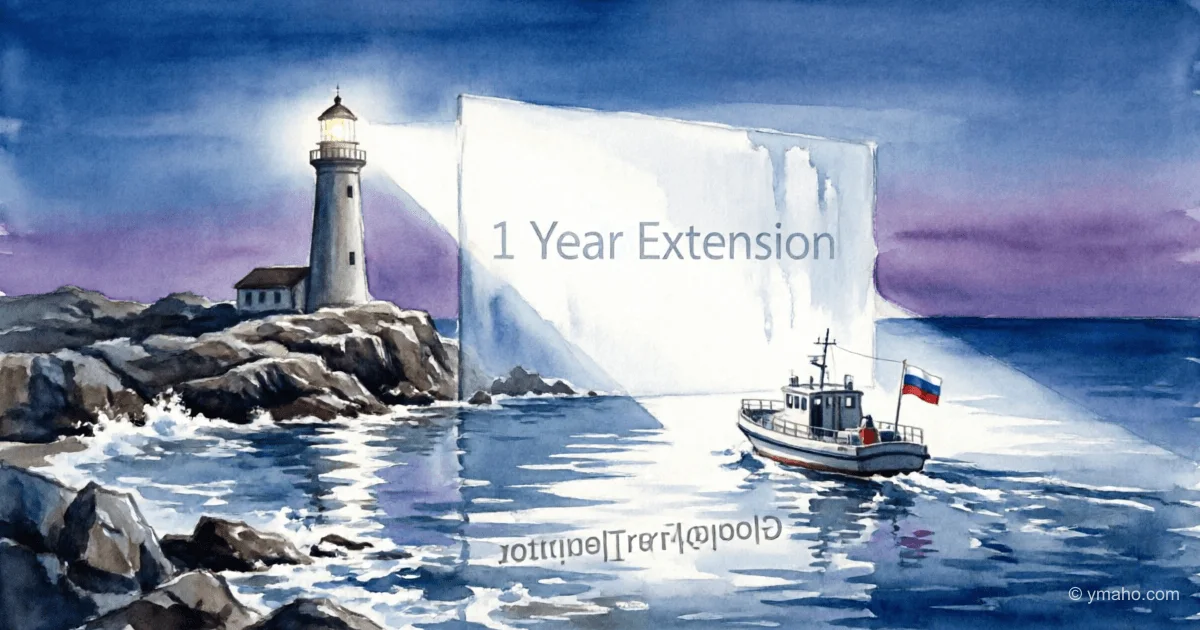
Trump Extends Ban on Russian Vessels: How Sanctions Are Reshaping Global Trade
U.S. President Donald Trump has extended for one year the ban on Russian vessels entering American ports. While this decision might seem distant from everyday life, such sanctions directly impact store prices and global fuel costs—even if you live thousands of miles away. Why? Because the modern economy is an interconnected web where every nation relies on others. When one link in that chain weakens, the tremor is felt everywhere.
What Changed?
This refers to an executive order first signed by Joe Biden in April 2022, right after the war in Ukraine began. At the time, the U.S. banned Russian ships from docking in American ports. The restriction covers all vessels:
- flying the Russian flag or registered in Russia;
- owned by the Russian government, companies, or citizens;
- managed from within Russia.
The only exceptions are ships carrying nuclear materials essential to the U.S. or those in distress. Now, Trump has simply renewed this order for another 12 months, citing ongoing Russian actions that continue to threaten international security. Formally, this isn’t a new sanction but a reaffirmation of existing rules. Symbolically, however, it sends a clear message: the U.S. has no intention of easing pressure on Russia.
Imagine countries building invisible walls across the ocean. These barriers prevent Russian ships from delivering goods directly, forcing them to take longer routes. Longer routes mean higher shipping costs, which ultimately translates to higher prices for consumers. Think of it like a familiar road closed for repairs—you’re forced onto a detour, burning more gas and wasting time. Cargo faces the exact same reality: moving goods now costs significantly more.
How Does This Affect Global Trade?
Sanctions targeting the Russian fleet are just one piece of a broader strategy to economically isolate Russia. The U.S. and its allies aim to cap Moscow’s export revenues, particularly from energy commodities. Yet global trade is remarkably adaptable: when one route closes, goods find another.
For instance, on the very day the extension was announced, analysts noted that a shipment of liquefied natural gas (LNG) from Russia’s sanctioned Portovaya plant headed straight for India. In other words, Russia is rerouting its cargo toward nations that haven’t joined the sanctions, like India and China. It’s similar to heavy traffic on a highway: when the main route is blocked, drivers take backroads. But detours are longer and riskier, meaning trips take more time and cost more.
Additionally, insurance firms and banks handling Russian vessels face the threat of secondary sanctions. As a result, many have cut ties with Russian clients. This further complicates logistics and drives up costs. Ultimately, even if you never buy Russian goods directly, you’ll likely feel the pinch through rising prices on everyday items—simply because the baseline cost of global shipping keeps climbing.
Key Takeaways
- The extension isn’t a new sanction but a renewal of existing measures, signaling sustained pressure on Russia without any relaxation.
- Russia is actively seeking new buyers for its goods, especially energy exports, by redirecting shipments to Asia. However, this requires more complex logistical arrangements.
- Extended shipping routes increase logistics costs, which can drive up prices for a wide range of goods, including food and fuel.
- Sanctions also deter insurance and financial institutions due to fears of secondary penalties, further narrowing viable shipping options.
What Does This Mean for Everyday People?
You may notice prices on certain goods climbing faster than usual—particularly groceries and fuel. This happens because sanctions complicate and inflate shipping expenses. Still, it’s crucial to remember: these measures are designed to curb Russia’s export earnings, which could ultimately help bring the conflict to a close. In the meantime, everyone absorbs slightly higher costs for international trade. But without these restrictions, the war could easily drag on longer, causing far greater suffering.
— Editorial Team









