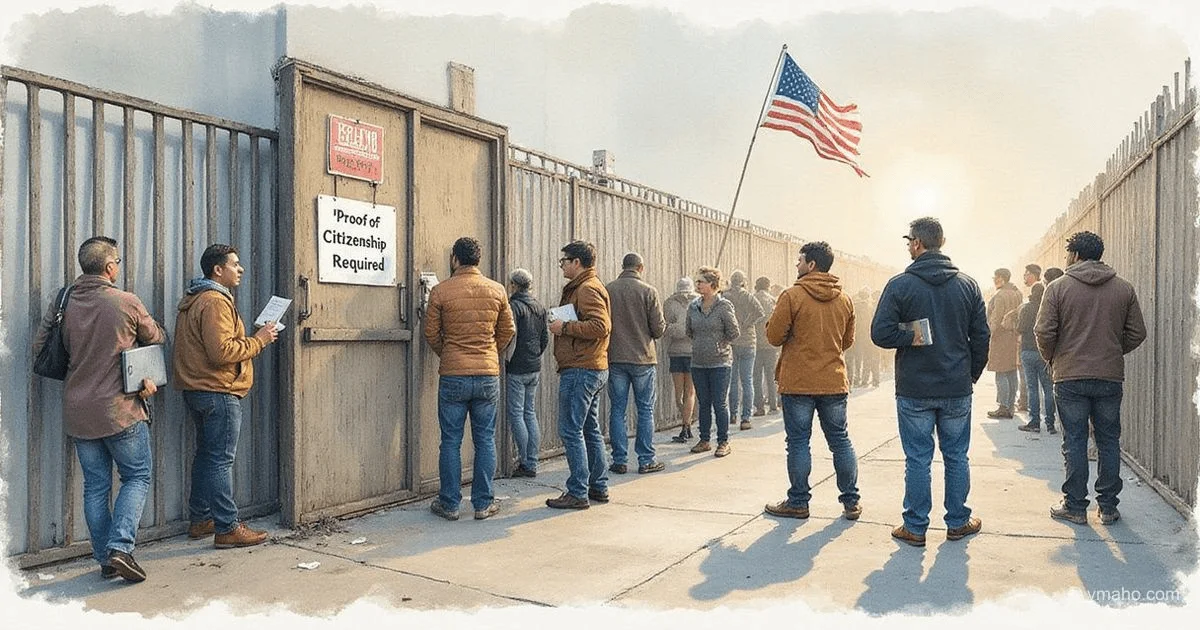
What the Trump-Backed SAVE America Act Would Change About Voting — and Why It Matters to You
A controversial voting bill backed by former President Donald Trump is stirring fierce debate in Washington. If passed, the SAVE America Act would require every voter to show proof of U.S. citizenship—like a birth certificate or passport—to register or cast a ballot. While supporters say it’s about election security, critics warn it could block millions of eligible Americans from voting, especially those who’ve changed their name, moved often, or simply don’t have easy access to official documents.
For most people, this isn’t just politics—it’s about whether you’d be able to vote next time without jumping through extra hoops.
What the SAVE America Act Actually Does
The Safeguard American Voter Eligibility (SAVE) America Act would make major changes to how Americans prove they’re allowed to vote. Right now, states run their own elections and use different methods to verify voters. Federal law already bans noncitizens from voting, and anyone registering must swear under penalty of perjury that they’re a U.S. citizen.
Under the new bill:
- Voters would need to show a birth certificate, U.S. passport, or naturalization papers to register.
- States would have to check all voter rolls against a federal immigration database.
- Election officials could face criminal penalties if they let someone register without the required documents.
- The rules would take effect immediately—with no new funding to help states implement them.
Think of it like needing a car title to drive—not just a license. Even if you’ve driven legally for years, without that specific paper, you’re suddenly locked out.
How Common Is Noncitizen Voting, Really?
Supporters argue the law is needed to stop noncitizens from voting. But data shows this almost never happens.
- In Utah, officials reviewed over 2 million voter records from 2025 to 2026 and found just one noncitizen mistakenly registered—and zero cases of actually voting.
- A federal database used by some states flags potential noncitizens at a rate of 0.04%. But follow-up checks often reveal those people are citizens—the system just got their records wrong.
- The conservative Heritage Foundation, which tracks election fraud, has documented only a handful of noncitizen voting cases nationwide over decades.
In other words, the problem the bill aims to fix is extremely rare—like worrying about shark attacks while walking to work in Nebraska.
Who Could Be Left Out?
The bigger concern isn’t fraud—it’s access. Millions of eligible voters might struggle to meet the new requirements:
- 9% of eligible voters (about 21 million people) don’t have easy access to citizenship documents.
- 52% of Americans don’t have a valid passport.
- 11% lack a birth certificate.
Women who changed their last name after marriage face an extra hurdle: their birth certificate shows their maiden name, but their ID shows their married name. Without additional paperwork linking the two—which many don’t keep—they could be turned away. An estimated 69 million women fall into this category.
Others at risk include military families who move often, disaster survivors who lost documents, and low-income communities with less access to government offices.
The Senate Roadblock: Filibuster or No?
The bill passed the House along party lines but is stalled in the Senate. Republicans hold 53 seats—short of the 60 usually needed to overcome a filibuster, a Senate rule that lets the minority block most bills.
Trump is pushing GOP leaders to “kill the filibuster” so the bill can pass with a simple majority. That’s a big deal: scrapping the filibuster would reshape how laws are made for years, no matter which party is in power.
So far, Senate Republicans haven’t taken that step. Without it, the bill likely won’t become law before the November midterms.
What Does This Mean for Regular People?
If the SAVE America Act becomes law, voting could get harder for millions—even if you’ve voted your whole life. You might need to dig up old paperwork or visit multiple offices just to prove you’re you. And because the law offers no extra money or time to adapt, confusion and errors are almost guaranteed.
Even if it doesn’t pass, the debate reveals a deeper tension: how to balance election security with making voting accessible to everyone who’s eligible. For now, your ability to vote still depends on where you live—but that could change fast if rules shift at the federal level.
Key Takeaways
- The SAVE America Act would require proof of citizenship to register or vote—something most states don’t currently demand.
- Noncitizen voting is exceptionally rare; studies show it affects far less than 1% of voters.
- Up to 21 million eligible voters may lack the documents needed under the new rules.
- Women who changed their names, military families, and disaster survivors are especially at risk of being blocked.
- The bill is stalled in the Senate unless Republicans eliminate the filibuster—a major procedural shift.
— Editorial Team









