Scalp Wellness: Why Scalp Care Is Becoming the Ultimate Beauty Routine of 2026
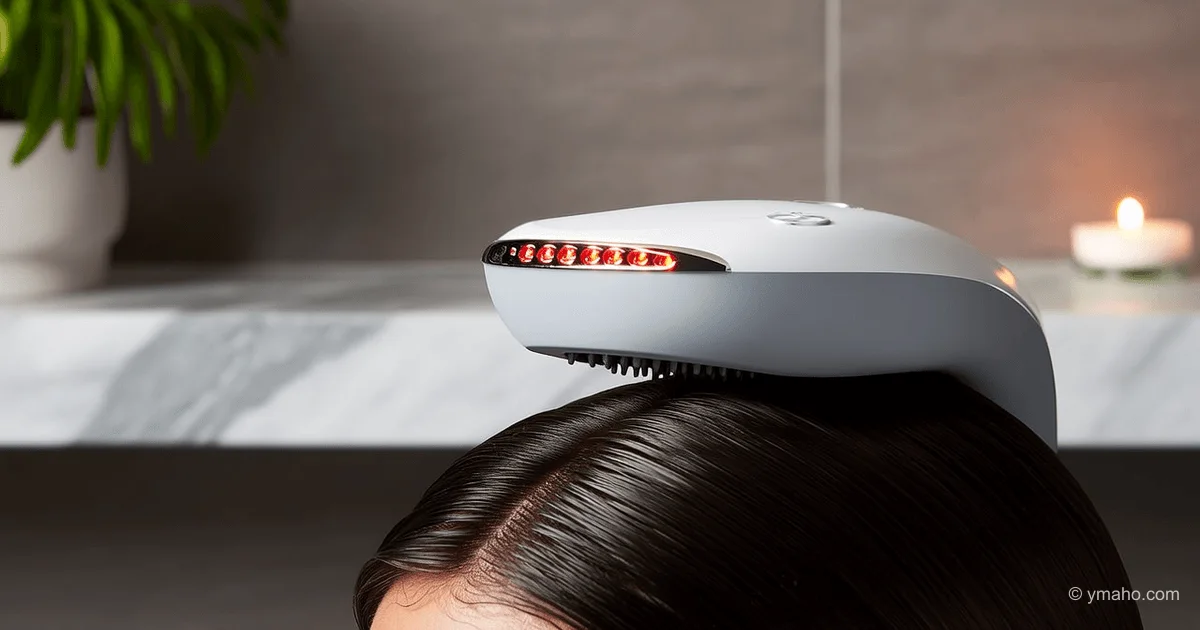
FOREO has unveiled the new FAQ 301 device, which uses red LED light and T-Sonic massage to stimulate microcirculation of the scalp, turning care into a spa ritual.
Scalp Wellness: How the Scalp Became the Main Beauty Frontier of 2026 — and Why This Is Just the Beginning
The Bottom Line: What's Really Happening
On May 9, 2026, FOREO introduced the FAQ 301 — a device that combines 20 red LED diodes with a wavelength of 650 nm and patented T-Sonic massage technology in a single wireless device. The clinical data is impressive: a 41% reduction in hair loss, a 36% increase in thickness and density, and a 40% boost in shine. The device is designed to work with liquid products — including minoxidil — by temporarily expanding scalp pores for deeper penetration of active ingredients.
The industry has already dubbed this "scalp wellness" — the next evolutionary step after skinification of hair. But behind the catchy term lies something more serious: a reshaping of the beauty market map, where the scalp becomes a battleground between tech companies, traditional hair care, and pharmaceutical players.
And FOREO is just the first herald. An army follows.
Timeline and Context
What happened in May 2026 has been brewing for the past three years. The term "skinification" — applying facial skincare principles to other categories — entered the industry lexicon around 2020, but it was in 2026 that, in the words of Jen Brady from Kenvue, it reached a "tipping point": "People have been talking about skinification of hair and scalp for the last ten years. Now it's here."
The chain of events follows a clear logic. In 2025, the scalp product category grew 19% year-over-year. In November 2025, Kenvue launched Neutrogena Hair Restore and OGX ProGrowth + Peptide — hair growth lines priced at $8–$20, deliberately democratizing what was previously only available through expensive clinical brands. In early 2026, retailers began reorganizing shelves: Ulta created a dedicated scalp product category featuring prestige brands Cécred, Briogeo, and Bumble & Bumble. Sephora already had a similar positioning.
Meanwhile, the hair care devices market is booming. According to Global Market Insights, the North American hair devices market was valued at $754.4 million in 2025 and is projected to grow to $1.73 billion by 2035 at a CAGR of 8.3%. Within this market, the LED light therapy devices segment is one of the fastest-growing, driven primarily by home use.
The global hair and scalp care market is estimated at $88.2 billion to $150 billion in 2025–2026, with growth projections to $150–$173 billion by the early 2030s. The scalp massager devices segment is more modest — $459.27 million in 2025, projected to reach $779.83 million by 2034 — but its 6.18% CAGR masks the fact that electric devices with LED and vibration are growing faster than the overall category (6.44% CAGR), and home use accounts for 86% of the market.
The launch of the FAQ 301 became the convergence point of all these trends in a single product.
Who Wins and Who Loses
FOREO wins — that's obvious. But the scale of the win is bigger than one product. The FAQ 301 moves the company from the facial devices market (where it competes with dozens of brands) into the adjacent haircare devices market, valued at $844.2 million in North America in 2026. This is a strategic diversification into a segment with higher willingness to pay — hair loss is perceived more acutely by consumers than "insufficient skin glow," and budgets for solving it are more readily allocated.
Mass-market brands win. The launch of Neutrogena and OGX by Kenvue at $8–$20 per unit directly targets the "white space" Brady mentions: 87% of women experience hair loss, but only 25% do something about it, and fewer than one-fifth of those are satisfied with the results. Kenvue's research, drawing on 35 years of experience with Rogaine, shows that the problem exists, and solutions are either expensive or inconvenient. Lines priced at $10–$20 with dermatological expertise capture an audience that prestige brands ignored and pharma scared off with complexity.
Consumers win. The FAQ 301 bundle with serum sells for $479–$559 Singapore dollars (about $355–$415 USD). For comparison, a course of LED therapy in a US clinic costs $1,500–$3,000 per year. A one-time purchase of a home device with a claimed 36% increase in hair density is consumer surplus that will drive the market.
Dermatology clinics lose. The haircare devices market is shifting toward direct-to-consumer — the DTC channel dominates. Consumers choose home solutions because they are more convenient, cheaper in the long run, and don't require appointments with specialists. When a $400 device promises results comparable to clinical treatments, clinics lose their funnel.
Brands without a "skinification" positioning lose. More than 50% of US consumers seek products that combine care and results; among Gen Z and millennials, this share reaches 60%. Companies that continue to sell "just shampoo" lose an audience that now asks about peptides, niacinamide, and the scalp microbiome.
Local manufacturers without R&D lose. As Fortune Business Insights notes, unorganized players with cheap devices create price pressure but cannot compete on efficacy. The clinical data for the FAQ 301 (41% reduction in hair loss, 36% increase in density) is a barrier to entry that cannot be overcome by lowering the price by $10.
What the Media Isn't Saying
Insight #1: The FAQ 301 isn't about hair. It's about capturing a ritual.
Most reviews focus on LED therapy and clinical results. But look at the product mechanics: 637 silicone bristles, massage pulses, wireless form factor, compatibility with serums. This is not a medical device. It's a spa ritual packaged in a gadget. FOREO is deliberately building not a "treatment" but a "daily scalp care routine" — and thereby entering the consumer's routine on a permanent basis. Medical devices are used in courses. Rituals are used every day. And daily use means repeat purchases of serums and consumables.
Insight #2: Scalp wellness is a Trojan horse for the male grooming market.
Fortune Business Insights explicitly states that growing male interest in hair care creates a new opportunity for manufacturers. FOREO offers separate protocols for men and women in the FAQ Swiss app. About 50% of men and 40% of women experience hair loss in their lifetime. But the male hair loss solutions market has historically been limited to pharma (minoxidil, finasteride) and transplants. A device that a man can use at home, without a prescription and without side effects — that opens up a colossal market that no beauty brand has seriously tapped.
Insight #3: The devices market is growing faster than the products market — and that flips the industry's economics.
Compare the numbers: global hair and scalp care market (products) — $88–$150 billion with a CAGR of 7.0–7.3%. The haircare devices market in North America alone — $844 million with a CAGR of 8.3%. The scalp massager devices market — $483 million with a CAGR of 6.18%. Devices are growing faster than products. This means consumers are willing to invest in hardware that enhances the effect of software (products). And FOREO is building an ecosystem around exactly that: device + serum in a bundle, an app with protocols, compatibility with minoxidil. The "razor and blades" model, where the device is a platform for regular consumable purchases.
Forecast: Next 30 Days and 90 Days
30 days (by June 13, 2026):
The FAQ 301 has gone on sale. In the next month, we'll see the first wave of user-generated content — unboxings, first results after 2–4 weeks of use, comparisons with other LED devices (Capillus, iRestore, HairMax). TikTok and Instagram will fill with the hashtag #ScalpWellness and videos titled "I used an LED scalp massager for 30 days, and here's what happened."
Kenvue will begin national distribution of Neutrogena Hair Restore and OGX ProGrowth + Peptide through Walmart and other mass retail chains. This will create price pressure: consumers will see professional scalp care for $8–$20 next to devices for $400, and the question "what's more effective — product or gadget?" will become the main discussion of the summer.
FOREO's competitors — Breo, Panasonic, Maxsoft — will ramp up marketing campaigns. Expect announcements of new LED massagers with "clinical data" from these brands in the coming weeks.
90 days (by mid-August 2026):
By then, three important shifts will emerge.
First, a wave of M&A is coming. Major beauty corporations — L'Oréal, Estée Lauder, Unilever — will see the growth numbers for devices and want hardware capabilities. FOREO, as a private company with strong R&D and proven clinical results, will become an attractive target. The deal price, if it happens, could reach $500–$800 million.
Second, medical dermatology associations will begin issuing position papers on home LED therapy for the scalp. Until now, the professional consensus has been cautious — insufficient data. But the clinical results of the FAQ 301 (41% reduction in hair loss in a few weeks) and similar data from competitors will force a revision of recommendations. As soon as the AAD (American Academy of Dermatology) recognizes home LED devices as "adjuvant therapy" for androgenetic alopecia, the market will explode.
Third, Amazon will update the category structure of its beauty section. Currently, haircare devices are scattered between "Health & Household" and "Beauty & Personal Care." The segment's growth will force the platform to create a dedicated "Scalp Care Devices" category — and the brand that first secures top positions there will gain a long-term competitive advantage.
Conclusion. The FAQ 301 is not "just another LED gadget." It is the entry point into a new beauty market segment that combines cosmetics, technology, and a pharmaceutical approach. FOREO has done what Kenvue is doing with mass-market products and Ulta and Sephora with retail categories: it has legitimized scalp care as an independent, high-margin, growing category.
The next 12 months will show whether scalp wellness becomes as must-have as facial skincare — or remains a niche for early adopters. But the bets are already placed. The global market is targeting $150–$173 billion, devices are growing faster than products, and consumers are willing to pay for solutions that work. Whoever combines scientific credibility, technological innovation, and a spa ritual in one product will win not just a category — they will win the daily lives of millions of people for whom healthy hair is becoming a matter of identity.
— Editorial Team









