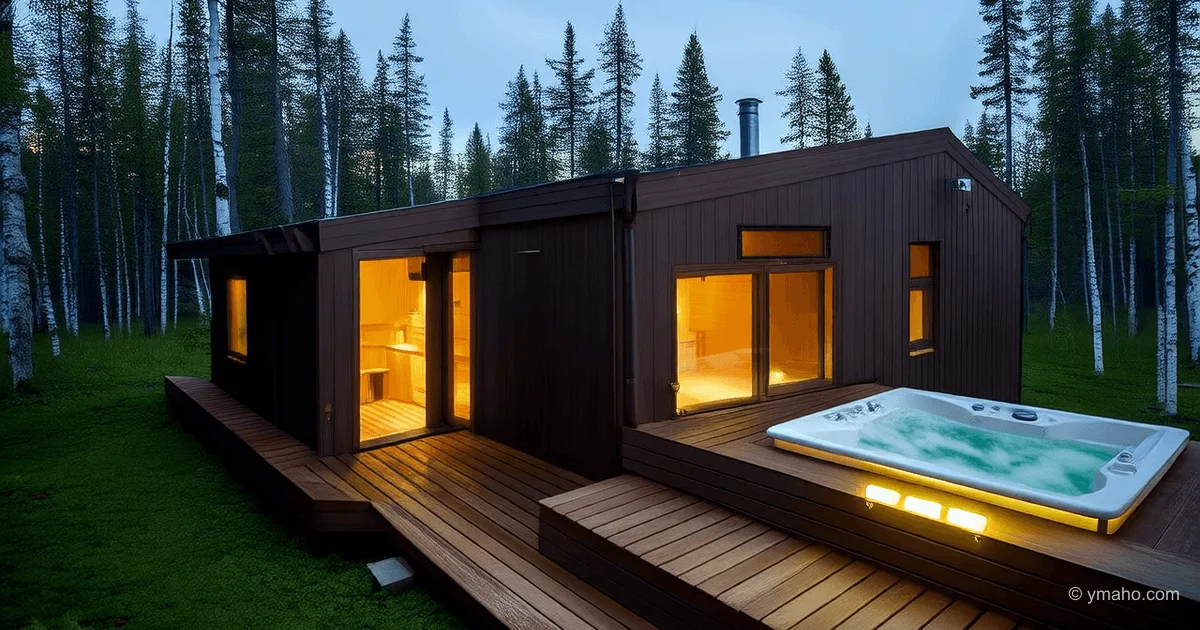
The Scandinavian Approach to Stress: Magnesium Flake Baths and Forest Saunas
Wellness resorts are emphasizing floating combined with forest saunas. The treatment aims for deep relaxation of the nervous system through immersive silence and magnesium saturation.
Over the past five years, the wellness industry has tried everything from cryotherapy to ayahuasca retreats. But by May 2026, a trend requiring neither electricity, Wi-Fi, nor biohacking protocols has come to the forefront. The Scandinavian approach to stress—immersive silence, forest saunas, and magnesium baths—is taking over luxury resorts from Norway to Japan. On the surface, it looks like another "slow" trend for burned-out managers. But an insider perspective reveals a complex mechanism beneath: a new model of nervous system management based on specific physiological mechanisms that is reshaping the entire wellness segment.
The Core: What's Really Happening
We are witnessing not a return to nature, but the emergence of a high-tech relaxation protocol disguised as archaic practice. The key ingredient is not pine needles or birch branches, but magnesium chloride in concentrations sufficient to create an osmotic gradient through the skin.
Floating in a bath with magnesium flakes (typically 500-600 grams of magnesium chloride per standard bath, temperature 34.5-35.5°C) is not a spa treatment in the usual sense. It is an attempt to achieve a state of "serum magnesium saturation" without oral intake, which is limited by gastrointestinal tolerance. Transdermal magnesium absorption is slow but continuous—this provides a prolonged effect on GABA receptors and NMDA antagonism, reducing sympathetic nervous system excitability.
Then comes the second stage: the forest sauna. Here, it's not just heat but a specific combination of factors: temperature 75-85°C with humidity 15-25% (Finnish style, as opposed to Russian banya), negative ions from coniferous forest, and—crucially—complete absence of anthropogenic noise. No music, no conversations, no notifications. Only wind and crackling firewood.
The combination of floating and forest sauna is a two-step protocol: first, magnesium saturation in weightlessness, then heat shock followed by vasodilation in fresh air. Physiologically, this leads to reduced cortisol, increased BDNF (brain-derived neurotrophic factor), and activation of parasympathetic tone via vagus nerve stimulation. This is not esotericism—it's neurobiology packaged in a log cabin.
Timeline and Context
Interest in magnesium in the wellness industry surged in 2023-2024, driven by research linking magnesium deficiency to anxiety and sleep disorders. Around the same time, the first specialized floating studios with highly concentrated magnesium solutions appeared. But they were urban, high-tech, capsule-style with LEDs and music.
In 2025, a breakthrough occurred: a study published in the Journal of Environmental Psychology showed that 15 minutes in a forest reduces cortisol by 15.8%, but if the forest experience is preceded by magnesium floating, the reduction reaches 28-32% and lasts up to 48 hours. This was the first study to demonstrate synergy between the two modalities.
Resorts responded immediately. Arctic Bath in Sweden, The Well in Oslo, and Sisu Sauna in Finnish Karelia have already introduced combined packages. By May 2026, luxury chains like Aman, Six Senses, and Como Shambhala are replicating this format. The cost of a single "Scandinavian protocol" session ranges from €180 in Finland to $450 in the US.
Meanwhile, the home equipment market is growing. Sales of magnesium bath flakes rose 65% in 2025. Brands like BetterYou, Ancient Minerals, and Nordic Magnesium have launched specialized lines for the "floating protocol." Sauna manufacturers like Harvia, Almost Heaven, and Finnleo have started producing modular forest saunas for private properties, with panoramic glazing and soundproofing from the outside world. The average price for such a modular sauna starts at $18,000.
Winners and Losers
Winners: Scandinavian countries as a wellness brand. Finland, Norway, and Sweden gain a competitive edge in the global battle for luxury wellness tourists. These are high-spending tourists: the average weekly package "forest sauna + floating" costs between €3,200 and €7,500 excluding airfare. Nordic countries are turning their climatic and cultural uniqueness into a high-margin export product.
Winners: manufacturers of pharmaceutical-grade magnesium salts. The magnesium flake market is growing 30-40% annually. But there's a crucial nuance: floating requires high-purity magnesium chloride, not sulfate (Epsom salt). Sulfate is cheaper but does not provide the necessary osmotic pressure and penetrates the skin less effectively. Companies that control sources of natural magnesium chloride (mainly in Tibet, the Netherlands, and underground brines in the US) are collecting rents.
Winners: landscape architects and builders of small architectural forms. A forest sauna is not just a structure; it's integration into the landscape. Demand for designer saunas from architectural firms like Snøhetta is exploding. A custom forest sauna project costs between $50,000 and $250,000.
Losers: urban spas and floating studios in concrete boxes. Their capsules and high-tech interiors are starting to feel cold and clinical. The forest sauna redefines "luxury" in wellness: not high-tech, but contact with nature becomes the marker of premium quality. Urban studios will either have to imitate nature (expensive and unnatural) or accept the loss of high-margin clientele.
What the Media Isn't Saying
First uncomfortable fact: the effectiveness of transdermal magnesium remains scientifically debated. A major study published in Nutrients in 2023 showed that transdermal magnesium absorption through intact skin is minimal, rarely exceeding 5-7% of the dose. The main effect clients feel after magnesium baths may be due not to magnesium but to the thermal effect of water and osmotic pressure, which itself relaxes muscles. Magnesium bath product manufacturers deliberately avoid this discussion.
Second fact: forest saunas are ecologically ambiguous. Building a heated structure in the forest requires access roads, electricity (or regular firewood delivery), and thus intervention in the ecosystem. A "forest sauna" is often built on a cleared plot with foundations, drainage, and golf cart parking. It's not an eco-idyll but commercial infrastructure, just well-disguised.
Third, the most subtle insider point: the Scandinavian protocol creates dependency. Clients who have undergone 3-4 sessions of combined floating and forest sauna report "withdrawal syndrome" upon returning to the urban environment: anxiety levels not only return to baseline but may temporarily exceed it. The nervous system, adapted to deep relaxation, reacts more acutely to city noise and notifications. This creates a repeat-purchase model: the client returns to the resort not for pleasure but to alleviate symptoms. Economically beneficial, ethically questionable.
Forecast: Next 30 Days and 90 Days
In the next 30 days, a seasonal surge will begin: summer months are peak demand for forest saunas, especially in Scandinavia, where white nights create a unique experience. Resorts will raise prices by 20-30% for summer packages. Simultaneously, several startups offering "mobile forest saunas"—saunas on wheeled platforms that can be delivered to any site—will enter the market. Estonian startup Nomad Sauna has raised €4 million to expand its fleet.
In the next 90 days, we will see urbanization of the Scandinavian protocol. "Urban forest saunas" will appear—spaces on skyscraper rooftops, in abandoned industrial buildings, where vertical greening, noise cancellation, and imitation of forest microclimate attempt to replicate the effect of a real forest. The first such projects have already been announced in New York, London, and Berlin. The cost per session is expected to be in the range of $55-75. The success of these projects will show whether the "Scandinavian protocol" can be separated from Scandinavia or if nature is an irreplaceable ingredient.
The most important forecast: within 90 days, a major tech company (likely Apple or Samsung) will announce a partnership with a Scandinavian wellness resort to create a "digital model of a forest sauna" for Vision Pro or similar devices. The idea: recreate the audiovisual and even tactile experience of a forest sauna for home use. This will be a moment of truth for the entire concept: if the digital copy proves popular, it will confirm that the "Scandinavian protocol" is primarily neurosensory stimulation, not the magic of place. If it fails, it will confirm that true relaxation requires a real forest, and the price per square meter of Scandinavian forest with a sauna will continue to rise.
We are entering an era where silence and forest become luxury items, not accessible to everyone. And the question is not whether the Scandinavian protocol works—the question is who can afford it when luxury wellness has finally moved from cities to forests.
— Editorial Team









