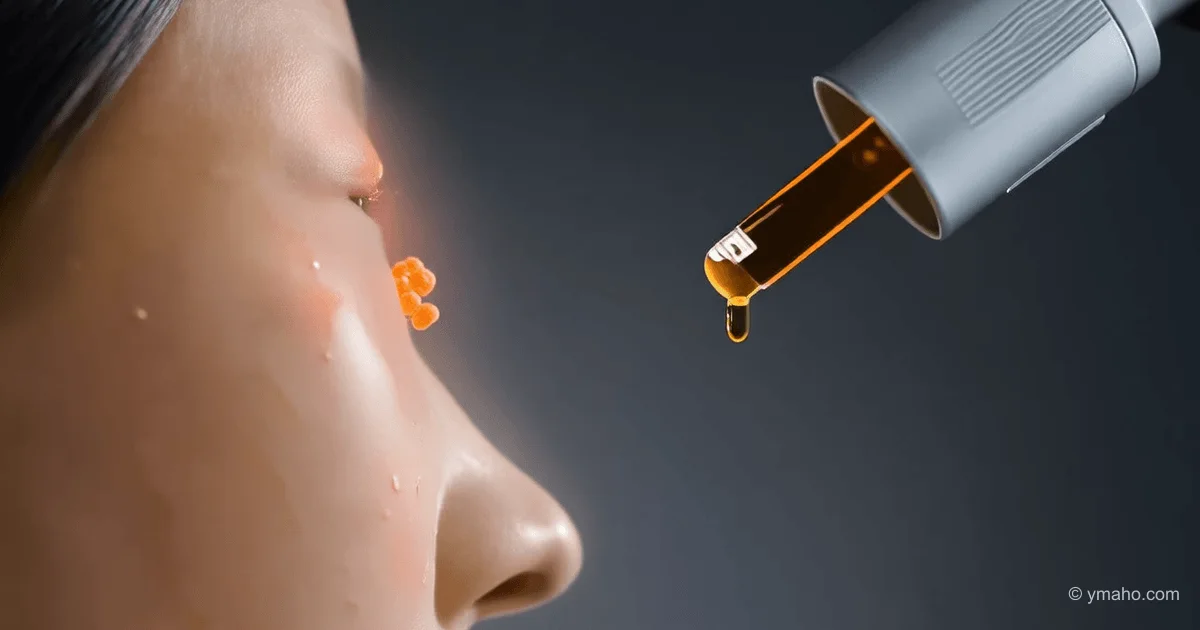
Skin as a Biomarker: Creams and Serums Replace Health Diagnostics
The beauty industry is learning to read signals: dull complexion is no longer masked but "fixed" through cellular detox and NAD+. Skincare is becoming a first-aid kit for mitochondria, and a jar of cream a monitor of inflammatory processes in the body.
Your face just became a medical device. The beauty industry is rewriting the rules of diagnostics
Forget about foundation that masks fatigue. The new trend, which Mintel has dubbed "Metabolic Beauty," turns skin into the body's dashboard. Dull complexion, sudden breakouts, loss of firmness—these are no longer cosmetic defects but signals of systemic malfunctions that a $60 cream can no longer cover up. In 2026, a jar of serum becomes the entry point for health diagnostics at the cellular level.
Metabolic Beauty: How Skin Became a "Dashboard"
A term that is changing the game is growing louder: Metabolic Beauty. The concept is simple: beauty is finally moving out of the cosmetologist's domain and into the realm of evidence-based medicine. Mintel notes that consumers now expect skincare to deliver both external and internal results, backed by solid scientific evidence. A serum with resveratrol should not just "moisturize" but boost mitochondrial function and repair DNA damage, as if it were a drug, not a cosmetic.
Evidence is not hard to find. LG Household & Health Care (LG생활건강) published a groundbreaking study in the Journal of Nanobiotechnology in early 2026. Scientists used ultra-precise STORM microscopy to observe in real time how NAD+ repairs mitochondria damaged by bacterial toxins. Result: an anti-inflammatory effect occurs within 30 minutes of delivering the coenzyme into the cell. Here, NAD+ acts not just as an "active ingredient" but as a molecular mechanic that reboots cellular energy generators.
Niagen NanoCloud: A Venture into a Waterless Future
While LG tests hypotheses in the lab, Niagen Bioscience is already bringing them to market. In March 2026, the company launched the Niagen Skincare Innovation Lab and its first physical product under the division: Niagen NanoCloud.
The product solves a fundamental problem: NAD+ and its precursors degrade rapidly in water. To keep the active ingredient from dying in the jar, NanoCloud comes in a completely waterless format. The package contains 30 sealed sachets. The contents of a sachet are mixed with a portion of serum or cream just before application. According to clinical data, skin becomes noticeably smoother, more hydrated, and more radiant within just two weeks.
Rob Fried, CEO of Niagen Bioscience, calls the launch "a strategic step toward exploring how Niagen can expand beyond supplements." This is not just a jar of cream. It is a research probe that will collect data on consumer behavior and adjust the development roadmap.
The Holy Grail: Real-Time Biomarkers
The shift from "creams with promises" to "sensors with evidence" is fueled by explosive growth in analysis technologies. According to Skinobs reports, dermocosmetics is entering the era of predictive analytics. Questionnaires are being replaced by sampling methods: adhesive strips, swabs, and microfluidic extraction of dermal interstitial fluid.
These technologies, combined with AI and "omics" (proteomics and lipidomics), reveal not just the state of the epidermis but markers of oxidative stress, barrier integrity, and even the bacterial composition of the skin. LG is already using NAD Power24™ technology to breach the epidermal barrier. Lancôme has patented Cell BioPrint, a portable "lab-on-a-chip" that calculates your biological skin age from a cheek swab and a facial photo.
Who Is Losing Ground and Why
The total "medicalization" of beauty hits two categories. The first: mythmakers. Brands that built their strategy around metaphors like "cellular respiration" and "inner radiance" are losing their audience. Consumers demand specifics: which cytokine is suppressed, by what percentage. The second group of losers: manufacturers of unstable "watery" formulas. If the NAD+ in your cream degrades on the shelf within a month, you lose to "waterless" competitors.
The market reacts instantly. The anti-inflammatory ingredients segment is growing at 9.5% annually and will reach $1.37 billion by 2032. Companies like Symrise and Barentz are already testing actives not just for moisturization but directly for sirtuin activation and glycation inhibition. Cosmetics are turning into a first-aid kit for mitochondria.
Forecast for Tomorrow
In three to four years, sensors for inflammation and oxidative stress will no longer be laboratory curiosities. Analytical platforms like the Niagen Skincare Innovation Lab will become the standard for any self-respecting brand. A cream without mechanistic data on cellular pathways will look like a car without ABS.
The line between dietary supplements, pharmacy products, and luxury serums will finally dissolve. Those who first implement portable diagnostics and waterless packaging will win. The 2030 consumer will open an app not to "find the right shade" but to check the current level of oxidative stress in their tissues. And this is no longer science fiction—it is the beauty industry's roadmap.
— Editorial Team









