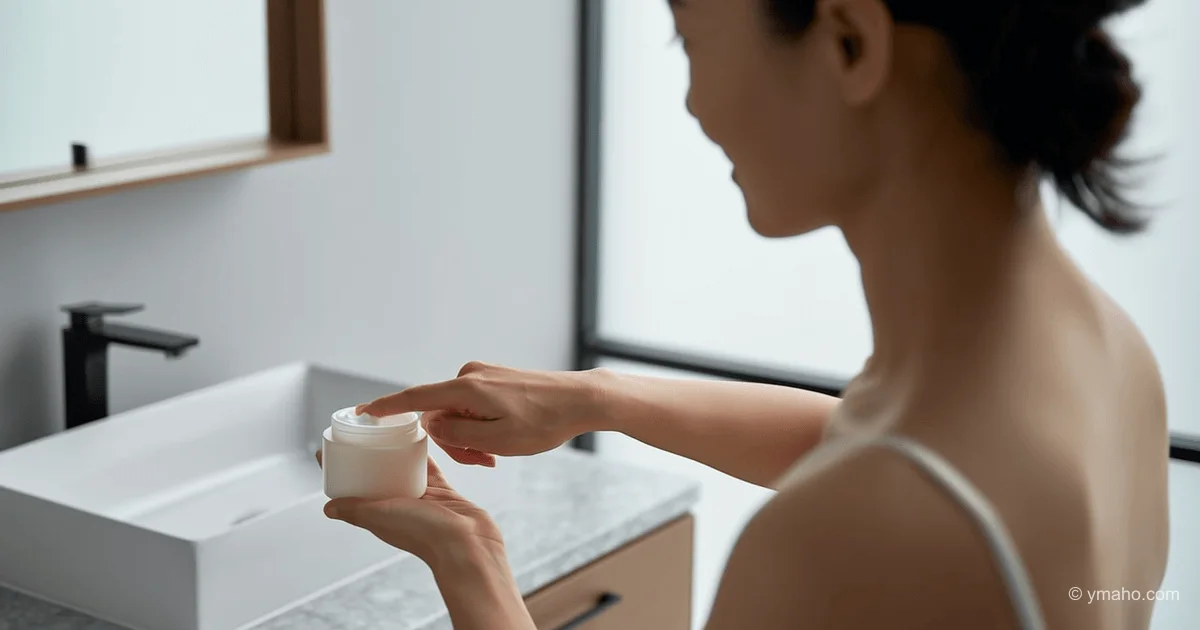
The Trend Toward Simplified Skincare: What Is 'Skin Fasting' and Who Needs It
Against the backdrop of social media overload with multi-step routines, the trend of 'skin fasting' is gaining momentum — a temporary break from harsh actives to restore the barrier, as celebrity Mira Kapoor says.
Skin Fasting: Why the Beauty Industry Fears a Trend It Created
The Essence: What's Really Happening
On May 9, 2026, Mira Kapoor — one of the most influential figures in the Indian wellness space — announced in her Instagram series 'Mira Mira On The Wall' that she is 'currently doing a skin fast.' It might seem like a routine celebrity statement. But for those who understand the mechanics of the beauty market, this is not just a personal choice by an influencer. It's a shockwave that exposes a fundamental paradox of the industry.
Skin fasting is the conscious avoidance of harsh actives (retinol, AHA/BHA acids, vitamin C) for several days or weeks, while maintaining only basic care: cleansing, moisturizing, sunscreen. The concept isn't new — its roots go back to the Japanese minimalist beauty tradition. But its explosive growth in 2026 is not a return to basics; it's a desperate reaction from consumers after a decade of aggressive marketing that convinced everyone that skin needs an arsenal of ten products.
The paradox is that an industry built on the model 'the more products, the more revenue' is now watching its best customers voluntarily cut back on consumption. And the silence of major brands on this topic is no accident. It's fear.
Timeline and Context
The trajectory of skin fasting is clear. In 2025, social media — especially TikTok — was flooded with multi-step routines: 10 steps, 12 steps, 'Korean morning ritual' and 'evening protocol with double cleansing.' By mid-year, the term 'damaged skin barrier' became one of the most frequent search queries in the beauty segment. Consumers began to notice: after all these procedures, their skin wasn't glowing — it was burning.
In fall 2025, the first viral videos with the tag #SkinFasting appeared, where users documented skipping skincare for several days and showed improved skin texture. By early 2026, the trend was dubbed 'skinimalism' in mass-market retailer analytics: experts noted a demand for minimalist routines with multifunctional products.
In March 2026, Femina published an analysis with comments from dermatologists Dr. Prachi Bodkhe and Dr. Nidhi Tandon, who for the first time loudly stated: 'Scientifically, skin doesn't need fasting, but reducing unnecessary products helps the barrier stabilize.' This was a turning point: the professional community didn't reject the idea but acknowledged its limited validity.
In April 2026, BURO Beauty Edit included skin fasting among the top trends of the year with the status 'confidently establishing itself,' but with a caveat: skipping skincare is not the answer. And in May, Mira Kapoor's statement turned a niche trend into a mainstream discussion.
Who Wins and Who Loses
Consumers with overloaded routines win. This isn't hypothetical profit. A 2023 study cited by Dr. Priyanka Kuri showed that fasting-mimicking diets improve skin hydration and texture through autophagy mechanisms and reduced oxidative stress. Skin fasting works on the same principle: by removing harsh actives, you allow the barrier to restore its integrity.
Dermatologists who promote controlled skin fasting win. Dr. Kuri puts it precisely: 'Most dermatologists support controlled fasting, where patients stop using irritating products but continue using sunscreen and moisturizers to restore the barrier.' This gives doctors a simple, effective protocol for dealing with irritated skin without prescribing additional medications.
Barrier-repair cosmetic brands win. When a consumer gives up retinol and acids but continues to buy a moisturizing cream with ceramides, it's not a loss but a budget reallocation. Manufacturers of gentle cleansers, barrier moisturizers, and sunscreen benefit from those who previously spent $200 on active serums. And this is a multi-billion dollar segment.
Brands built on harsh actives lose. The Ordinary, Drunk Elephant, Paula's Choice — all whose business model relies on selling acids, retinoids, and peels. When a consumer goes on a fast for two to three weeks, they don't just pause use — they reconsider the necessity of these products altogether. Then comes the classic funnel: didn't buy now, didn't buy in a month, found an alternative in barrier care.
Influencers with 'full routine' content lose. Ten-step videos lose relevance when the audience switches to 'I didn't use anything for a week, and here's what happened.' The 'skin fasting journey' format gains views, while the 'my $500 skincare routine' format becomes a symbol of a bygone era.
Sephora and Ulta lose — or rather, their cross-selling model. If a customer comes in for a cream, they're sold a serum, toner, and essence. When a consumer consciously reduces their routine to three steps, the average ticket drops from $150 to $45. For retailers whose margins depend on basket size, this is a direct hit.
What the Media Aren't Saying
Insight #1: Skin fasting is a reaction not to bad products, but to poor consumer education.
Most publications present skin fasting as a 'revolt against overloaded routines.' But the real reason is deeper. Dr. Bodkhe puts it with clinical bluntness: 'A damaged barrier occurs when the outer layer of skin loses its ability to retain moisture and protect against irritants. Currently, excessive product use and improper choices influenced by social media are among the main causes of barrier disruption.'
This isn't a product problem. It's an education problem. Social media — especially TikTok — created a situation that XRC Ventures analyst calls 'democratization of information or misinformation.' Consumers get recommendations not from dermatologists but from creators with zero medical training. Result: a 25-year-old woman without acne uses retinol, AHA peel, and vitamin C simultaneously — because a video said 'these are must-haves.' A month later, she goes to a dermatologist with a red, burning face and asks 'what am I doing wrong?'
Skin fasting is not a trend. It's a collective correction of a mistake. Consumers aren't giving up skincare — they're giving up skincare that was imposed on them by algorithms, not doctors.
Insight #2: Complete abandonment of skincare is a myth. Real skin fasting is 'controlled simplification.'
All the hype around the 'caveman routine' — complete avoidance of even water and cleansing — is an extreme that even dermatologists mock. Real skin fasting, supported by professionals, looks different. Dr. Tandon describes it as 'simplifying the routine to a gentle cleanser, a moisturizer with barrier components, and sunscreen.' Dr. Yadav calls it 'selective fasting: pausing some actives while continuing gentle cleansing, moisturizing, and sun protection.' Dr. Jain directly warns: 'Complete abandonment of skincare, especially sunscreen, can be devastating.'
In other words, the clickbait headline 'I gave up all cosmetics' is false. Any competent dermatologist leaves three products: cleanser, moisturizer, sunscreen. Without them, skin doesn't recover — it degrades. Media chase clickbait, but reality is more boring and smarter.
Insight #3: Skin fasting is dangerous for certain groups — and almost no one discusses this.
Dr. Kuri warns: 'People with acne, rosacea, eczema, or pigmentation disorders should continue treatment until a doctor says to stop.' She also notes that 'people over 20 with normal skin should not stop using all products because it won't provide significant benefits.' In other words: skin fasting works for those who have overloaded their skin. For everyone else, it's pointless or harmful. But social media algorithms don't make this distinction. A 16-year-old with acne sees a fasting video, stops the adapalene prescribed by their dermatologist, and three weeks later has a flare-up. This isn't a hypothetical scenario. It's already happening.
Forecast: The Next 30 Days and 90 Days
30 days (by June 13, 2026):
Mira Kapoor's statement will trigger a second wave of interest. In the next month, we'll see a surge of hashtags #SkinFasting, #SkinDetox, #BarrierReset on Instagram and TikTok. Major beauty publications — Allure, Byrdie, Dermstore — will release articles in the format 'dermatologists explain who can and who can't.' This will be a moment of division: the mass consumer will learn that complete abandonment of skincare doesn't work, and the trend will begin to mutate toward 'controlled simplification.'
At the same time, the first products labeled 'skin-fasting friendly' will appear. Barrier-care cosmetic brands — CeraVe, La Roche-Posay, Avene — will launch marketing campaigns with the message 'your skin is fasting, but it needs these three products.' This is a smart business move: not fighting the trend, but embedding themselves in it.
90 days (by mid-August 2026):
By this point, the trend will begin to institutionalize. I predict three key shifts.
First, formal guidelines from dermatological associations will emerge. The American Academy of Dermatology or its European counterparts will release a position paper: 'Controlled treatment interruption: when and how.' This will move skin fasting from the category of 'viral trend' to 'clinical practice.'
Second, major brands will launch dedicated 'skin-fasting' lines: sets of three products (cleanser, moisturizer, sunscreen) in special packaging labeled 'for barrier reset weeks.' The price of such a set will be $45-65 — significantly lower than a full seven-step routine, but higher than a single cream. Retailers will go along with this because a smaller check is better than zero.
Third, TikTok and Instagram will face backlash from the medical community. If documented cases emerge where skin fasting led to worsening acne or rosacea in teenagers, platforms will be forced to add disclaimers to videos with this hashtag — similar to how they label content about diets and mental health. This will hit the reach of creators making radical content and force them to soften their rhetoric.
Conclusion. Skin fasting is not a trend that can be ignored or mocked. It's a diagnostic symptom. The beauty industry for years increased the complexity of routines, the number of steps, and the concentration of actives because it boosted revenue. But it forgot to ask whether skin could handle it. Consumers answered themselves — with mass rejection.
The irony is that skin fasting doesn't kill the industry. It rebuilds it. Ten steps are replaced by three — but those three products must be flawless in formulation, evidence base, and price-quality ratio. Those who understand that the consumer isn't leaving the market will win. They just no longer want to pay for something that damages their skin. And that's the healthiest consumer behavior of all.
— Editorial Team









