Beauty as Ritual: How Slowing Down Becomes the Year's Beauty Practice
The Slow Beauty trend is gaining momentum as an antidote to "fast" masks and aggressive cosmetics. Rituals of mindful product application, layered oil textures, and working with the nervous system through tactile practices turn daily skincare into an act of mental restoration and skin longevity.
The beauty industry in 2026 is experiencing a moment of sobriety. After decades of a marketing race promising instant transformation through "revolutionary" serums and aggressive device-based methods, both the industry and consumers have taken a collective breath and asked: where are we in this equation? The answer is a trend that analysts and visionaries call the year's main beauty practice. It's about Slow Beauty—a philosophy of mindful deceleration where daily skincare ceases to be a functional obligation and becomes a profound act of mental recovery and tactile meditation.
From Quick Fixes to "Biological Honesty"
The formal establishment of Slow Beauty as a major direction didn't happen overnight, but the first half of 2026 marked its crystallization. A landmark event was the launch of the massive year-long campaign "Take Your Time" by Forest Essentials, announced in late March. The brand, built on Ayurvedic principles, openly opposed its philosophy to the culture of productivity and "fast" beauty solutions. At the campaign's core lies a simple yet revolutionary idea for the mass market: time and intention are the true ingredients of luxury. Mira Kulkarni, the brand's founder, put it this way: "At the heart of Ayurveda lies the teaching that beauty cannot be rushed. Preparing oil, blending herbs, and applying the mixture to the skin—all require patience and presence. Today, when the world moves faster than ever, 'Take Your Time' is a reminder that true luxury lies in slowing down."
This marketing manifesto landed on prepared scientific ground. As Attracta Courtney, founder of the Attracta Beauty Awards and a former intensive care practitioner, notes, Slow Beauty in 2026 is not just a trend but "a deep return to biological integrity." Long-term skin health, she says, is not a sprint but a marathon, supported by highly effective products and consistent, mindful care rituals. Courtney's medical background gives her the authority to assert that the most impressive results are achieved only through respect for the body's natural intelligence, not through aggressive correction. The paradigm of "fixing" is giving way to a paradigm of "preservation."
The Anatomy of Ritual: Why Tactility Heals
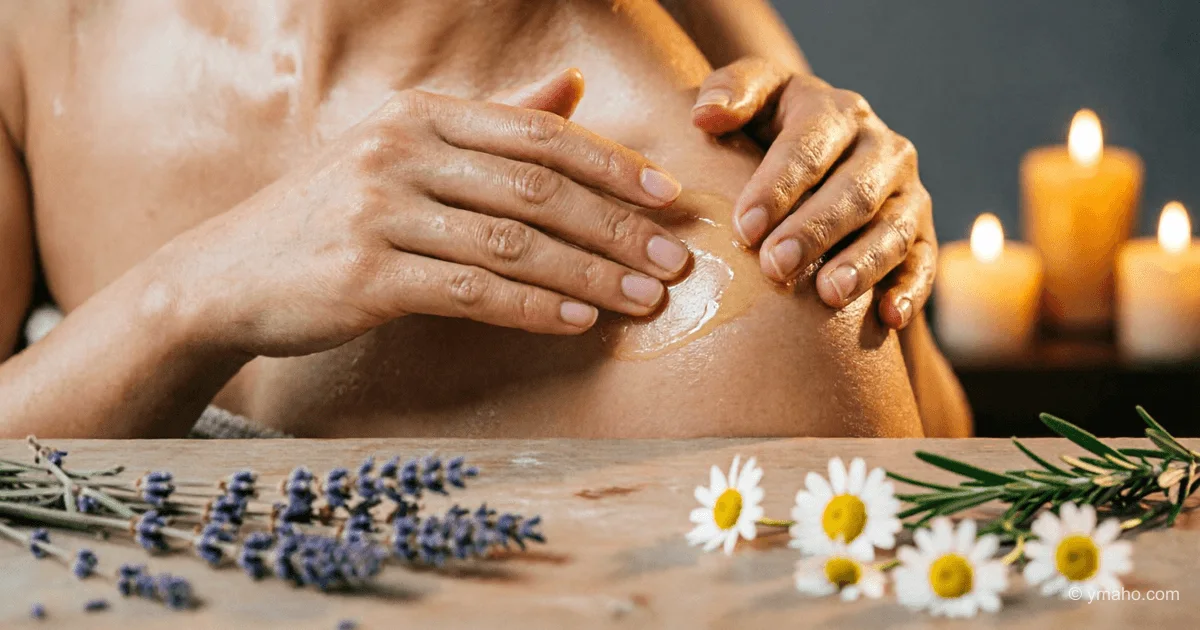
The key difference between Slow Beauty and merely "longer skincare" lies in its proven impact on the nervous system. The trend is based on neurophysiological data: tactile practices underlying ritual product application can induce measurable changes in the body. Studies show that classic massage, slow oil application, or even simple mindful touch to the skin reduce cortisol levels and stimulate endorphin production. Moreover, modern manual techniques, such as the "Flow-Balance" protocol developed by Dr. Nina Katshani, scientifically confirm that manual massage after thermal procedures improves skin barrier function, enhances myofascial release effects, and significantly reduces anxiety levels.
This means that in 2026, the daily beauty routine is no longer just "applying cream." It has transformed into a multisensory experience where product texture is as important as its composition. As analysts at Mintel astutely note, consumers are no longer satisfied with mere functionality—they seek products that regulate mood and evoke emotions. Balms that transform into oils and then into powders, gel textures that turn into foam—these are not marketing gimmicks but tools of sensory storytelling, creating tactile surprise and emotional engagement.
The "texture-emotion" link is also evident in global figures. According to BeautyMatter, 76% of cosmetics consumers in China say that the feel of a product's texture directly impacts their user experience, and 75% associate it with perceived efficacy. In other words, people believe a product works not only when they see results but also when they feel it on their skin. This connection is the foundation of ritual care: layered application of textures, from light essences to rich creams, not only nourishes the skin but also sends the nervous system signals of safety and relaxation.
The Economics of Slowing Down: How Well-Being Became a Luxury Currency
From an economic perspective, Slow Beauty represents a market reshuffle where luxury is no longer measured in carats of gold in a cream but has shifted to the realm of experiences and emotional comfort. Cosmetics market forecasts confirm this shift: the market is estimated to grow from approximately $190 billion in 2026 to $322 billion by 2034. A significant portion of this growth will come from products and practices tied to ritualistic, mindful consumption.
A telling case is the Dutch brand Rituals, which by 2026 has become a benchmark for experiential beauty. According to Behavio Labs, its key competitive advantage is not price, composition, or even fragrance, but emotional habit. The phrase "part of my ritual" became the brand's strongest differentiating association (47% of mentions). Consumers are not paying for a shower cream but for the 10 minutes of calm it provides. "Habits are hard to steal," analysts comment, emphasizing that emotional loyalty built on the neurobiological loop of "action-relaxation" proves stronger than any price competition.
Simultaneously, the industry is also abandoning the idea of "poreless perfect skin" characteristic of the filter era. As Mintel notes, beauty demand today is driven by fatigue with overly optimized aesthetics. Instead, consumers want beauty that feels human. Brands that showcase their artisans, production processes, and even the imperfections of handcrafted work win the battle for trust. In this context, Slow Beauty means accepting one's own skin, rejecting masks in favor of "preservation," and focusing on long-term cell viability.
Industry Response: From "Diagnostic" Serums to the Pro-Age Alliance
Cosmetic giants and niche players are responding to the demand with three waves of innovation. The first wave involves formulas. In trend are "biomimetic textures" that work in synergy with the skin's natural mechanisms: they support barrier function and moisture retention while creating a feeling of comfort and protection without heaviness. At the in-cosmetics Global 2026 exhibition in Paris, the theme of longevity and ritual textures became dominant: Clariant presented the concept "Let True Beauty Glow," aiming to reconcile demands for efficacy, time savings, and Slow Beauty philosophy in one bottle.
The second wave is a rethinking of the role of devices. In the 2026 paradigm, technology does not exclude slowing down but integrates into it. Attracta Courtney calls this "Preservation Tech": microcurrent devices and LED therapy are used not for aggressive intervention but for cumulative support of the skin's natural rhythms. The device ceases to be a tool for "quick lifting" and becomes part of the evening ritual, alongside a cup of tea and meditation.
The third and most significant wave is the institutionalization of the Pro-Age movement within Slow Beauty. Courtney, who calls herself a Pro-Age activist, articulates a firm thesis: "Beauty is not about erasing the map of our experiences, but about caring for vibrant, healthy skin that radiates vitality at any age." This directly opposes aggressive anti-aging campaigns of the past and forms an alliance among brands that promote "respect for biology" instead of "fighting age."
Forecast and Conclusions: Skincare as an Act of Civil Disobedience
In the coming years, Slow Beauty will fully crystallize into an independent economic and cultural force. According to forecasts, by 2030 consumers will expect beauty products to perform not only aesthetic but also diagnostic, emotional, and preventive functions. Serums and creams will become tools for mood management and tracking stress biomarkers.
But the deepest shift lies in social psychology. Slow Beauty in 2026 is, essentially, an act of resistance against the culture of productivity. The "Take Your Time" campaign precisely captures the spirit of the times: it targets "productivity guilt"—the feeling of guilt for being unproductive that haunts modern people even in the bathroom. Quickly applying cream and rushing off—that is the model the trend declares outdated. The new ideal is a woman capable of "turning off autopilot" and consciously choosing herself in that particular moment.
The cultural redefinition of skincare as an "investment in mental health" will have a domino effect: cosmetic clinics are already transforming into spaces for emotional reset, where silence, touch, and the absence of devices are valued no less than laser technologies. We are entering an era where "luxury" is defined not by the speed of achieving results but by the depth of immersion in the process. And in this worldview, the daily evening ritual with oils and creams is not a routine but a micro-retreat, the only guaranteed "capsule of silence" in a noisy world. For this guarantee, the consumer is willing to pay, and the industry responds by betting not on the promise of eternal youth but on the promise of peace of mind here and now.
— Editorial Team









