Investing in Quality and Smart Minimalism in Shopping and Cosmetics
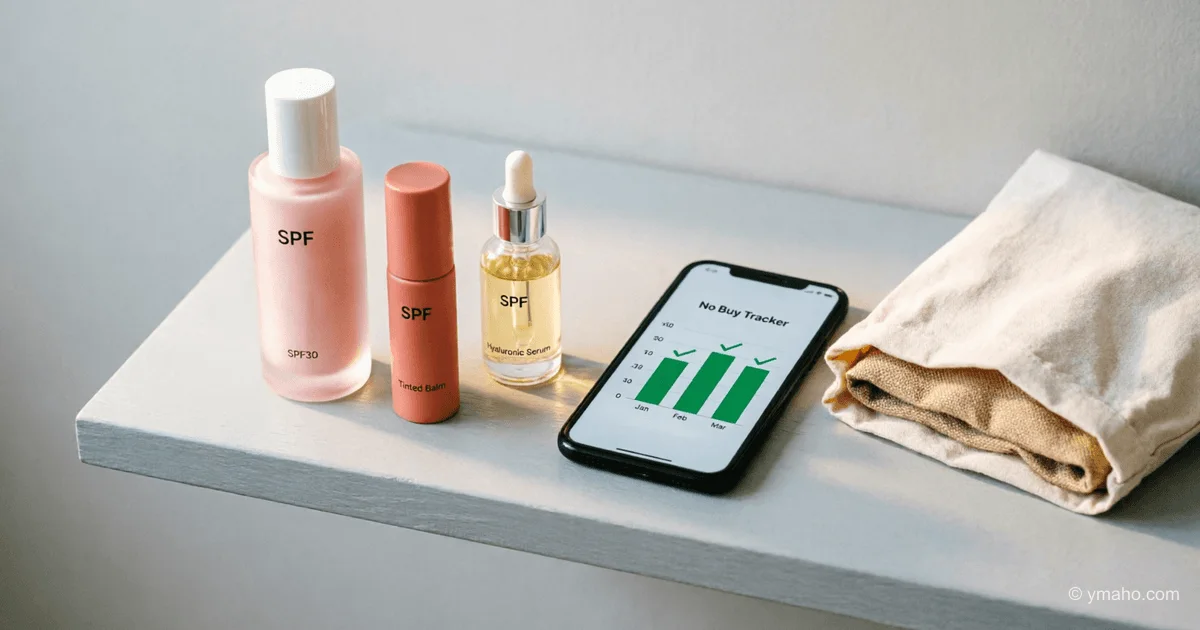
Consumers are abandoning impulse purchases in favor of thoughtful investments in quality items and cosmetics with proven efficacy. The resale, upcycling, and local brand markets are flourishing, while in decorative cosmetics, the trend is toward multifunctional care and makeup "2-in-1" products.
Introduction
The beauty and fashion industry is undergoing a fundamental transformation. The cult of consumerism, impulse purchases, and overflowing makeup bags is giving way to an era of conscious minimalism. By 2026, more and more consumers are abandoning the race for novelties in favor of thoughtful investments in quality items and cosmetics with proven efficacy.
This shift is not just a reaction to economic instability. It is a deep change in values: people are tired of information noise, visual clutter, and the financial drain that endless consumption brings. Smart minimalism, multifunctionality, the circular economy, and support for local brands are taking center stage. This article analyzes how these trends are shaping the new landscape of the beauty market.
Event Details and Timeline
The Collapse of Multi-Step Routines
Just a few years ago, the beauty industry promoted 10-step Korean routines: toner, essence, serum, ampoule, eye cream, emulsion, night cream — and that's only part of the list. By 2024, consumers began to realize that many steps duplicate or even neutralize each other, and the skin reacts to the "layer cake" with irritation and clogged pores.
By 2026, this has been replaced by skinimalism — a concept based on using a minimal number of highly effective products. The focus is on multifunctional "2-in-1" and "3-in-1" products that solve several tasks at once. The emphasis shifts to perfect skin health: radiance, even tone, smooth texture, rather than layered makeup that masks problems.
The Rise of the Resale and Upcycling Market
Alongside simplified skincare, the culture of reuse is gaining momentum. Consumers are increasingly buying cosmetics and clothing on the secondary market, and brands are launching exchange and resale programs.
A telling example is the partnership between AI brand Skin Inc and the largest recommerce platform Carousell. In April 2026, they launched the "Skin Inc Reboot" project: refurbished skincare devices are sold 60% cheaper than new ones. The CEO of Carousell noted: "Young consumers are actively seeking more sustainable beauty options, and such initiatives are a timely response to demand."
A study by NielsenIQ and CEW UK, presented in March 2026, confirms that economic pressure has led to a K-shaped polarization of the market. Only 17% of consumers can spend freely. Some seek absolute affordability, others invest in premium luxury, but both groups are united by one thing: the demand for justified value.
The Rise of Local Brands
The trend toward local production is strengthening worldwide. Consumers are tired of globalized corporations and want to support small manufacturers with transparent supply chains. Even at the level of small towns, farmers' markets are emerging where local entrepreneurs offer handmade cosmetics, handcrafted soaps, and products made from natural ingredients.
Impact and Significance
A New Philosophy of Consumption
Skinimalism is not just about saving money; it is a full-fledged philosophy. Consumers no longer want to be "hostages" of 10-step rituals. They seek products that actually work, rather than creating an illusion of care.
NielsenIQ data is telling: 52% of global consumers (and 62% of Gen Z) are willing to pay more for products that simplify life and save time. 33% say that recent years have made them realize that "less is more." This directly aligns with the Curation trend, which Trend Hunter highlights in its list of 2026 megatrends: people want someone to filter the chaos and offer them the best.
Multifunctionality as the New Norm
The market is actively responding to this demand. Formats that replace several products at once are emerging:
- Moisturizers with SPF: combine sun protection and basic care.
- Tinted moisturizers with skincare: BB and CC creams now contain serums, vitamins, and anti-aging components.
- Transformer balms: one product for lips, cheeks, and eyes creates a harmonious monochrome makeup look and cares for the skin.
- Two-phase treatments in one sachet: for example, a serum with spicules + a moisturizing mask in one package for an at-home course.
The global trend toward hybridization, identified by Trend Hunter, is fully manifested here. Boundaries between categories are blurring: skincare and makeup, cleansing and toning, cosmetics and skincare become one.
Investment Logic Instead of Impulse
Consumers in 2026 think like investors. They are willing to pay more for a product with proven efficacy because, in the long run, it is more profitable than buying three cheap products that don't work.
This resonates with the Prosumerism trend described by Trend Hunter: people want professional tools and services; they won't settle for compromises. They study ingredients, compare clinical studies, and look for products that have "earned their place" in a simplified routine.
Reactions of Key Players
Large Corporations
Global giants are restructuring their portfolios to meet new realities. According to a report by NielsenIQ and CEW UK, innovations are now focused on hybrid products, especially those combining makeup with advanced skincare. L'Oréal, Estée Lauder, and other leaders are actively adopting AI personalization: climate-adapted formulas, smart delivery of active ingredients, and products created by individual algorithms.
Retailers and Platforms
Sephora, Target, and Superdrug are seeing explosive growth in the mini-format category. "Little sweet treats" are becoming an emotional anchor for Gen Z, with nearly a third of them indulging in micro-luxuries daily. Miniatures are not only a way to try a product but also a form of collecting and aesthetic pleasure.
Recommerce platforms like Carousell are actively building their capabilities. Their recent acquisition of LuxLexicon and entry into offline retail demonstrate serious intentions: the secondary market is no longer a "garage sale" but is becoming a structured sales channel.
Small and Local Brands
Independent manufacturers gain a competitive advantage through transparency, proximity to the consumer, and flexibility. Local beauty brands using natural ingredients and sustainable packaging are becoming the choice of conscious buyers. The Naturality and locality trend highlighted by Trend Hunter works in their favor.
Forecast and Conclusions
Smart Minimalism Is Here to Stay
Skinimalism is not a passing fad. It addresses three fundamental demands of modern people: saving time, financial rationality, and environmental responsibility. These values will only strengthen.
According to forecasts by WGSN, one of the world's leading trend sources, in the next 2-3 years we will see:
- Growth in the micro-joys category (Tiny Things, Massive Joy) — small, inexpensive products with high emotional payoff.
- The transition of professional ingredients to the mass market — PDRN, exosomes, and next-generation peptides will become available in home care.
- Circular beauty as the standard: refurbished devices, reusable packaging, and exchange programs.
What's Next?
The future lies in several key directions:
- AI integration. 49% of consumers already receive beauty recommendations from generative AI. ChatGPT and similar tools narrow the "shelf" from 50 products to 1-2. The SEO of the future is optimization for AI search.
- Justified value. Brands must scientifically prove efficacy. Sustainability, transparency, and community are no longer bonuses but mandatory conditions.
- Personalization without complexity. Consumers want a personalized approach, but through one smart product, not ten different ones.
- Balance between saving and investing. Two segments will grow: budget (through recommerce and mini-formats) and premium (through scientifically proven efficacy and multifunctionality).
Recommendations for Consumers
If you want to join the smart minimalism movement:
- Review your makeup bag. How many products have you used in the last month? Get rid of those that are gathering dust.
- Look for multifunctionality. A BB cream with SPF 30+ can replace foundation, day cream, and sunscreen.
- Buy refurbished. The secondary market offers devices and electronics with a warranty at 40-60% below the new price.
- Support local. Local brands often offer more transparent ingredients and a smaller carbon footprint.
- Invest, don't spend. It's better to buy one serum with proven peptides than three cheap ones with unclear ingredients.
The main lesson of the era of smart minimalism is simple: true beauty and health do not require an army of bottles. They require a conscious approach, quality tools, and respect for your own resources — time, money, and the planet.
— Editorial Team









