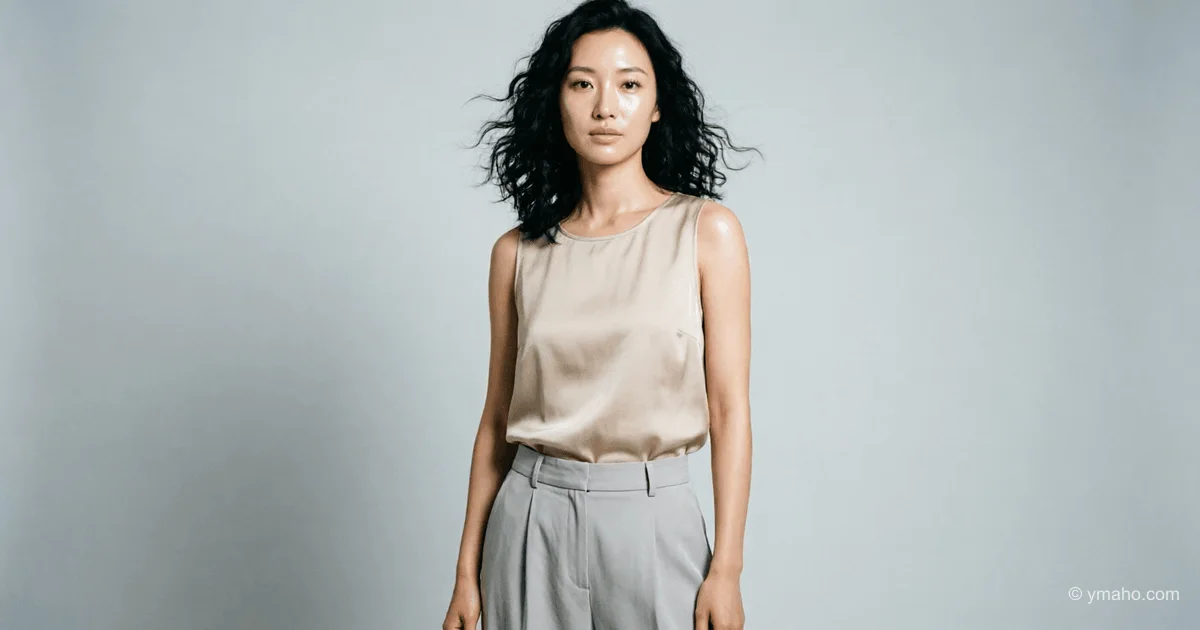
The "Soft Glam Rebellion" Movement: The Ultimate Beauty Manifesto of 2026
The main trend on red carpets and runways is minimalist makeup with an emphasis on skin texture and individuality. Dense foundations and heavy contouring are being replaced by "soft glam," where visible skin and subtle accents are valued, and the motto becomes "authenticity is the new luxury."
This is not just another fashion wave, but a tectonic shift in the philosophy of beauty that has finally taken shape on key runways and red carpets in spring 2026. The "Soft Glam Rebellion" movement is a direct response to the long era of filters, "Instagram face," and heavy contouring that masked any hint of skin's natural nature. The industry, which for decades sold us the promise of a "perfect canvas," has suddenly done a 180-degree turn, proclaiming a manifesto whose central idea is authenticity. The revolutionary moment lies in the fact that luxury is now considered not the ability to conceal, but the courage to reveal—texture, pores, and even slight tonal imperfections. This is a fundamental reassessment of what it means to look "expensive" and well-groomed.
Event Details and Timeline
The formal consolidation of the trend occurred at the intersection of two global industry events: the Met Gala 2026, held in early May, and the fall-winter shows that we are observing right now in early May of the new season. It was the Met Gala, traditionally setting the highest standard for evening makeup, that unexpectedly became a platform for abandoning classic glamour. Leading makeup artists working with the evening's key figures almost unanimously rejected dense foundations and graphic sculpting techniques. Instead, the red carpet was dominated by products with semi-sheer coverage, resembling not a masking layer but an expensive serum illuminating the skin from within.
Parallel to this, on the runways of Milan and Paris, where the fall-winter 2026/27 collections were presented, models came out with makeup that professionals have dubbed "skinimalism 3.0." This was not a rejection of cosmetics as such, but rather a virtuosic micro-level work requiring much more skill from makeup artists than painting a new face. The timeline of the transition looks like this: if in 2024 we saw the rise of "clean girl aesthetics," and in 2025 the consolidation of the "glass skin" trend, then May 2026 marked the third stage—the acceptance of "living skin." Technically, this is expressed in applying products with fingertips (so the warmth of the hands "melts" the texture), abandoning powder in favor of cream highlighters, and the complete disappearance of baking from the lexicon of top stylists. The focus has shifted from correcting cheekbones to eyebrow arches, which give the face character, and to lip balms in complex berry shades that look as if they have just been "kissed."
Impact and Significance
The significance of "Soft Glam Rebellion" extends far beyond the beauty industry, affecting economics, psychology, and social attitudes. From an economic perspective, we are witnessing a powerful market reshuffle. The foundation category is experiencing a crisis of overproduction of dense textures. Meanwhile, the skincare segment, especially serums with a glow effect and essences, according to Q1 2026 data, grew by 34% compared to the same period last year. The average price for a premium serum providing a "second skin" effect has risen to $120–$180 per bottle, comparable to the cost of a good luxury foundation. Brand investments are rapidly shifting from color cosmetics to textures. Producing one kilogram of innovative silicone that mimics the lipid barrier costs laboratories about €800, almost three times more than classic polymers for matte bases. This indicates that the technological race has moved into the realm of creating "smart" coatings that adapt to the skin's texture rather than hiding it.
For society, this trend has been a breath of fresh air in an era of total digitalization and deepfakes. When reality and graphics become indistinguishable in social media feeds, visible skin texture turns into a marker of authenticity and even a status symbol. The statement "my skin is good enough to be seen" is a new form of luxury. Moreover, this strongly correlates with psychological well-being: abandoning the daily "war paint" reduces anxiety levels associated with not matching one's own filtered image online. The wellbeing effect here is expressed in reducing morning makeup time from 40 to 10-15 minutes, freeing up time for meditative practices or a leisurely breakfast.
Reactions from Key Players
The industry's reaction was swift and polarized. The Estée Lauder Companies conglomerate quickly relaunched the marketing strategy of its flagship brand MAC, shifting focus from legendary long-lasting matte lipsticks to the "Hyper Real Serumizer" line, which balances at the intersection of skincare and makeup. This is a radical step for a brand that has been associated with heavy coverage for decades. In contrast, luxury giant LVMH is betting on "quiet luxury" through Dior and Givenchy, releasing limited collections of products with a clean skin effect, priced from $150 per bottle, with an emphasis on the application ritual comparable to a Japanese tea ceremony.
The most notable statement came from legendary makeup artist Pat McGrath (Pat McGrath Labs). Her new collection, shown right during the Met Gala days, consisted of 80% transparent and semi-sheer glosses and creams. In her interview, she emphasized that "creating skin that looks like skin requires 10 times more investment in development than creating a perfectly matte mask." Independent beauty experts in Los Angeles and New York also report a collapse in demand for contouring services. Meanwhile, demand for microneedling RF lifting and IPL therapy (photorejuvenation) procedures has soared by 62%, as clients now come not with a request to "cover up" but with a demand to "restore" texture. The cost of one such procedure in the upper price segment of New York reaches $1,200, highlighting the investment nature of the new approach to beauty.
Forecast and Conclusions
Looking at the development of "Soft Glam Rebellion," it becomes clear that we are entering an era that can be called the "Era of Transparency." A return to dense matte foundation in the next 3–5 years is almost impossible, unless some fundamental countercultural upheaval occurs. We will see a further reformatting of makeup bags: numerous jars will be replaced by 2–3 multifunctional products. The main battle among giants will not be over the color palette, but over formulas capable of providing a "lens effect"—a transparent coating that refracts light so that the skin glows with health without a gram of shimmer.
The market forecast includes a 15% decline in retail sales of classic matte foundations by the end of the year and a parallel growth in the hardware and injectable cosmetology market by approximately $550 million. People are willing to pay for the skin itself, not for its masking. Socially, this trend establishes a new norm: aging and texture have ceased to be enemies. The enemy now is unnaturalness. "Soft Glam Rebellion" is not just a style; it is a collective relief and permission to be oneself, monetized into billions of dollars.
— Editorial Team









