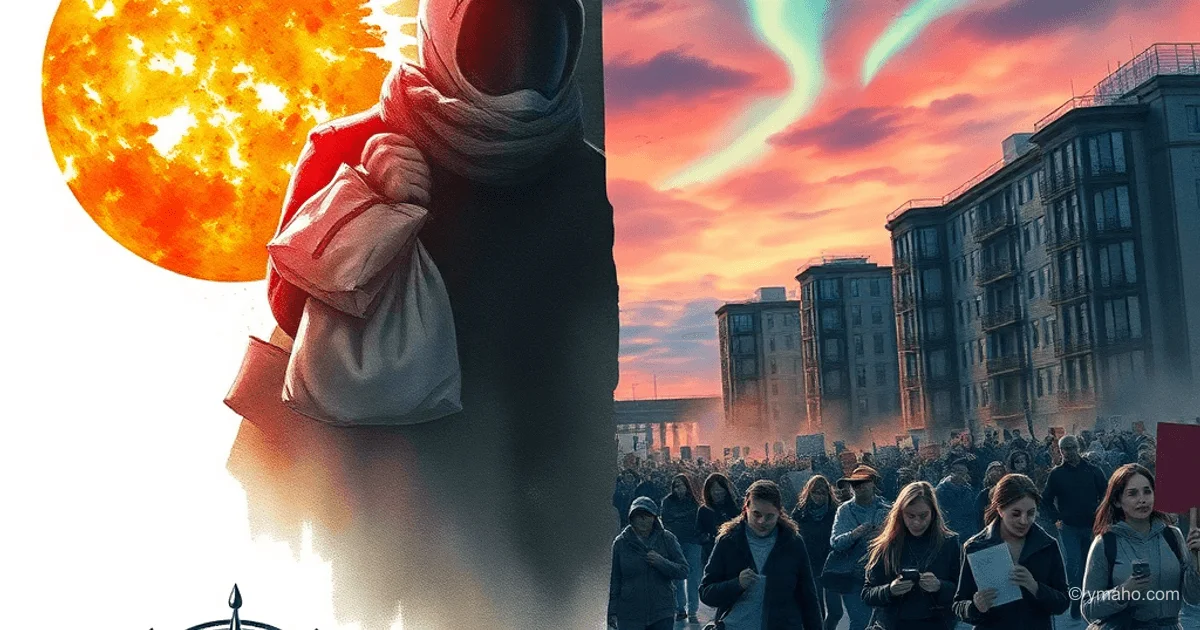
How a Massive Solar Storm Could Spark Panic and Chaos on Earth
A once-in-a-century solar storm could do more than knock out power grids—it might trigger panic buying, conspiracy theories, and even protests. Scientists warn that our biggest vulnerability isn’t just broken satellites or blackouts, but how people react when technology fails.
When the Sun Throws a Tantrum
Solar storms happen when the sun erupts with huge bursts of energy—like solar flares or coronal mass ejections (CMEs). Think of it like the sun sneezing out billions of tons of magnetized gas. If aimed at Earth, this “sneeze” can mess with power lines, GPS signals, and radio communications. The most famous example is the 1859 Carrington Event, which set telegraph offices on fire. Today, a similar event could shut down entire power grids for days or weeks.
But here’s what’s new: experts now say the real danger might not be the tech failure itself—it’s how humans respond to it.
Misinformation Spreads Faster Than the Storm
Imagine waking up to no internet, spotty phone service, and news reports saying a “massive solar blast” hit Earth. If you’ve never heard of space weather—which nearly half of adults in the U.K. hadn’t, according to a past survey—you might start believing wild theories online. Was it an attack? A government cover-up? A sign of the apocalypse?
Social media echo chambers can turn confusion into fear very quickly. Without clear, trusted information, rumors fill the void. And fear changes behavior.
Empty Shelves Before the Lights Go Out
Remember the toilet paper rush during the early days of the pandemic? That wasn’t caused by actual shortages—it was panic. The same could happen with food, water, fuel, or batteries if people hear that a solar superstorm is coming.
Even if supply chains are still working fine, a sudden wave of hoarding can create real shortages overnight. This “self-fulfilling crisis” makes recovery harder and hits vulnerable communities first.
Protests, Distrust, and Unequal Recovery
If power goes out across a region, who gets it back first? Hospitals? Wealthy neighborhoods? Critical infrastructure? Perceived unfairness in how services are restored could spark anger. In extreme cases, the report warns, this might lead to public unrest or protests—especially if people feel ignored or misled by officials.
When Belief Systems Take Over
History shows that major cosmic events can trigger extreme beliefs. In 1997, members of the Heaven’s Gate cult died by suicide, believing a spaceship was hiding behind Comet Hale-Bopp. While rare, such reactions show how celestial phenomena can be twisted into doomsday narratives.
In today’s hyperconnected world, fringe ideas can go viral fast. A massive solar storm—misunderstood or sensationalized—could feed into apocalyptic thinking for some groups.
Tech Fails, But People Decide the Outcome
The key insight from the latest U.K. space weather report is this: technology and human behavior are tangled together. Fixing transformers won’t help if panic causes riots. Sending accurate alerts won’t matter if no one trusts them.
Building true resilience means:
- Hardening power grids and satellites
- Training emergency responders for space weather scenarios
- Teaching the public what space weather actually is—and isn’t
- Creating clear communication channels that survive early disruptions
What does this mean for regular people? You likely won’t need to build a bunker—but knowing what a solar storm really is (a natural space event, not a weapon or omen) helps you stay calm and make smart choices. Sharing simple facts with friends could reduce collective panic if a big storm ever hits.
Key takeaways:
- Extreme solar storms happen roughly once every 100–200 years; we’re overdue.
- The biggest risks may come from human reactions—not just tech failures.
- Misinformation, panic buying, and distrust can worsen the crisis.
- Public education is as important as engineering fixes.
- Staying informed reduces fear and helps communities respond wisely.
— Editorial Team









