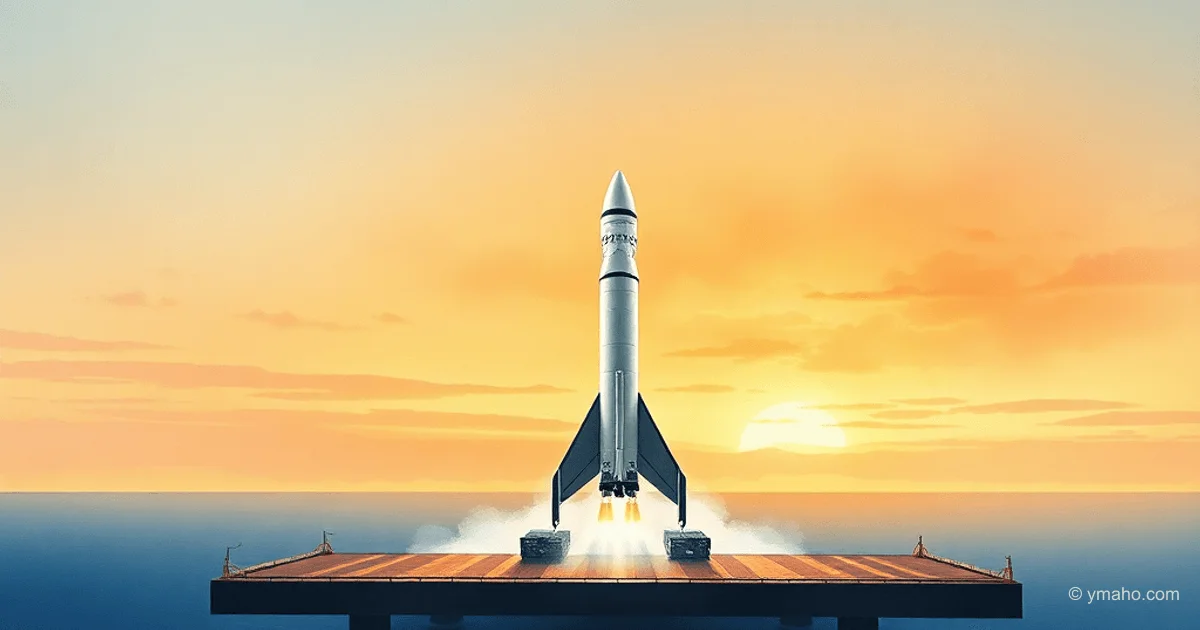
SpaceX Catches Its 600th Rocket: Why Reusable Launches Matter
SpaceX just caught a falling rocket for the 600th time, turning what used to be a one-way trip into space into a routine commute. This milestone matters because it is quietly rewriting the economics of getting anything off our planet.
The Art of Catching a Falling Rocket
Think of traditional rockets like disposable airplanes. Imagine buying a passenger jet, flying it across the ocean, and then deliberately crashing it into the water after one trip. That is exactly how space travel worked for over half a century. SpaceX changed the game by designing boosters that fly up, drop off their payload, and gently lower themselves back to Earth to fly again.
On Sunday, April 19, a Falcon 9 rocket lifted off from California carrying 25 new Starlink internet satellites. Roughly eight minutes later, the first-stage booster (the bottom section that provides initial thrust) flipped around and touched down on its four metal legs aboard a floating platform in the Pacific Ocean. This specific rocket, known as B1097, has now completed that round trip eight times. The company reached 500 successful landings in September 2025, proving that what once looked like a science fiction stunt is now a weekly routine.
Why Reusability Changes Everything
Building a rocket from scratch costs hundreds of millions of dollars and takes months of careful manufacturing. Reusing the most expensive part of the vehicle slashes those costs and dramatically speeds up launch schedules. Confirmed data shows SpaceX has already conducted 47 Falcon 9 launches this year alone, with 630 total missions to date. The Starlink network now includes more than 10,275 satellites circling the globe, nearly all delivered by reused boosters.
Industry analysts suggest this pace could eventually support weekly crewed missions and heavy cargo runs to the Moon, though those timelines depend on future safety certifications and regulatory approvals. What we know for certain is that the hardware itself has crossed the experimental phase. The focus has shifted from proving rockets can land to optimizing how quickly they can be inspected, refueled, and sent back up.
Here is how the numbers stack up:
• 600 total orbital-class rocket landings since 2015
• 8 successful flights for booster B1097 alone
• 47 launches completed in 2026 so far
• Over 10,000 active Starlink satellites in low Earth orbit
What does this mean for regular people?
Cheaper, more reliable launches translate directly into better global internet coverage and faster deployment of weather and navigation satellites. As reusable rockets become the industry standard, the cost of space-based services will likely drop, making high-speed connectivity accessible in remote areas. You will not book a personal spaceflight tomorrow, but the infrastructure that powers your daily digital life is getting a major upgrade.
Key takeaways
• SpaceX successfully landed an orbital rocket for the 600th time during a routine Starlink deployment.
• Reusable boosters function like commercial airplanes, dramatically cutting launch costs and turnaround time.
• The company has already flown 47 missions this year, with one specific booster completing eight round trips.
• While future crewed expansion remains speculative, the current hardware has proven highly reliable for satellite delivery.
• Everyday users benefit through expanded broadband access and more resilient global communication networks.
— Editorial Team









